Canada Breaks Pattern After Venezuela Strike, Signaling a New Line With Washington
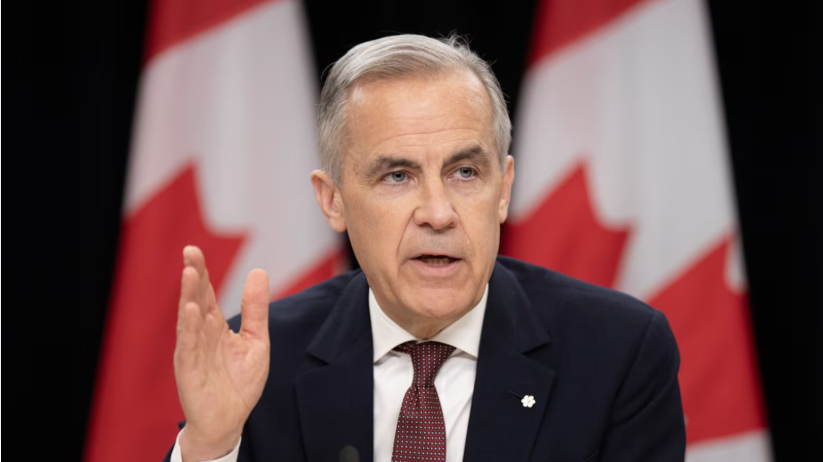
Ottawa declines to endorse U.S. invasion as Mark Carney stresses international law, multilateralism, and sovereignty over automatic alignment
WASHINGTON / OTTAWA — When the United States moved swiftly to seize Venezuela’s president in a dramatic overnight operation, most analysts assumed the aftermath would follow a familiar script: allies would quietly fall in line, statements would be issued, and the alliance would absorb the shock. Instead, the most consequential response did not come from Europe or Latin America. It came from Canada.
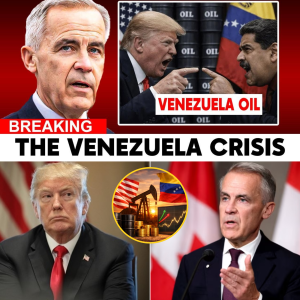
In a carefully worded statement, Mark Carney refused to endorse the unilateral U.S. action, signaling that Ottawa would not legitimize an invasion carried out without international authorization. The language was calm, restrained, and unmistakably deliberate—and it landed in Washington with unexpected force.
The U.S. operation unfolded with speed and spectacle. Explosions over Caracas, low-flying aircraft, and the capture of Nicolás Maduro and his wife dominated global headlines. By morning, American officials were no longer speaking cautiously; they were speaking in the language of control and transition, suggesting Washington would oversee Venezuela’s next phase.
Markets reacted quickly. Commentators framed the move as a hemispheric turning point. And many assumed Canada, a long-time critic of Maduro’s rule, would offer at least tacit support. Ottawa had refused to recognize previous Venezuelan elections, condemned human rights abuses, and supported Venezuelan refugees. On paper, alignment seemed inevitable.
But alignment was not the issue. Method was.
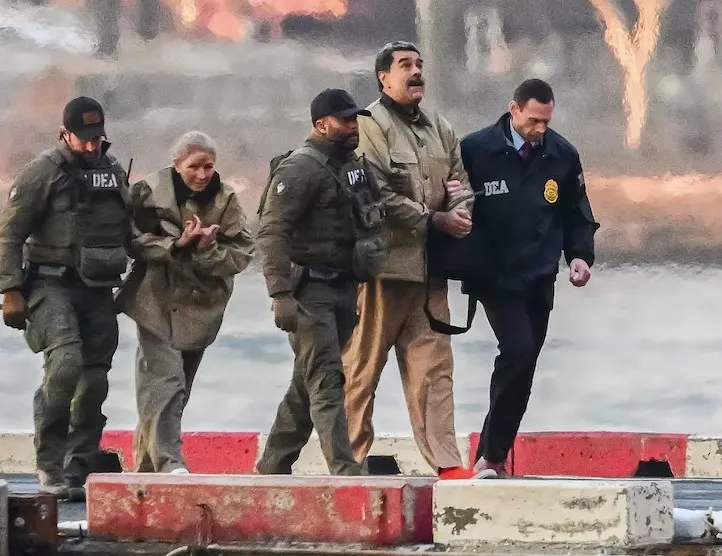
Unlike past interventions, this operation came without United Nations authorization, without a multilateral coalition, and without regional consensus. It was Washington acting first and explaining later. For Canada, that distinction mattered.
Carney did not rush to cameras. He did not praise the outcome. He did not issue a dramatic condemnation. Instead, his statement reaffirmed Canada’s long-standing position that Venezuela’s regime lacked democratic legitimacy and that Venezuelans deserved a peaceful, democratic future. Then came the pivot: a clear emphasis on self-determination, peaceful transition, international law, and multilateral engagement.
Notably absent was any endorsement of military force. No validation of occupation language. No suggestion that unilateral action should be normalized.
Diplomats described the statement as “quietly defiant.” By acknowledging desired outcomes while refusing to legitimize the means, Canada drew a sharp contrast without confrontation. Washington spoke of running Venezuela. Ottawa spoke of Venezuelans deciding their own future.
That contrast was the point.
This was not a rupture with the United States, nor an embrace of Maduro. It was a declaration of strategic sovereignty—the idea that alliance does not require obedience, and shared values do not mandate silence when principles are at stake.
The philosophical divide was striking. Where Washington emphasized speed, force, and decisiveness, Canada emphasized rules, process, and legitimacy. Carney’s language leaned heavily on concepts the White House avoided: international law, multilateral cooperation, peaceful transition. In diplomatic circles, those words functioned as signals.
Multilateral systems exist to constrain unilateral power. When they are bypassed, trust erodes. Canada’s response underscored that reality without saying it outright. By restating its principles rather than reacting emotionally, Ottawa exposed what the invasion lacked: consent, process, and legal grounding.
That exposure unsettled Washington more than open criticism might have.
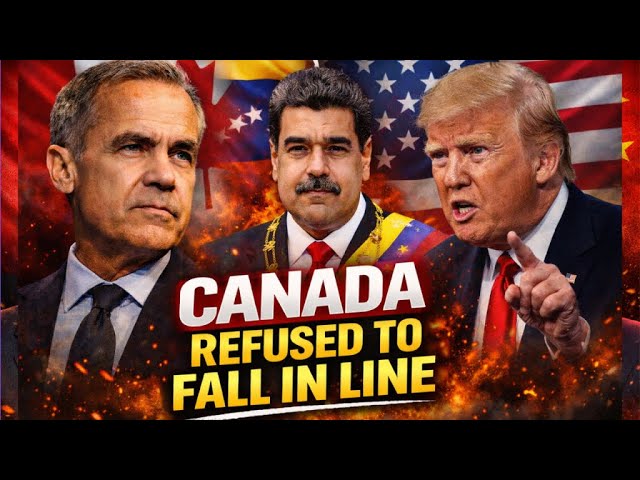
Inside Canada, the invasion triggered sharp debate. Some voices applauded Washington’s decisiveness, framing the capture of Maduro as a moral victory regardless of method. Others condemned the operation outright as illegal and dangerous, warning of precedent and escalation. A third camp attempted to straddle the line, acknowledging Maduro’s abuses while expressing discomfort with unilateral force.
Carney rejected all three approaches. He avoided applause, outrage, and hedging. Instead, he anchored Canada’s position in consistency: democracy matters, but so does international law; supporting people does not require endorsing chaos.
That restraint was leadership. At a moment ripe for slogans, Canada chose discipline.
For Washington, the discomfort did not come from criticism but from independence. For decades, U.S. strategy has rested on an assumption that close allies will eventually align, if not enthusiastically then quietly. Canada’s refusal to do so—calmly, publicly, and without drama—challenged that expectation.
By questioning automatic legitimacy rather than American power itself, Ottawa introduced uncertainty into a system built on predictability. Influence, after all, depends not just on force but on trust. And trust depends on restraint.
This dynamic reaches far beyond Venezuela. It affects future coalition-building, NATO credibility, and the viability of any U.S.-led intervention that relies on assumed consent rather than negotiated support.
The stakes are heightened by Maduro’s legal position. He now faces four U.S. federal criminal charges, including conspiracy to commit so-called “drug terrorism,” conspiracy to import cocaine, and possession of machine guns and explosive devices. Each charge carries a maximum penalty of life imprisonment, transforming the geopolitical crisis into a legal and moral test for the international system.
Canada’s response did not defend Maduro. It defended a principle: that accountability must be pursued through law, not imposed through unilateral force.
In choosing restraint over reaction, Canada clarified its role on the world stage. Not a loud counterweight to Washington, and not a silent follower either, but an independent actor capable of bridging divides when others escalate them. That reliability—predictable, principled, consistent—is increasingly rare in global politics.
This moment will likely be remembered less for the invasion itself than for what followed. One leader acted with speed and certainty that power alone would settle the question. Another responded with judgment, signaling that sovereignty, law, and credibility still matter—even when it is inconvenient to say so.
Power seizes headlines. Principle builds trust. And in this moment, Canada chose the long game.