In a rare moment of vulnerability, Donald Trump—a man who has long cultivated an image of unshakeable strength—has been caught “begging” his own party to salvage his political career. With impeachment resolutions ready to hit the floor and a cocktail of old and new scandals boiling over, a singular question haunts Washington: Will Trump choose a scorched-earth defense, or will he retreat like Richard Nixon before him?

A Startling Confession from the “Tower” of Power
The scene unfolded during a closed-door GOP meeting in early January 2026. Instead of his typical bravado regarding victory, Donald Trump issued a chilling and anxious warning to his colleagues: “You have to win the midterms… because if we fail, they will surely find a reason to impeach me. I’ll be impeached.”
This is not the language of a President in control of the narrative. It is the distress signal of a leader who knows he is standing on a precipice. Trump understands that his power currently rests on a single “shield”: the Republican majority in the House. Should that shield shatter this coming November, a third impeachment is no longer a hypothetical—it is a preordained destiny.
The “Dismantling” Strategy: Targeting the Cabinet First
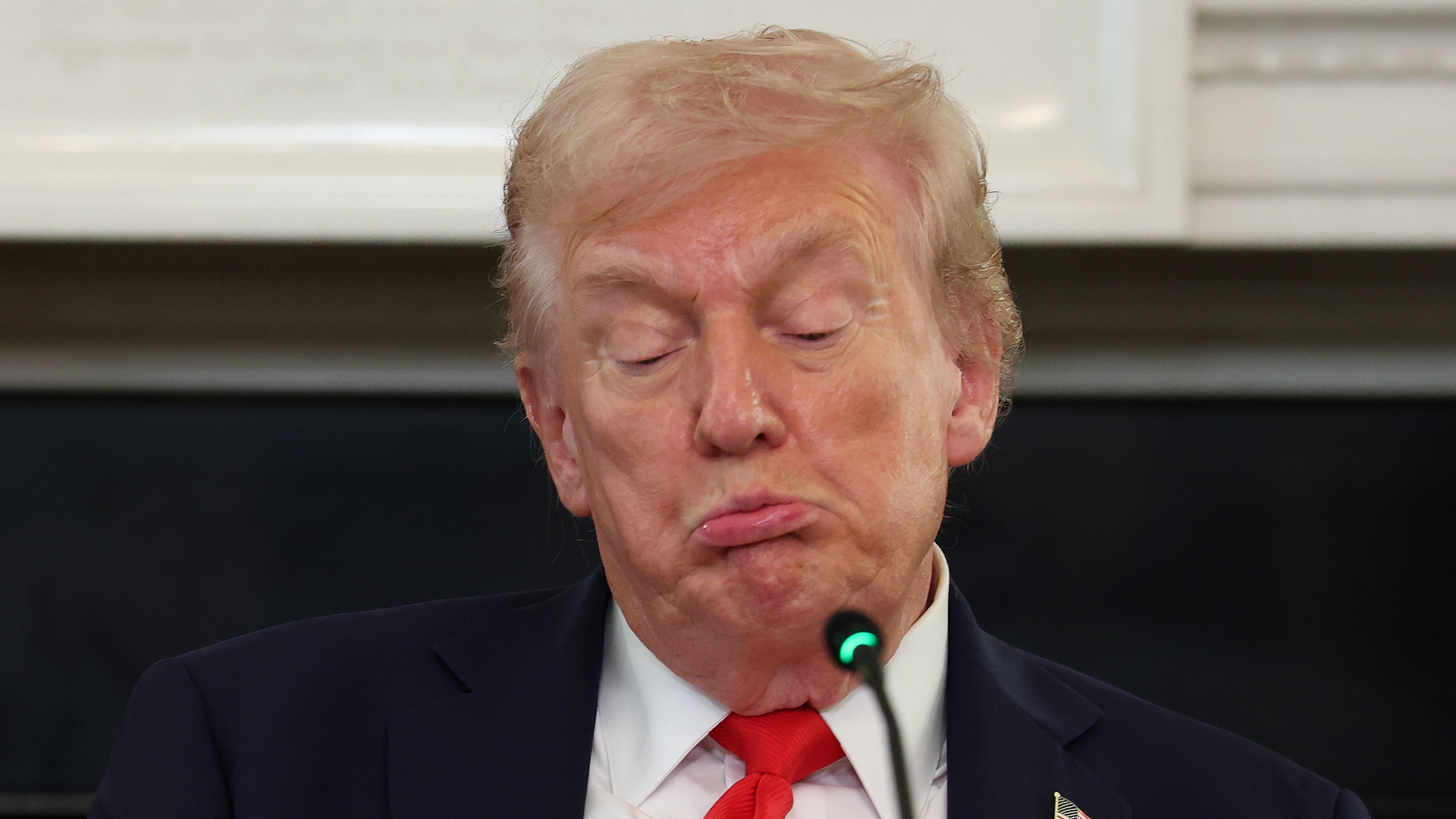
Democrats aren’t simply waiting for election day; they have launched a sophisticated tactical offensive: pressure high-ranking Cabinet officials to resign or face immediate impeachment.
The primary target is currently Homeland Security Secretary Kristi Noem. Following a series of deadly shootings involving ICE agents in Minneapolis, Democratic lawmakers issued a brutal ultimatum: “Resign or be impeached.”
Why target the Cabinet first? Political analysts suggest this is a psychological conditioning of the public. By framing Trump’s team as “corrupt and out of control,” Democrats are establishing a legal and political precedent. Once the “outer circle” is dismantled, Trump will be left entirely isolated within the White House. At that point, the pressure to resign may come not just from his rivals, but from weary allies within his own party.
A “Mountain” of Evidence: From Jack Smith to the Epstein Files
What makes this potential third impeachment far more perilous than the previous two is the sheer volume of evidence that has moved into the public domain:
-
Jack Smith’s Evidence: Federal prosecutors claim they possess evidence “beyond a reasonable doubt” regarding Trump’s alleged crimes.
-
The Epstein Files: Newly leaked documents have become a political nightmare, carrying allegations of high-level information suppression.
-
Policy Crisis: A string of executive orders struck down by courts and a disastrous government shutdown have eroded the confidence of swing voters.
Trump is no longer fighting abstract accusations. He is facing specific data, recordings, and direct judicial rulings.
The Democratic Ultimatum: Resolution H.Res. 353

Moving beyond televised rhetoric, Democrats have formally introduced Impeachment Resolution H.Res. 353, accusing Trump of “high crimes and misdemeanors” during his second term.
This resolution is currently idling in a GOP-controlled committee, acting as a political “time bomb.” The moment the balance of power shifts after the midterms, this bomb is set to detonate. Investigations will be reopened, witnesses will be subpoenaed, and this time, Democrats are vowing that Trump will not have an “escape hatch.”
The “Nixon Exit”: Will Trump Resign?
U.S. history has seen only one President resign to avoid the ignominy of being forcibly removed: Richard Nixon. Is Donald Trump destined to repeat that history?
While Trump remains defiant in public, strategic realities suggest that resignation could be his final bargaining chip. Resigning allows a President to negotiate for legal immunity, protecting family and assets from prolonged judicial pursuit after leaving office. Conversely, being impeached and convicted by the Senate strips away all leverage to cut a deal.
Conclusion: A Democracy Facing a Survival Test
The current battle in Washington is about more than just a man named Donald Trump. It is a battle over the definition of executive power and the limits of accountability.
In November 2026, American voters will not just be electing representatives; they will be deciding whether Donald Trump’s term ends through a standard election cycle, a historic impeachment trial, or a bitter letter of resignation.
Trump’s panic is palpable because, for the first time in decades, the walls of the legal and political system are truly closing in. Time is running out, and the microphones are no longer just catching promises—they are capturing the anxious sighs of a man on the verge of losing it all.