In a landmark decision that reaffirmed the boundaries of executive authority, Federal Judge Colleen Kollar-Kotelly delivered a sharp rebuke to President Donald Trump’s efforts to reshape federal election procedures through unilateral action. On Friday, the U.S. District Judge for the District of Columbia issued a permanent injunction blocking key provisions of Trump’s March 2025 Executive Order on elections, ruling that they violated the Constitution’s separation of powers.
A Direct Challenge to Presidential Overreach
The ruling centered on provisions within Executive Order 14248 that sought to impose stringent citizenship verification requirements on voter registration processes. Specifically, the order directed federal agencies administering public assistance programs to assess citizenship status before providing voter registration forms and mandated documentary proof of citizenship for the Federal Post Card Application used by military servicemembers and overseas citizens.
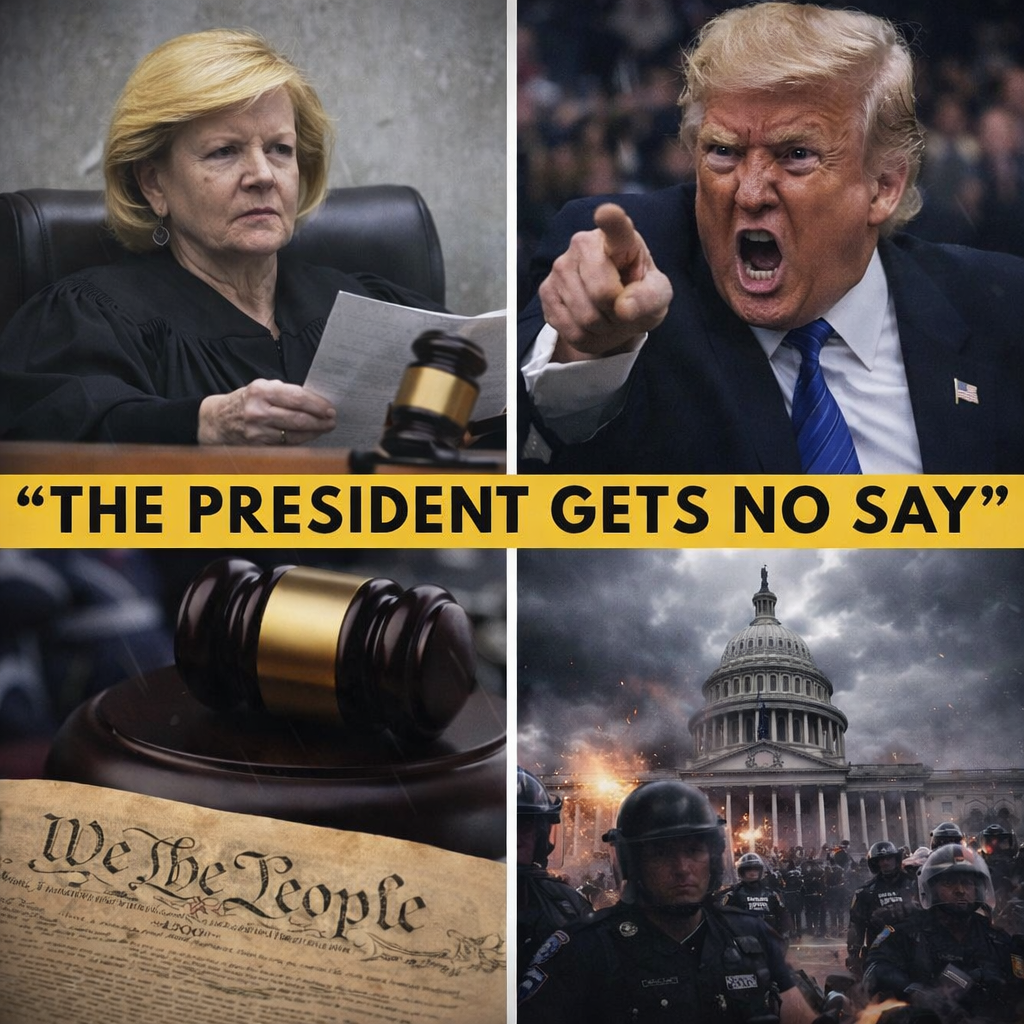
Judge Kollar-Kotelly, a long-serving jurist appointed by President Bill Clinton, described these measures as an unconstitutional encroachment on authority reserved for Congress and the states. In her detailed 118-page opinion, she emphasized that the Framers deliberately excluded the president from regulating election mechanics to prevent potential abuse of power. “The Framers of our Constitution recognized that power over election rules could be abused, either to destroy the national government or to disempower the people from acting as a check on their elected representatives,” she wrote. “They assigned no role at all to the President. Put simply, our Constitution does not allow the President to impose unilateral changes to federal election procedures.”
This decision marks the latest in a series of setbacks for the administration’s election-related initiatives. Earlier injunctions had already curtailed other elements of the order, including broader proof-of-citizenship mandates on the national voter registration form. Voting rights advocates hailed the ruling as a critical safeguard against what they described as attempts to erect new barriers to participation, particularly for vulnerable groups such as low-income individuals reliant on public assistance and those serving abroad.
The Broader Context of Election Integrity Debates
President Trump has long framed such measures as essential to preserving the integrity of American elections, arguing that stricter verification would prevent noncitizen voting and restore public confidence. Supporters of the executive order contended that requiring proof of citizenship—such as passports or select government-issued documents—would address longstanding concerns about fraud, even though evidence of widespread noncitizen voting remains limited.
Critics, however, viewed the provisions as thinly veiled voter suppression tactics. They pointed out that millions of eligible Americans lack ready access to the specified documents, potentially disenfranchising citizens who vote through mail or in federal assistance-linked registration drives. The ruling echoed arguments from lawsuits brought by Democratic-led states, civil rights organizations, and election advocacy groups, which maintained that the president lacked the constitutional footing to override established federal and state frameworks for voter registration.
Judge Kollar-Kotelly’s opinion invoked foundational principles, quoting Supreme Court precedents that describe the right to vote as “preservative of all rights.” She underscored the deliberate design of the Constitution’s Elections Clause, which entrusts primary authority to the states while allowing Congress limited oversight—leaving no opening for executive fiat.

Implications for Future Electoral Battles
The permanent injunction ensures that the blocked sections cannot be implemented without further legislative action or a successful appeal. Legal observers expect the administration to seek review from higher courts, potentially escalating the matter to the U.S. Court of Appeals for the D.C. Circuit or the Supreme Court. Such appeals could test the limits of presidential power in an era of heightened partisan tension over election rules.
For now, the decision stands as a firm reminder of institutional checks. It protects existing voter registration pathways, including those tied to public benefits programs and overseas military voting, from executive alteration. In doing so, it reinforces the decentralized nature of American democracy, where election administration remains largely a state responsibility shielded from direct White House control.
This ruling arrives amid ongoing national conversations about election security and access. As the 2026 midterm elections approach, it highlights the enduring tension between efforts to tighten verification and concerns over barriers that could disproportionately affect certain voters. Judge Kollar-Kotelly’s words serve as both a legal conclusion and a broader civics statement: executive ambition, however framed as protective, cannot rewrite the constitutional allocation of power over the ballot box.
The decision underscores a core tenet of American governance—that no single officeholder, regardless of title or intent, holds unilateral sway over the mechanisms through which citizens choose their leaders. In blocking these provisions, the court preserved the delicate balance the Founders intended, ensuring that changes to voting rules must navigate the legislative process rather than descend from executive decree.