Trump’s “Board of Peace” Debuts With Grand Claims, Sparse Allies, and Familiar Controversy
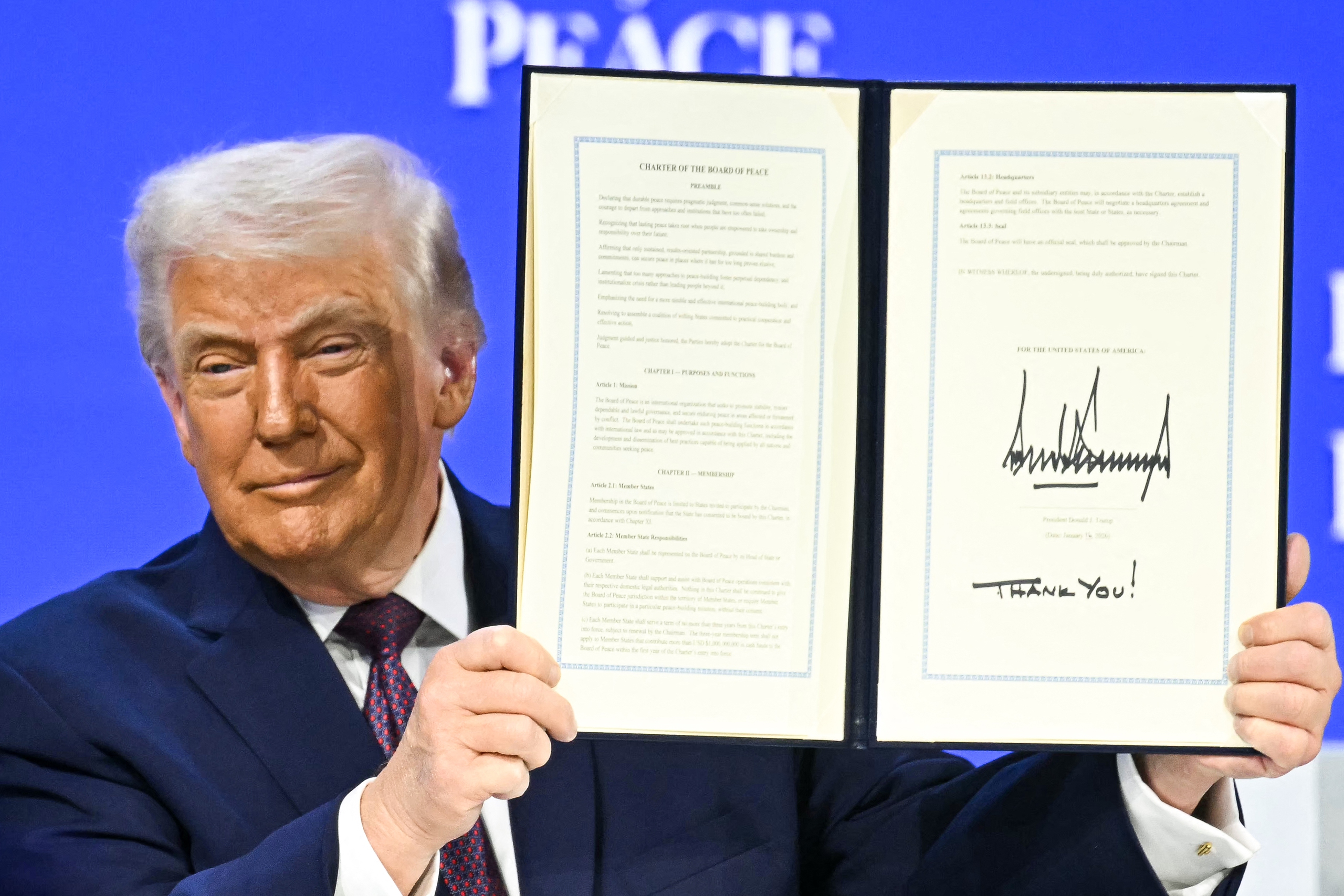
WASHINGTON — President Donald Trump unveiled what he has described as one of the most ambitious diplomatic initiatives of his political career this week: the creation of a new international body he calls the Board of Peace. Announced with sweeping rhetoric about global stability and American leadership, the organization is intended, according to the White House, to serve as an alternative forum for resolving international disputes outside existing multilateral institutions.
Yet the launch of the Board of Peace, and Trump’s self-designation as its chairman, has been met less with international enthusiasm than with skepticism, muted participation, and, in some quarters, open mockery.
“This board has the chance to be one of the most consequential bodies ever created,” Trump said during a White House signing ceremony, praising what he described as its “historic potential” and emphasizing that it was “a tremendous honor” to lead it. Administration officials framed the move as a corrective to what Trump has long derided as the failures of the United Nations and other global institutions, which he argues are bloated, ineffective, and hostile to U.S. interests.
But the early facts surrounding the Board of Peace suggest a far more modest — and politically fraught — beginning.
A Limited Coalition
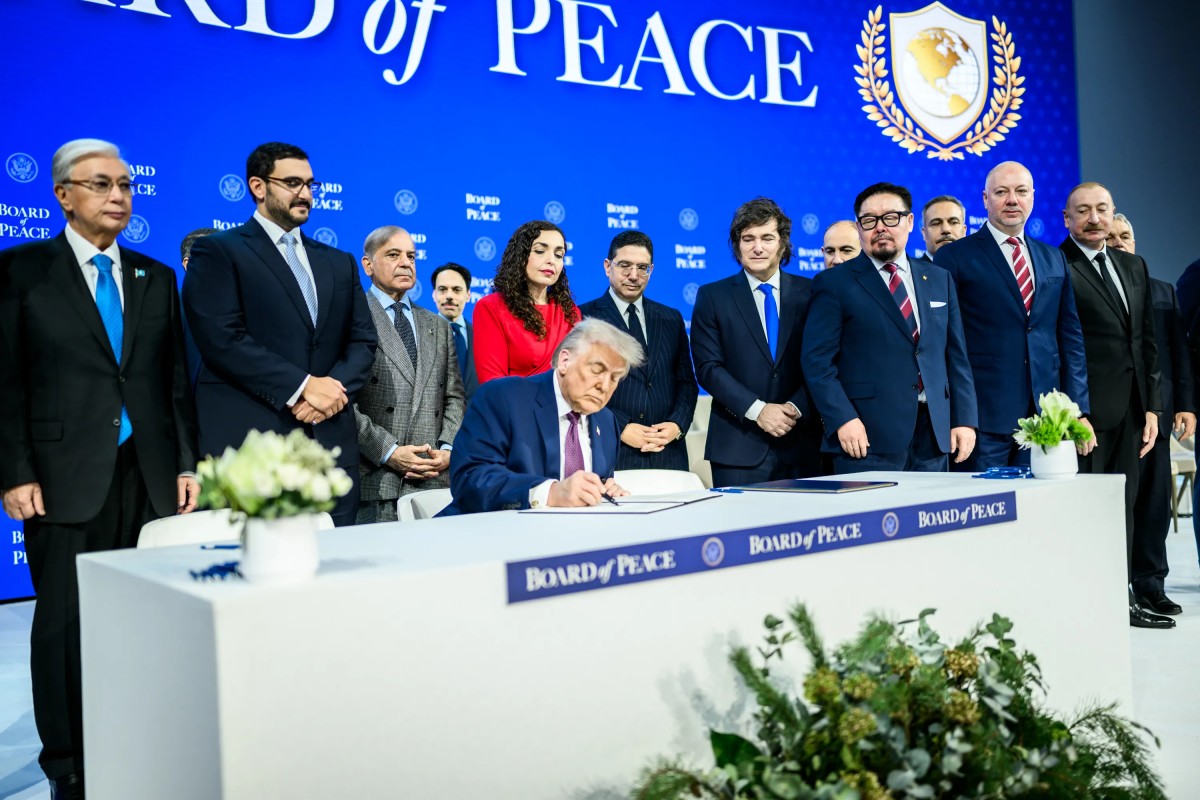
According to administration disclosures and contemporaneous reporting by outlets including The Daily Beast and Axios, fewer than 20 countries have formally agreed to participate in the Board of Peace so far. The list notably excludes nearly all Western European allies, including the United Kingdom, France, Germany, and Italy. No representative from a Western European nation attended the inaugural meeting.
Also absent: Israel, a longtime U.S. ally whose government has benefited from some of Trump’s most emphatic diplomatic and military support over the past year. Israeli officials did not publicly explain their absence, but the omission was widely noted by analysts and commentators across U.S. cable news and social media.
Among the participating countries are Saudi Arabia, Qatar, the United Arab Emirates, Argentina, and Paraguay — a group that reflects Trump’s preference for transactional diplomacy and bilateral relationships over traditional alliance structures. Several of these governments have close economic or security ties to Washington but limited influence within broader multilateral frameworks.
Administration officials had privately suggested they hoped to secure commitments from at least 35 countries by launch, according to reporting by Politico. That benchmark was not met.
A Ceremony That Raised Eyebrows
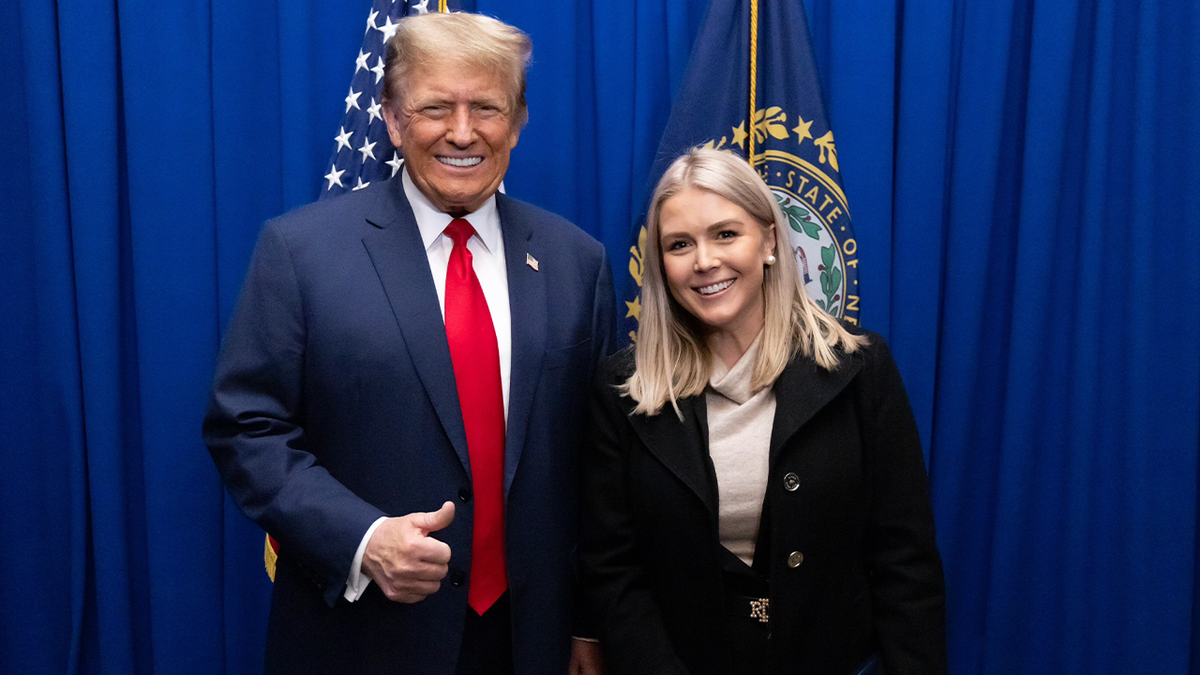
The optics of the signing ceremony itself quickly became a point of discussion online. At several moments during Trump’s remarks, White House Press Secretary Caroline Leavitt appeared to be the only attendee applauding enthusiastically, prompting a brief but conspicuous pause before others followed suit.
The moment was widely circulated on X (formerly Twitter), TikTok, and political commentary channels on YouTube, with critics casting it as emblematic of the initiative’s thin support. The Daily Beast described the scene as “awkward,” noting the contrast between Trump’s soaring language and the subdued reaction in the room.
Such moments have become increasingly common in Trump’s second term, as his administration pursues bold announcements that struggle to generate broad institutional backing.
A Familiar Design, a Familiar Critique
Perhaps the most viral element of the Board of Peace launch, however, was its logo.
Unveiled during the ceremony and later shared by the White House on social media, the emblem immediately drew comparisons to the United Nations logo. Like the UN’s seal, it features a globe encircled by laurel branches. Unlike the UN’s design, the Board of Peace logo is rendered in gold tones, framed by a shield, and centers the Western Hemisphere — with the United States prominently positioned at the middle.
Design experts and commentators were quick to weigh in. Some described the logo as derivative; others called it emblematic of Trump’s broader worldview — one that places America at the literal and figurative center of global order.
On social media, critics joked that the Board of Peace was a “gold-plated UN knockoff,” while supporters praised the symbolism as a declaration of renewed American leadership. The White House did not respond to questions about whether the logo was inspired by existing international insignia.
Substance Versus Symbolism
Beyond optics, foreign policy experts are questioning whether the Board of Peace has any meaningful authority or mechanism to influence international outcomes.
Unlike the United Nations, the organization has no charter negotiated among member states, no established dispute-resolution procedures, and no apparent enforcement capacity. Its mandate, as described so far, relies largely on voluntary cooperation and moral persuasion — tools that critics argue are insufficient in the current geopolitical environment.
“This appears to be more of a political statement than an operational institution,” said one former U.S. diplomat, speaking on condition of anonymity to discuss internal skepticism. “It reflects Trump’s long-standing frustration with multilateralism, but it’s not clear what problem this actually solves.”
Supporters counter that existing institutions have failed to prevent conflicts in Ukraine, Gaza, and elsewhere, and that a smaller, more flexible forum could act more decisively. Conservative commentators aligned with the administration have argued that the Board of Peace’s very informality is its strength.
A Pattern of Personalized Governance
Trump’s decision to serve as chairman of the Board of Peace himself fits a broader pattern of governance that places personal authority and branding at the center of institutional life. From trade negotiations to domestic task forces, Trump has consistently favored structures that allow him to occupy a dominant role.
Critics note that this approach often blurs the line between statecraft and self-promotion. The Board of Peace announcement was accompanied by Trump’s characteristic emphasis on personal recognition, with repeated references to the honor of being selected — by a board he himself created — to lead it.
Late-night hosts, online satirists, and political commentators quickly seized on the irony. Comparisons circulated widely between Trump’s announcement and the corporate practice of naming oneself CEO of a newly formed company.
An Uncertain Future
Whether the Board of Peace endures beyond its initial launch remains an open question. Many past Trump-era initiatives, from advisory councils to special task forces, have faded quietly after initial fanfare.
For now, the organization exists largely as an idea — one laden with symbolism, ambition, and controversy, but light on concrete achievements. Its success will depend not on logos or ceremonies, but on whether it can attract broader participation and demonstrate relevance in resolving real conflicts.
As one prominent political commentator remarked during a livestream following the announcement, “Everything feels performative right now. The question is whether anything actually lasts.”
With midterm elections approaching and global crises mounting, the Board of Peace enters the world at a moment of profound instability — and profound skepticism. Whether it becomes, as Trump promised, “one of the most important organizations in history,” or simply another footnote in an already crowded political era, is a judgment that time — and the international community — will render.
For now, the applause remains tentative.