Greenland Dispute Exposes NATO Strains and Deep Political Divisions in the United States

Washington – Copenhagen – Nuuk
A series of blunt remarks from officials in President Donald Trump’s administration suggesting that the United States would “not rule out” aggressive measures — including military pressure — to gain control over Greenland has ignited fierce backlash in Congress, across Europe, and within NATO itself. The comments have not only triggered a diplomatic shock but also raised serious questions about America’s global leadership and the future of the world’s most important military alliance.
In a tense exchange broadcast on U.S. television and widely circulated on social media, a Republican senator sharply rebuked the White House’s rhetoric as “stupid” and “amateurish,” stressing that the president does not speak for Congress — a coequal branch of government under the Constitution. If Greenland were ever to become part of the United States, he said, it would require a legitimate vote on the floor of Congress, not “surreal statements delivered on television.”
An Old Idea, New Consequences
The notion of the United States purchasing or controlling Greenland is not new. It dates back to the Truman administration in the aftermath of World War II. But reviving the idea today — amid rising geopolitical tensions in the Arctic, expanding Russian and Chinese influence, and growing strains within NATO — has provoked an unusually strong reaction.
Critics in Washington argue that the Trump administration has ignored a fundamental reality: Greenland is part of the Kingdom of Denmark, a longstanding NATO ally. “We can expand our military footprint and strengthen Arctic security cooperation without threatening the sovereignty of a NATO country,” a former Pentagon official wrote on X (formerly Twitter). “This isn’t strategy — it’s sabotage.”
Several former U.S. military commanders, lawmakers say, have privately voiced similar concerns. NATO, they argue, not unilateral action, is the cornerstone that has kept Europe — and much of the world — stable for more than 75 years.
Denmark: From Dismissal to Anger
In Copenhagen, the initial response was cautious, even dismissive. But as statements from Washington grew more explicit and forceful, the tone among Danish leaders hardened.
A former U.S. ambassador to Denmark, who served under Presidents Obama and Biden, described the national mood as moving through “stages of grief” — shock, sadness, and now anger. For Denmark, he said, the relationship with the United States is its most important foreign partnership. Being threatened by an ally it fought alongside in Afghanistan — where Denmark suffered one of the highest per-capita casualty rates after the United States — feels like a profound betrayal.
Voices From Greenland
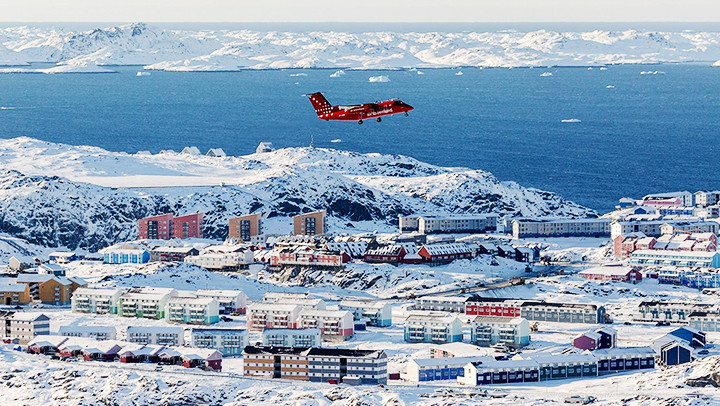
In Nuuk, Greenland’s capital, the debate has taken on a different character. Kuno Fencker, a member of Greenland’s parliament, argued that claims the United States is prepared to use military force to coerce Greenland into giving up its sovereignty are exaggerated.
Fencker emphasized that many Greenlanders have long sought full independence from Denmark — a process they trace back to Denmark’s formal incorporation of Greenland in 1953. He did not rule out negotiations with Washington if they offered economic or security benefits, but insisted that any final decision must come through a democratic referendum.
Recent polling, however, shows that roughly 85 percent of Greenlanders oppose joining the United States, suggesting Fencker and like-minded politicians represent a minority view.
NATO and the Red Line
Security experts warn that any threat to Denmark’s sovereignty could implicate NATO’s Article 5 — the collective defense clause that treats an attack on one member as an attack on all. While the likelihood of actual military confrontation remains remote, even raising the possibility risks undermining trust within the alliance.
Some U.S. commentators have contrasted the global reaction to Denmark with past responses to Venezuela, where American intervention drew far less resistance. The difference, analysts say, is that Denmark is a wealthy, democratic NATO member with a strong international reputation. “There is no support for threatening a NATO ally,” one Republican senator said bluntly on air.
Domestic Political Fallout
In Washington, the Greenland controversy has produced one of the rare moments when criticism of President Trump has come from both parties. While many Republicans remain silent, sharp rebukes from others highlight the limits of party loyalty when long-term strategic interests are at stake.
“This is a distraction,” one lawmaker said. “If the president wants a positive legacy, he needs advisers who are willing to tell him the truth — even when that truth is ‘no.’”
A Test of American Leadership
The Greenland dispute, even if it never leads to concrete action, has become a crucial test of how the United States wields power in the 21st century. It raises the question of whether Washington will continue to rely on alliances and international norms — or shift toward a coercive approach, even with its closest partners.
For many observers in both Europe and the United States, the answer will shape not only Greenland’s future, but also global confidence in American leadership for decades to come.