Today’s testimony before the House Homeland Security Committee — nominally focused on border policy and detention controversies — was quickly overshadowed by a brewing constitutional crisis that has captured Washington’s attention and rattled political nerves across the country.
While Homeland Security Secretary Christy Gnome faced tough questions about deportations and detention practices, lawmakers and pundits pivoted immediately to a far more explosive topic: whether President Donald Trump is fit to remain in office and whether the Constitution’s 25th Amendment should be invoked.
Rising Calls from Within and Beyond Congress

Over the past weeks, a growing number of prominent lawmakers have publicly questioned Trump’s fitness for office, citing controversial policy statements and unorthodox behavior. Some Democratic members of Congress — including Rep. Yassamin Ansari and Sen. Ed Markey — have openly called for the 25th Amendment to be invoked, describing the situation as a constitutional safety mechanism meant to address a president unable to discharge the duties of the office.
Unlike routine fringe chatter, these calls are coming from sitting members of Congress and are grounded in Section 4 of the 25th Amendment, which allows the vice president and a majority of Cabinet members to declare a president unable to perform his duties — triggering temporary transfer of authority. However, it’s important to emphasize that the amendment has never been used in U.S. history for this purpose.
Democrats argue that recent rhetoric surrounding foreign policy — especially comments about Greenland — and other unconventional actions have raised serious questions about Trump’s judgment and stability, making the debate over fitness a matter of public concern.
What the 25th Amendment Really Means

The 25th Amendment, ratified in 1967, was originally designed to ensure continuity of government if a president becomes incapacitated due to health or disability. Section 4 — the most controversial portion — has never been formally invoked because it would require a majority of Cabinet secretaries to agree that the president is unable to perform his duties.
Legal scholars caution that invoking the 25th Amendment is an extreme step reserved for clear incapacity — such as serious medical conditions — not policy disagreements or political disputes. The Constitution’s text gives no explicit role to Congress in the initial decision, leaving the determination squarely in the hands of the vice president and the Cabinet.
Despite this, political pressures are mounting as public debate intensifies — with some lawmakers saying that if the Cabinet refuses to act, impeachment should remain an available alternative.
A Nation Divided, an Institution Tested
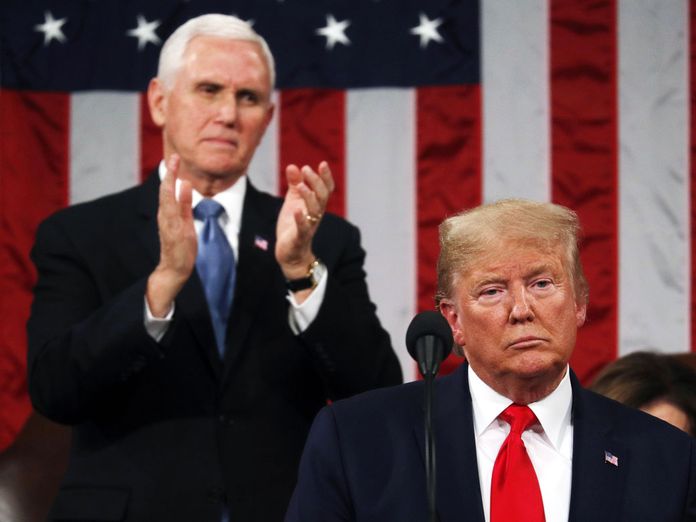
The conversation goes beyond partisan positioning. For many Americans, the rapid pace of political crises and repeated questions about the president’s behavior have reignited deep anxieties about executive stability and accountability.
On social media and across talk shows, pundits and voters alike are debating whether questioning a president’s fitness for office is a legitimate constitutional safeguard — or a dangerous escalation in political warfare that risks undermining democratic norms.
Some supporters of the president dismiss calls for the 25th Amendment as political theatrics designed to split the Republican Party and energize Democratic voters. Others worry that ringing alarm bells about presidential fitness without clear constitutional trigger points could set a perilous precedent.
The Big Picture: Constitutional Tool or Political Weapon?
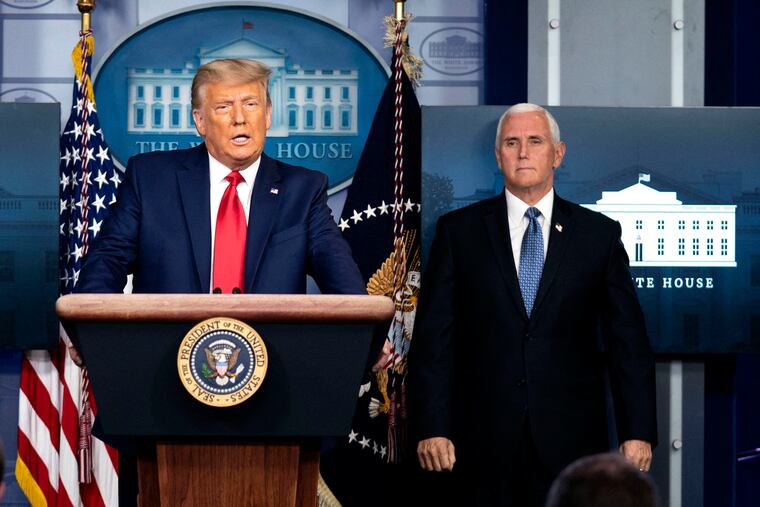
At its core, the national discussion over the 25th Amendment has forced Americans to revisit fundamental questions about how the country determines presidential fitness, how much discretion the Constitution actually affords, and what role elected officials should play in adjudicating such profound issues.
Whether the current debate will coalesce into formal action — with Cabinet members independently agreeing to invoke Section 4 — remains uncertain. What is undeniable is that discussion of the amendment has gone from rare academic sidebar to front-page debate, placing constitutional safeguards under intense public scrutiny for the first time in generations.
As lawmakers wrangle over impeachment and executive authority, the nation faces one of the most consequential constitutional conversations in modern history — a debate not about ideology, but about the mechanisms that protect the Republic when its highest office is in question.