How Trump’s “Stable Genius” Became Late Night Television’s Most Reliable Punchline
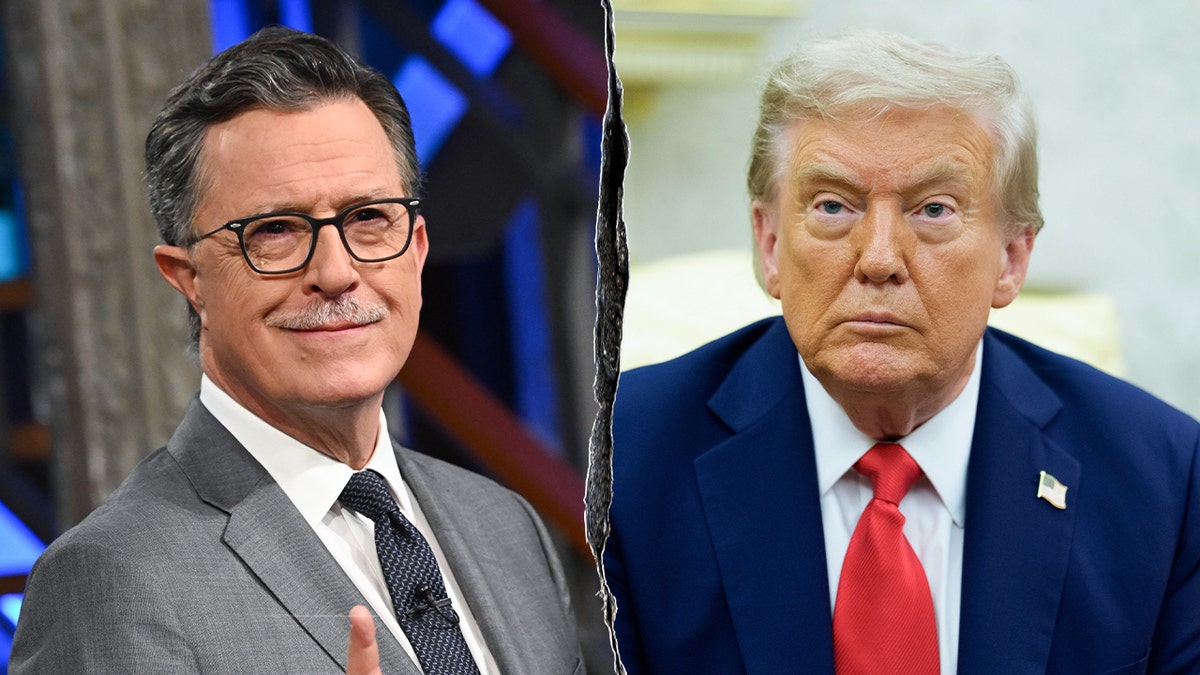
For nearly a decade, Donald Trump has insisted—loudly, repeatedly, and publicly—that he is exceptionally intelligent. In response, late-night comedy, led most prominently by Stephen Colbert, has turned that insistence into one of American television’s most enduring satirical themes.
Donald Trump has never been shy about self-praise. Long before he entered politics, he cultivated an image built on dominance, success, and personal brilliance. But no claim has been repeated more often—or scrutinized more relentlessly—than his assertion that he possesses an unusually high IQ.
From social media posts to press conferences, Trump has described himself as “very smart,” “mentally stable,” and ultimately, a “very stable genius.” These declarations were not delivered quietly or defensively; they were broadcast as facts. And in modern American culture, few things invite satire faster than a boast delivered without irony.
That is where Stephen Colbert enters the story.

The Birth of a Political Catchphrase
In January 2018, amid questions about his temperament and fitness for office, Trump took to social media to defend himself. “Throughout my life, my two greatest assets have been mental stability and being, like, really smart,” he wrote. He then concluded that moving from businessman to television personality to president “would qualify as not smart, but genius.”
The phrase “very stable genius” immediately entered the political lexicon.
Within hours, Colbert opened The Late Show with disbelief thinly veiled as gratitude. A sitting president had not only declared himself a genius, but had done so in language that practically begged for parody. Colbert joked that a “stable genius” sounded less like a philosopher and more like someone “smart enough to live in a barn.”
The laughter was not merely about wordplay. It was about a deeper cultural understanding: truly intelligent people rarely need to announce their intelligence. They demonstrate it.
When Intelligence Became a Performance
Trump’s fascination with IQ predates his presidency. In 2013, he famously tweeted, “Sorry losers and haters, but my IQ is one of the highest—and you all know it.” The message was not evidence-based, nor was it addressed to any specific critic. It was a declaration meant to assert dominance.
That pattern continued in office. When reports surfaced that then–Secretary of State Rex Tillerson had privately referred to Trump in unflattering terms, Trump suggested resolving the matter by comparing IQ tests. He was serious.
Colbert seized on the moment. “The president wants to have an IQ-off with his own secretary of state,” he said. “This is like challenging your employee to a fight in the parking lot. Even if you win, you lose.”
The joke worked because it reflected an obvious truth: leadership is not measured by test scores, and the desire to prove superiority through metrics often reveals insecurity rather than confidence.
“Person. Woman. Man. Camera. TV.”
Perhaps the most defining moment in the saga came in 2020, when Trump described taking a cognitive assessment intended to screen for serious neurological impairment. He repeatedly cited his ability to recall five words—“person, woman, man, camera, TV”—as evidence of extraordinary mental ability.
Colbert responded with restraint rather than exaggeration. He simply repeated the words, paused, and asked his audience whether that now qualified him to be president.
The humor landed precisely because it did not distort reality. Trump had elevated a basic memory test into a public triumph, and comedy merely held up a mirror.
Comedy as Cultural Accountability
Late-night satire has long played a role in American political life, from Johnny Carson to Jon Stewart. But the Trump era created a unique dynamic. Rarely had a president provided such a steady stream of self-generated material—often in his own words, on his own platforms.
Colbert did not invent Trump’s fixation on intelligence. He curated it.
By replaying Trump’s own statements, comedians transformed boasts into questions: Why does power require constant validation? Why does insecurity so often masquerade as confidence? And why does intelligence, when claimed too loudly, become suspect?
Trump responded predictably, attacking Colbert as “untalented” and “unfunny.” Those attacks, in turn, became new material. The cycle fed itself.
Why the Joke Endures
What makes the “stable genius” narrative persist is not simply humor, but relevance. It taps into a broader conversation about leadership in the modern media age.
In an era dominated by branding, social media, and personal mythmaking, Trump treated intelligence as a product to be marketed. Late-night comedy treated it as a claim to be examined.
Colbert’s most effective moments were not his sharpest insults, but his quiet observations: that Einstein never had to announce his brilliance, that Lincoln did not tweet about IQ scores, and that competence rarely demands applause.
The laughter, in that sense, served as a form of public reasoning.
A Reflection of the Times
Every quote in this ongoing exchange is documented. Every joke traces back to a real statement. The comedy works because it does not exaggerate; it contextualizes.
Trump’s insistence on his own genius was meant to project strength. Instead, it exposed a vulnerability that satire could not ignore. And once exposed, it became part of the cultural record.
As long as political power intersects with personal branding, and as long as leaders attempt to substitute declaration for demonstration, late-night comedy will remain ready to respond.
The “stable genius” saga did not end with a punchline. It became a case study—one that revealed how authority, insecurity, and humor collide in modern American life.
And in that collision, laughter often tells the truth first.