Trump, Oil Executives, and a Press Conference That Laid Bare the Presidency’s Fault Lines
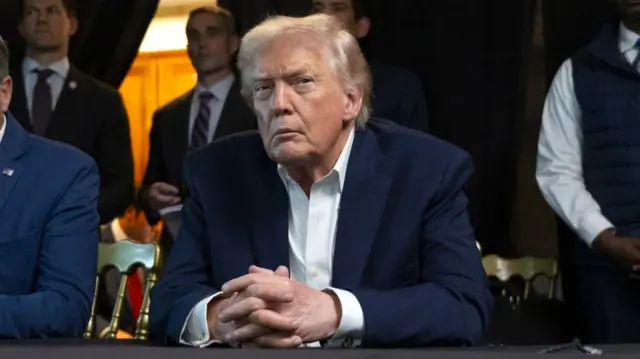
Washington — What was intended to be a routine press appearance alongside senior oil executives on Friday instead evolved into a revealing portrait of a presidency under strain, as President Donald Trump delivered a rambling, at times incoherent performance that immediately ricocheted across American social media and reignited debate about governance, credibility, and the fusion of private corporate interests with public power.
The event, held at the White House, featured executives from major energy companies with investments or ambitions tied to Venezuela, a country whose oil reserves have long attracted U.S. corporate interest amid political instability. But rather than a tightly managed message on energy policy or national security, the president veered repeatedly off script — misreading a private note, repeating disputed election claims, and issuing provocative remarks about foreign nations — prompting widespread scrutiny.
Within minutes, clips of the press conference spread rapidly across X, YouTube, and TikTok, amplified by prominent political commentators and journalists. Hashtags related to the event trended nationwide, with reactions ranging from disbelief to alarm.
A Private Note, Read Aloud
Perhaps the most striking moment came when Mr. Trump, appearing to drift from prepared remarks, read aloud a handwritten note passed to him by Senator Marco Rubio, who was standing nearby.
“Marco just gave me a note,” the president said, before proceeding to read instructions directing him back to a conversation with executives from Chevron.
The senator’s visible discomfort, captured on camera, became an instant viral image — widely shared as a symbol of a breakdown in message discipline at the highest level of government. Political analysts noted that such moments, while seemingly minor, carry deeper implications.
“In modern presidencies, control of information is power,” said one former White House communications official, speaking on condition of anonymity. “When that control collapses publicly, it raises questions not just about competence, but about who is actually steering policy.”
Venezuela, Security Guarantees, and Public Resources
During the press conference, Mr. Trump confirmed that security guarantees would be provided to oil executives operating in Venezuela — a statement that quickly drew criticism online.
Civil society groups and foreign policy commentators questioned whether U.S. taxpayer resources could now be used to protect private extraction efforts abroad, particularly in a country with a history of human rights concerns and political repression.
The administration has not clarified the scope or legal basis of such guarantees.
Renewed Claims About Minnesota
The president also reignited long-standing controversies surrounding U.S. elections, asserting that Minnesota — a state he has never won — was “very corrupt” and that he believed he had carried it in all three of his presidential campaigns.
Election officials and independent fact-checkers have consistently rejected such claims, noting that Minnesota has not voted for a Republican presidential candidate since 1972.
On social media, the remarks were interpreted by many as a signal of renewed pressure for restrictive voting measures, including voter ID laws and changes to mail-in and early voting systems.
“These comments matter,” wrote one constitutional law professor on X. “They are not just rhetorical. They shape how power is justified.”
Foreign Policy Rhetoric: Greenland and Iran
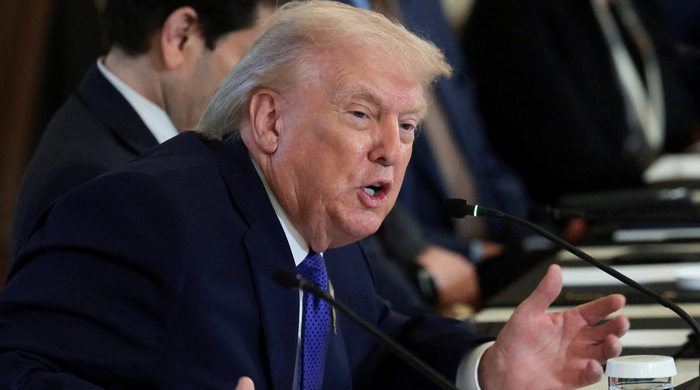
Mr. Trump also doubled down on past remarks regarding Greenland, suggesting that U.S. control of the territory was necessary to prevent influence from China or Russia — comments that again strained diplomatic norms.
Later, he warned Iranian leaders not to “start shooting,” adding that the United States would respond in kind — a statement made just days after domestic controversy surrounding an ICE shooting that resulted in the death of a U.S. citizen.
Critics online highlighted the contradiction between condemning violence abroad while defending aggressive enforcement actions at home.
Windmills, Jobs, and the Economy
In an extended digression, the president launched into a familiar tirade against wind energy, calling windmills “losers,” “made in China,” and vowing to approve no new wind projects during his term.
Energy analysts were quick to note that wind power constitutes a significant and growing share of U.S. energy production, particularly in Republican-led states.
The president also dismissed concerns about a newly released jobs report, describing it as “amazing” despite data indicating slowing employment growth — a characterization that economists on social media labeled misleading at best.
A Ballroom and a Presidency
Near the end of the event, Mr. Trump abruptly stood up to admire the White House ballroom under construction, boasting of bulletproof glass and “drone-proof ceilings,” and suggesting it could host a future inauguration.
The remark fueled online speculation about whether the president was envisioning another term, despite constitutional limits.
While supporters praised his confidence, critics viewed the moment as emblematic of a presidency increasingly detached from institutional norms.