When Special Counsel Jack Smith entered a closed-door deposition demanded by House Republicans, the political world expected a clash. What unfolded instead was a rare display of procedural discipline, prosecutorial restraint, and an unexpectedly sharp reversal for GOP investigators who had hoped to corner the veteran prosecutor. According to video released on New Year’s Eve—a timing widely seen by analysts as an attempt to bury the story—Smith’s testimony revealed conflicting instructions, shifting legal constraints, and a strategic miscalculation by lawmakers allied with former President Donald J. Trump.

The deposition itself took place under unusual conditions. Weeks earlier, Republicans had issued a subpoena compelling Smith to testify about his investigation, including the classified-documents case involving Mr. Trump. Smith responded with a counteroffer: he would appear publicly, for as long as necessary, and answer questions in an open setting. House Republicans rejected the proposal, choosing instead a private video deposition—later leaked—where they could control the narrative. “They didn’t want the optics,” one congressional aide familiar with the planning said, indicating concerns within the GOP that Smith’s experience and command of legal detail might expose inexperienced questioners.
The tension escalated an hour before the session began. Smith’s team received a last-minute email from the Department of Justice notifying him that Judge Aileen Cannon’s January 2025 order prohibited disclosing any non-public information from Volume II of his report, including interview transcripts, search warrants, business records, toll records, grand jury materials, and other investigative documents. The DOJ provided no additional clarification about which elements were considered publicly available. More strikingly, it refused to send a department lawyer to the deposition to intervene if questions broached restricted material—despite Smith’s request.
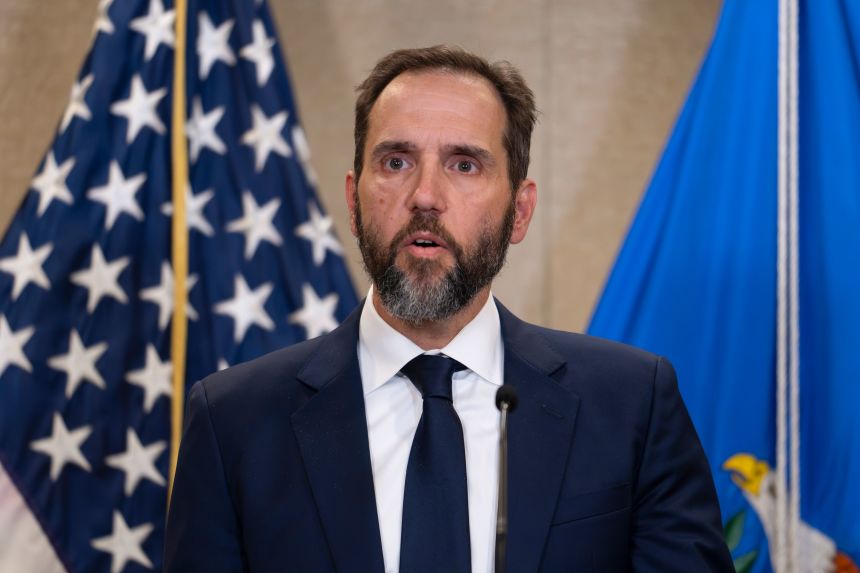
The result, as captured on the recording, was a legal paradox: House Republicans compelled Smith to testify yet simultaneously placed him in a position where answering certain questions risked violating an active court order. “You subpoena me to speak, then block what I can say,” Smith’s counsel stated in the deposition, characterizing the set of constraints as functionally unworkable. The moment became a centerpiece of online discussions once the footage began circulating, with many observers noting the unusual and potentially untenable position in which Smith was placed by dueling political and legal authorities.
Legal analysts who reviewed the video have described it as a near textbook example of what they call a “procedural trap”—a scenario where a witness may be exposed to accusations of misconduct not through substantive answers but through unavoidable ambiguity. Harry Litman, a former U.S. attorney and prominent legal commentator, called the setup “perilous,” emphasizing that any misstep could have allowed House Republicans to refer Smith for disciplinary action, despite the lack of clarity provided to him.
Yet none of those risks seemed to materialize during the deposition itself. Smith appeared composed, understated, and meticulously prepared. Several times he spoke so softly that committee staffers asked him to raise his voice. This restraint, legal experts said, is typical of career prosecutors but stood in stark contrast to the heated political tone of many committee proceedings.
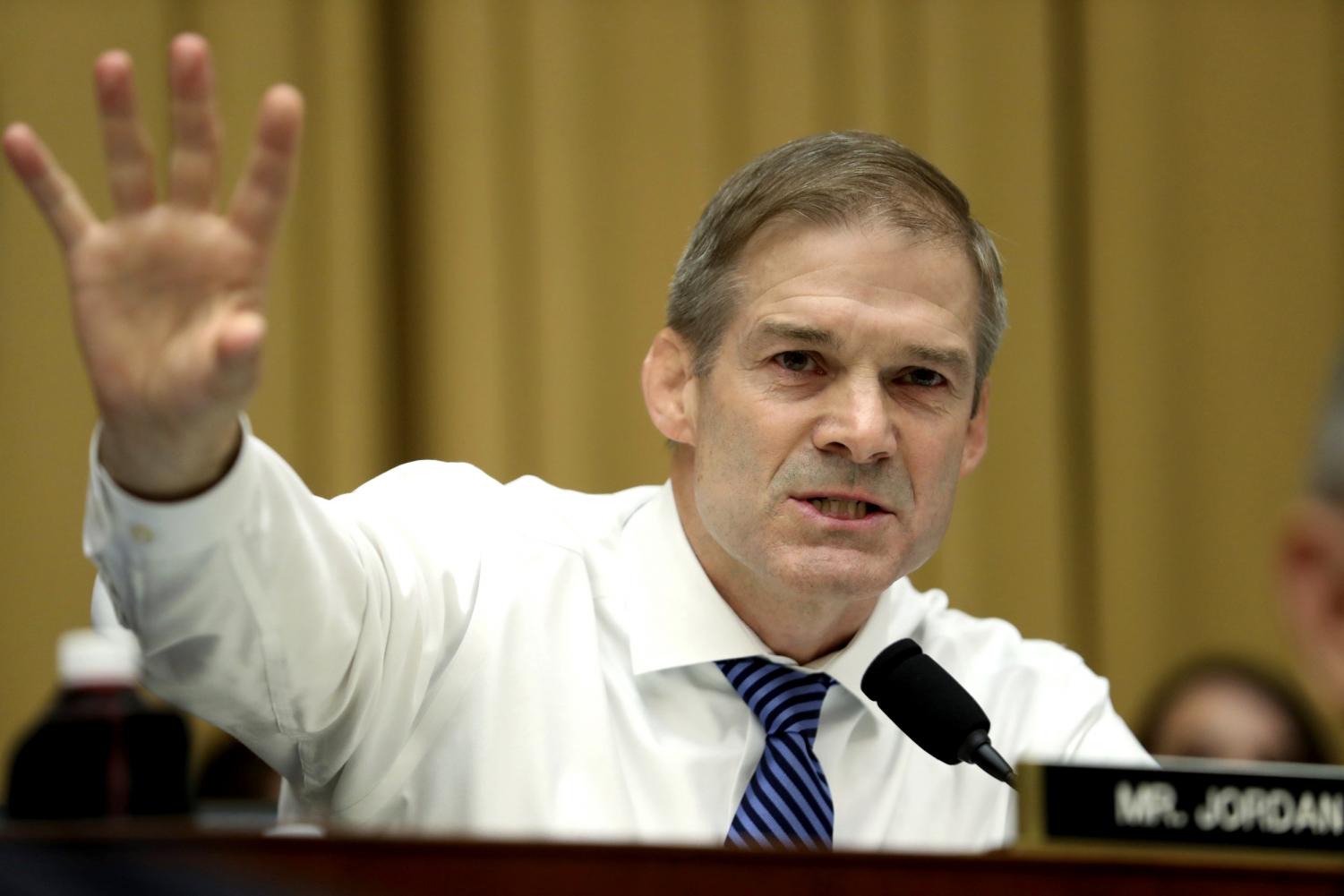
By the end of the session, Republicans had gained little. Smith declined to speculate, refused to comment on non-public materials, and reiterated that federal prosecutors are ethically bound to pursue charges only when they believe evidence establishes guilt beyond a reasonable doubt. He stated plainly that he had reached that conclusion regarding Mr. Trump—an assertion that, while unsurprising for legal professionals, was quickly amplified across social media platforms.
The timing of the video release—5 p.m. on New Year’s Eve—raised questions among political strategists. Several Democratic aides suggested that the GOP sought to minimize public attention by releasing the footage during a holiday lull. If that was the intent, it quickly backfired: the clip circulated widely, with millions of views reported within the first 24 hours. Within legal circles, the deposition is already being discussed as a case study in how procedural maneuvers can falter when applied against a witness intimately familiar with federal rules.

Beyond the immediate political implications, the episode underscores broader concerns about congressional oversight mechanisms being used for partisan objectives. Judge Cannon’s year-long delay in handling the underlying materials, the absence of DOJ participation in the deposition, and the unusual timing of the release have all fueled speculation about internal coordination among Mr. Trump’s allies and sympathetic agencies.
For now, the deposition stands as a snapshot of a moment when the goals of lawmakers, prosecutors, and the judiciary collided—each operating under different obligations and political pressures. Whether the incident will have long-term consequences for the House investigation remains unclear. But the footage has become a historical record of an attempted confrontation that did not unfold as planned.
As the eight hours of testimony continue to circulate online, legal experts, political operatives, and everyday viewers are dissecting each exchange. The story, it seems, is far from over.