Jack Smith’s Testimony and the Unfinished Question of Accountability
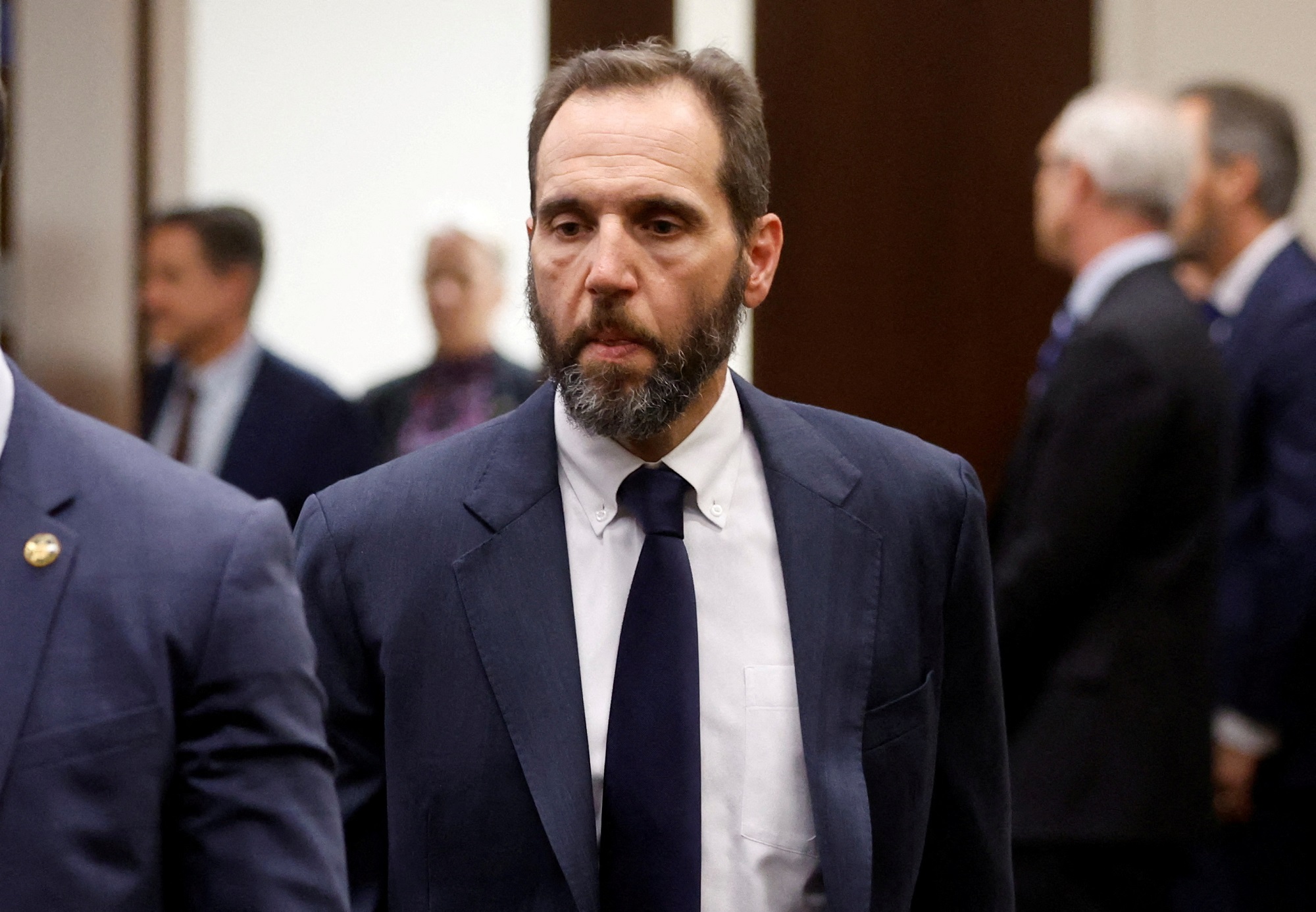
Washington — When Jack Smith appeared behind closed doors on Capitol Hill, he did so under conditions few former special counsels have ever accepted. He testified under oath before a congressional committee openly skeptical of his work, answering pointed questions about one of the most consequential prosecutions in American history: the criminal case against a former president who has since returned to office.
The appearance was neither symbolic nor theatrical. It was procedural, formal, and legally binding. Smith did not invoke executive privilege, did not decline to answer, and did not seek shelter behind prepared statements. Instead, he answered questions directly, fully aware that every word would be scrutinized for legal exposure on both sides of the aisle.
In doing so, Smith placed his prosecutorial decisions into the official congressional record — a rare move for a former special counsel and an even rarer one for a prosecutor who charged a former president with crimes carrying substantial prison exposure.
Legal analysts across the political spectrum noted the gravity of the moment. As former federal prosecutors explained on MSNBC and CNN, sworn congressional testimony is not a media appearance. It binds the witness legally. It also binds Congress institutionally. Once testimony is given under oath, it becomes part of the evidentiary history and cannot be dismissed as opinion or partisan narrative.
Smith’s strategy was consistent throughout. He framed his role narrowly and deliberately. He emphasized process over personality, evidence over politics, law over discretion. He did not claim personal judgment. Instead, he repeatedly grounded his answers in indictments, court filings, grand jury proceedings, and longstanding Department of Justice practice.
The charges, Smith stated plainly, were not personal. They were institutional — the result of facts gathered through lawful investigation and reviewed through ordinary criminal procedures.
The Role of the Grand Juries
Central to Smith’s testimony was a point often blurred in public debate: prosecutors do not indict presidents by instinct or ideology. They present cases to grand juries. Citizens decide whether charges proceed.
In this case, multiple grand juries — convened at different stages, reviewing different aspects of the evidence — independently found probable cause to indict. That step, Smith emphasized, matters. It removes unilateral control from prosecutors and anchors charging decisions in citizen judgment.
According to Smith, the grand juries reviewed evidence related to pressure on state officials, the creation of false elector slates, efforts to obstruct the certification of electoral votes, and attempts to manipulate the vice president’s constitutional role. They heard testimony, examined documents, reviewed timelines, and evaluated corroboration.
They returned indictments.
Those indictments have not been dismissed on the merits. They have not been overturned by courts. They have not been rejected as legally insufficient. They remain formal statements of alleged criminal conduct, frozen in place by policy rather than invalidated by law.
That distinction, Smith stressed repeatedly, is critical.
Evidence and Legal Thresholds

Smith stated unequivocally that the evidence met the criminal standard of proof — not marginally, but with what he described as substantial margin. He emphasized that each charge was supported by admissible evidence, including documents, contemporaneous records, and testimony from witnesses close to Donald Trump: advisers, lawyers, state officials, and individuals who testified that Trump had been informed repeatedly that his claims of election fraud were false.
Prosecutors, Smith explained, do not file cases of this magnitude lightly. They conduct internal stress tests, evaluate anticipated defenses, and assess post-verdict survivability on appeal. In his assessment, the case was built not only to win at trial but to withstand appellate review.
That view was echoed by numerous former Justice Department officials in public commentary, many of whom noted that prosecutors rarely proceed against powerful defendants without confidence in evidentiary sufficiency.
Smith made clear that the decision not to continue prosecution was not driven by doubt about guilt or weakness in evidence. It was driven by timing — specifically, Donald Trump’s return to office.
The Policy That Halted Prosecution
At the center of the case’s abrupt end lies a longstanding Department of Justice policy: a sitting president cannot be criminally prosecuted. The doctrine is not statutory. It is an internal rule designed to preserve executive branch functionality and prevent judicial incapacitation of the presidency.
Once Trump won the election, Smith testified, the policy became mandatory. The prosecution halted immediately — not because a court intervened, not because evidence failed, but because institutional rules required it.
Smith was careful with language. He did not say the case was lost. He did not say Trump was cleared. He said exoneration never occurred.
In legal terms, exoneration requires a verdict, a judicial finding, or a dismissal on the merits. None of those happened. The case was frozen midstream for procedural reasons, leaving the underlying allegations untested and unresolved.
Trump’s public claims of “total vindication,” Smith testified, do not align with the record.
Allegations of Conspiracy
At the core of the charges, Smith described an alleged criminal conspiracy — not political speech, not advocacy, but coordinated action aimed at obstructing the lawful transfer of power.
Conspiracy law, Smith explained, focuses on agreement and action, not success. The evidence, as outlined in indictments and testimony, showed planning, coordination, pressure campaigns, and execution. State officials were contacted and asked to alter outcomes. False elector certificates were drafted. Meetings were held. Timelines were established.
The objective, Smith said, was to disrupt certification, delay finality, and remain in power despite losing the election.
Legal scholars noted that the certification of electoral votes is a formal federal proceeding. Interference with it carries criminal exposure. Intent and action, not outcome, define liability.
Smith emphasized that the alleged conduct went beyond rhetoric and grievance into operational interference — a distinction courts have repeatedly recognized.
Unresolved Accountability

Smith acknowledged, implicitly, the strain this outcome places on the legal system. The courts did not fail. The juries were never heard. The process stopped before judgment.
The result is unresolved accountability — a case built, charged, and prepared for trial, then halted by institutional policy rather than legal insufficiency.
That tension — between law and power, procedure and office — now sits on the official record.
As commentators across major media outlets observed, the case illustrates how legality and institutional restraint can coexist with unresolved justice. The law acted. The system followed its rules. Yet judgment never came.
For now, the evidence remains cataloged. The indictments remain untested. And the question of accountability remains deferred — not answered by courts, but paused by policy.
Whether that pause strengthens or weakens the rule of law is a question the system has yet to resolve.