Jimmy Kimmel vs. JD Vance: How a Late-Night Monologue Exposed a Chilling Threat to Free Speech
When a sitting vice president attempts to gaslight an entire nation about government censorship — and a late-night comedian responds by comparing his approval ratings to chlamydia — it’s a clear sign that American politics has entered extraordinary territory.
What unfolded in late September 2025 between Jimmy Kimmel and Vice President J.D. Vance was not a celebrity spat or partisan theater. It was a documented case of government pressure on broadcasters, followed by a coordinated denial campaign, and capped by one of the most brutal and effective rebuttals in late-night television history.
This wasn’t about jokes. It was about power.
The Crisis Begins: A Threat Disguised as Regulation
To understand why Kimmel’s response landed with such force, we need to go back to September 17, 2025.
That morning, FCC Chairman Brendan Carr, a Trump appointee, appeared on a conservative podcast hosted by Benny Johnson. While discussing comments Kimmel had made about the assassination of conservative activist Charlie Kirk, Carr issued what sounded less like regulatory guidance and more like a mob warning.
“We can do this the easy way or the hard way,” Carr said, suggesting broadcasters could “take action” against Kimmel or face “additional work for the FCC ahead.”
That language mattered.
Federal regulators are not supposed to threaten content creators. They are not supposed to hint at retaliation. Yet Carr went further, openly floating the idea of revoking ABC’s broadcast licenses and urging local affiliates to pressure Disney to rein in Kimmel’s show.
Within hours, ABC announced that Jimmy Kimmel Live! would be suspended.
The timeline was undeniable.
:max_bytes(150000):strip_icc()/jimmy-kimmel-jd-vance-093025-6efae9cf3f0e47458758fdc54485d3cd.jpg)
The Chilling Effect Spreads
The consequences rippled quickly. Major broadcast groups including Nexstar and Sinclair announced they would preempt Kimmel’s show indefinitely. Sources inside ABC described Carr’s remarks as a “real, serious threat” to the entire network, not just one comedian.
Benny Johnson celebrated the suspension online. Conservative influencers framed it as accountability. Inside the industry, fear took hold.
This wasn’t cancellation by advertisers. It wasn’t a ratings issue. It was state power flexing against speech.
The DOJ Fallout
As the broadcast controversy unfolded, a separate crisis erupted inside the Department of Justice.
Four senior leaders of the DOJ’s Civil Rights Division resigned in protest after being ordered not to investigate the killing of Renee Nicole Good, but instead to scrutinize the victim’s affiliations. Federal judges from both parties began openly questioning the department’s credibility.
The message was becoming clear: dissent would not be tolerated, whether in media or government.
The Return — and the Lie
After six days of mounting pressure from free speech advocates, celebrities, and journalists, ABC announced Kimmel would return on September 23.
That’s when the gaslighting began.
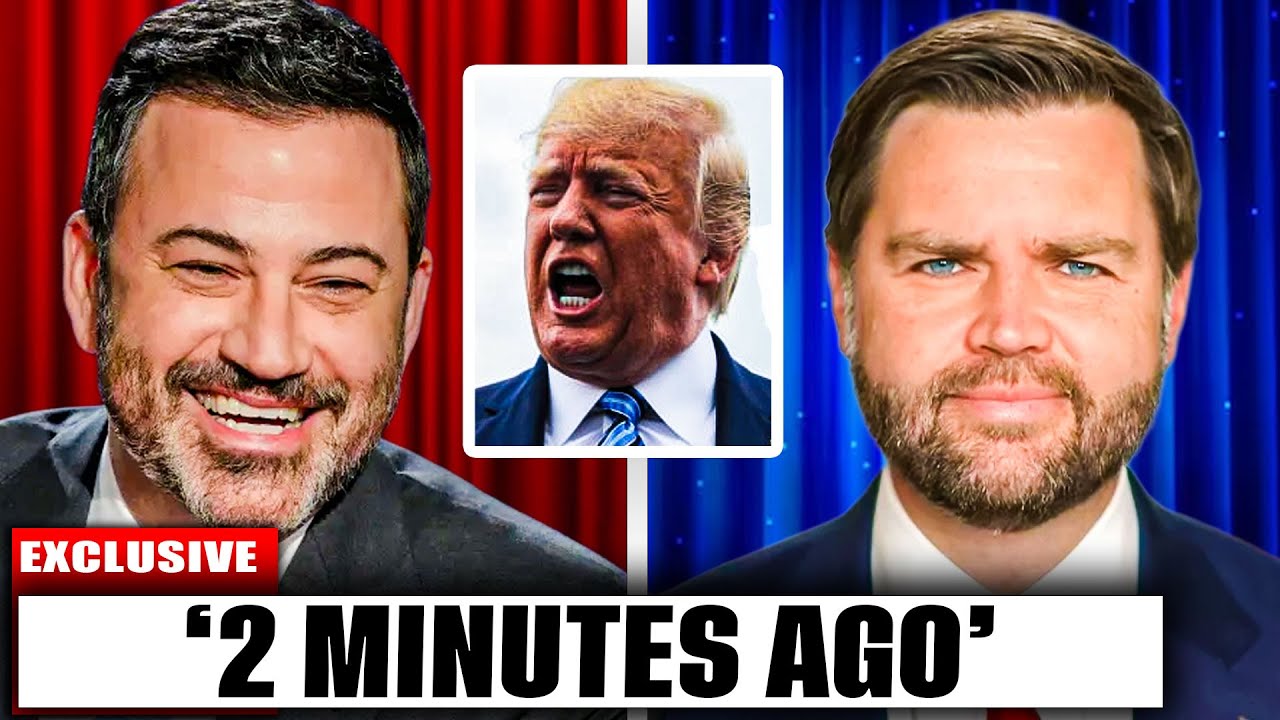
Vice President J.D. Vance went on the media circuit claiming there had been no government pressure whatsoever. According to Vance, Kimmel was never punished — and if some stations dropped the show, it was because “advertisers don’t like him” and “his ratings aren’t very good.”
CNN pressed Vance’s office on why he was spreading demonstrably false claims. Their response was stunning: Vance was simply repeating what he’d heard from “concerned citizens” calling his office.
Calls, apparently, were now evidence.
Kimmel’s Response: Facts, Humor, and Exposure
On September 29 and 30, Jimmy Kimmel responded — not with vague outrage, but with receipts.
He laid out the full timeline. He quoted Brendan Carr verbatim. He named the networks that buckled. He cited internal ABC reporting. And he used humor as a scalpel, not a shield.
When Kimmel compared Vance’s approval ratings to chlamydia, it wasn’t just a punchline. It was a reminder that authoritarian tactics are unpopular, especially when exposed to daylight.
More importantly, Kimmel showed viewers how censorship actually works in modern America — quietly, bureaucratically, and then denied with a straight face.
The Numbers Don’t Lie
When Kimmel returned to air, 6.3 million viewers tuned in, making it the most-watched episode in the show’s history. The claim that his suspension was about ratings collapsed instantly.
Yet Nexstar and Sinclair still refused to restore the show.
That contradiction said everything.
Why This Story Matters
This episode revealed a dangerous truth: free speech doesn’t disappear overnight. It erodes through threats, regulatory intimidation, and plausible deniability.
An FCC chairman doesn’t have to revoke a license. He only has to suggest that he might.
A vice president doesn’t have to order censorship. He only has to deny it convincingly enough for his supporters to believe it never happened.
And that’s where comedians, journalists, and public accountability still matter.
The Bigger Picture
Late-night comedy has always played a role in American democracy, but moments like this show why it remains essential. Kimmel did what institutions failed to do: he documented the abuse, named the actors, and made the truth accessible to millions.
When government officials can threaten broadcasters into silence and then claim it never happened, democracy depends on those willing to say, publicly and loudly, “No. Here’s what you did.”
This wasn’t just a feud. It was a warning.
And it proved something else too: intimidation collapses when it’s dragged into the light.