Jimmy Kimmel’s Calm Takedown Exposed a Deeper Weakness in Trump’s Media Strategy
Why One Late-Night Segment Landed Harder Than a Thousand Insults
Donald Trump has never treated comedy as harmless. To him, late-night jokes are not background noise — they are personal attacks. When comedians laugh at him, he responds the same way he responds to political criticism: with public insults designed to reclaim attention and reassert dominance.
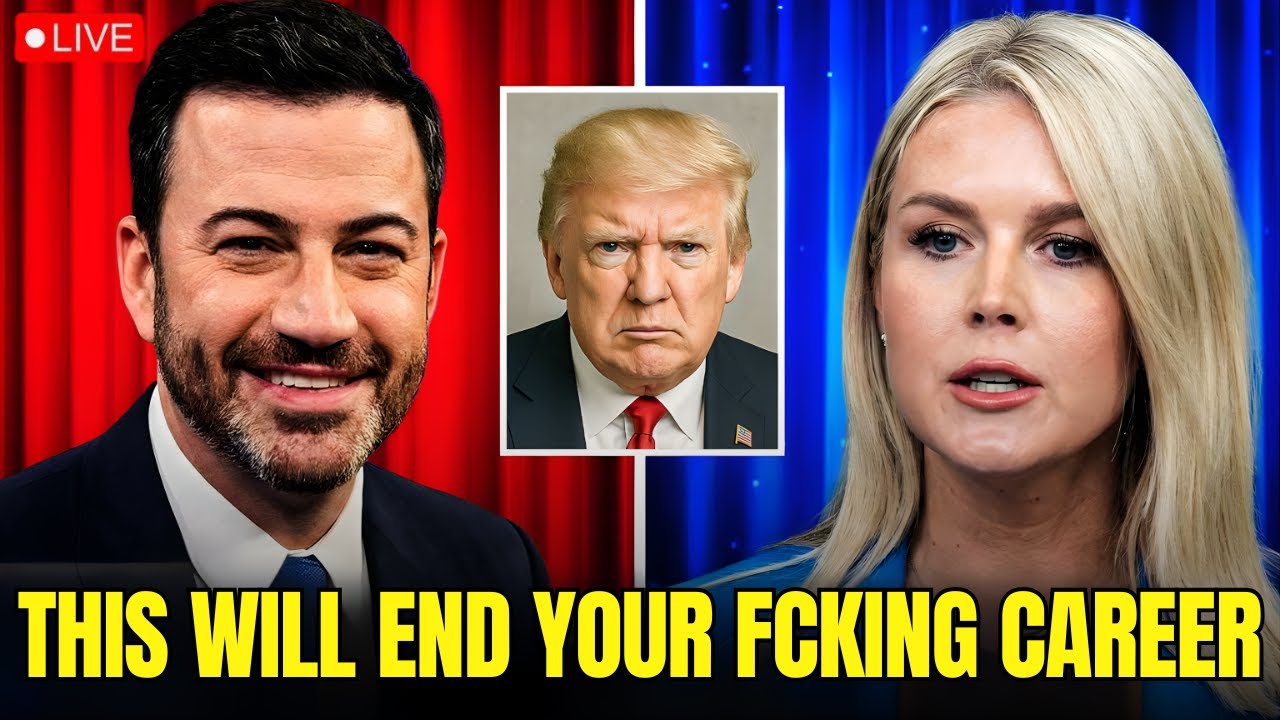
That reflex collided this week with an unexpected target. Not Trump himself, but his press secretary, Karoline Leavitt, became the focus of a segment on Jimmy Kimmel Live. What followed was not a shouting match, not a viral confrontation, and not a theatrical meltdown.
It was something far more unsettling for a media strategy built on outrage: a calm, methodical exposure of a communication tactic.
A Segment Built on Replay, Not Rage
Kimmel opened the segment in his usual understated tone. No theatrics. No monologue fireworks. Just a reminder of what a press secretary’s job actually is: to answer questions, not replace them with slogans.
He then played a short montage of recent White House briefings and headlines, pausing after each clip — the way a teacher pauses after a wrong answer — letting the audience process the gap between what was said, what was later claimed, and what the public record showed.
The joke, repeated across coverage, was that Leavitt might be worse than Sean Spicer — not because of volume or aggression, but because of how confidently she defended obvious contradictions.
One clip stood out. Leavitt insisted that the decision to cancel Jimmy Kimmel’s show came from ABC executives alone, emphasizing that she knew this for a fact because she was “with the president when the news broke.”
Kimmel didn’t argue. He didn’t mock her personally. He simply let the contradiction sit.
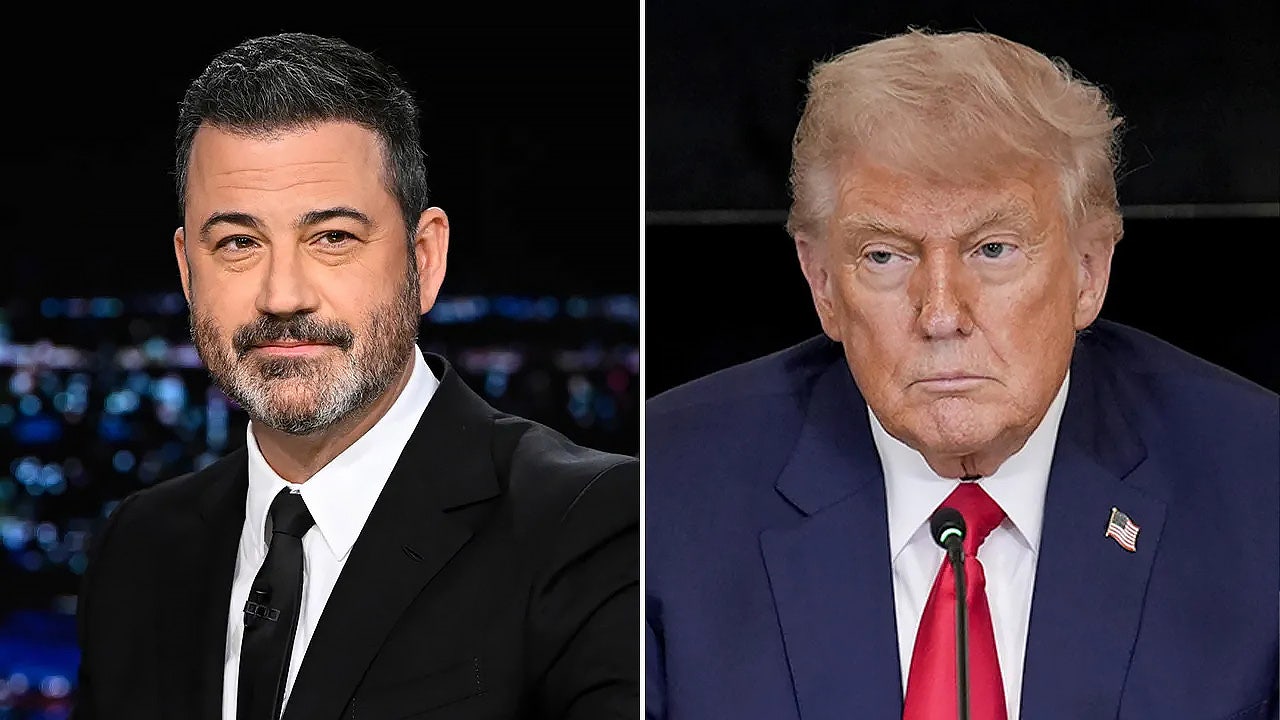
That was the point.
A Simple Test That Went Viral
Kimmel framed the entire segment around a test viewers could apply themselves — without trusting him, without trusting the media, without trusting politicians.
-
What was said?
-
What was later claimed?
-
What does the public record show?
“If a statement can’t survive a replay,” Kimmel said, “it isn’t information. It’s marketing.”
The studio laughed — and then applauded. Because the message wasn’t partisan. It wasn’t even ideological. It was procedural.
When an administration calls every question “fake,” Kimmel observed, it’s really admitting it doesn’t want to answer any.
That line spread rapidly online, not because it was cruel, but because it was clean.
Why the Usual Counterattack Didn’t Work
Within hours, the predictable response followed.
Supporters attempted to inflate the moment into a fake controversy, reviving long-debunked stories claiming Kimmel once kicked Leavitt off his show after a confrontation — narratives already dismissed by fact-checkers.
Trump himself responded the way he always does: with volume. He labeled Kimmel a “propaganda clown,” praised Leavitt as “brilliant,” and insisted the segment proved the media feared him.
It wasn’t a rebuttal. It was a flood.
But something different happened this time.
Kimmel didn’t engage.
The following night, he addressed Trump’s posts in a single sentence:
“If the segment was meaningless, why spend the entire day screaming about it?”
Then he moved on.
No extended feud. No back-and-forth. No oxygen.
Leavitt’s Response and the Frame She Couldn’t Escape
At the White House podium, Leavitt dismissed the monologue as “Hollywood misinformation,” urged viewers to ignore comedians, and pivoted back to policy announcements.
But the frame had already shifted.
The conversation was no longer about comedy versus politics. It was about whether a public official can treat basic verification as hostility.
Even critics acknowledged that Leavitt is capable of restraint when circumstances demand it. After a high-profile Minneapolis shooting, she called the death a tragedy and urged investigators to proceed — avoiding the incendiary rhetoric used by other Trump advisers.
That moment stood out precisely because it lacked fireworks.
Which made the contrast sharper.
What Actually Snapped
There was no thrown object. No live meltdown. No viral shouting match.
What cracked was something quieter: the impatience of a brand that depends on controlling the frame, confronted by a frame it couldn’t command.
Kimmel didn’t expose a scandal. He exposed a method.
Repeat. Deflect. Accuse. Exhaust the audience. Move on.
That method works only if people stop checking.
And that’s why the segment traveled.
It offered viewers an alternative to outrage: a checklist, a replay button, and permission to stay calm.
Why Calm Is More Dangerous Than Anger
Outrage fuels Trump’s media ecosystem. Anger creates loyalty, tribalism, and constant engagement. Calm does none of that.
Calm invites scrutiny.
A calm audience doesn’t cheer — it checks. And a checking audience becomes dangerous to any communication strategy built on volume and repetition.
That is why this moment lingered longer than most late-night jokes. Not because it destroyed anyone, but because it reminded viewers that truth doesn’t need to shout.
For a political operation that measures power in attention and dominance, nothing is more destabilizing than attention that refuses to be steered.
The Takeaway
Jimmy Kimmel didn’t “take down” Karoline Leavitt.
He didn’t need to.
He showed how to listen carefully, replay statements, and let contradictions speak for themselves. He demonstrated that calm questions can land harder than screaming accusations.
And in doing so, he exposed a vulnerability that insults can’t fix:
a strategy that collapses when the audience stops reacting and starts observing.
In an era addicted to outrage, that may be the most disruptive act of all.