Trump Faces Mounting Judicial Revolt as Dozens of Rulings Ignite Fears of a Nationwide Constitutional Crisis
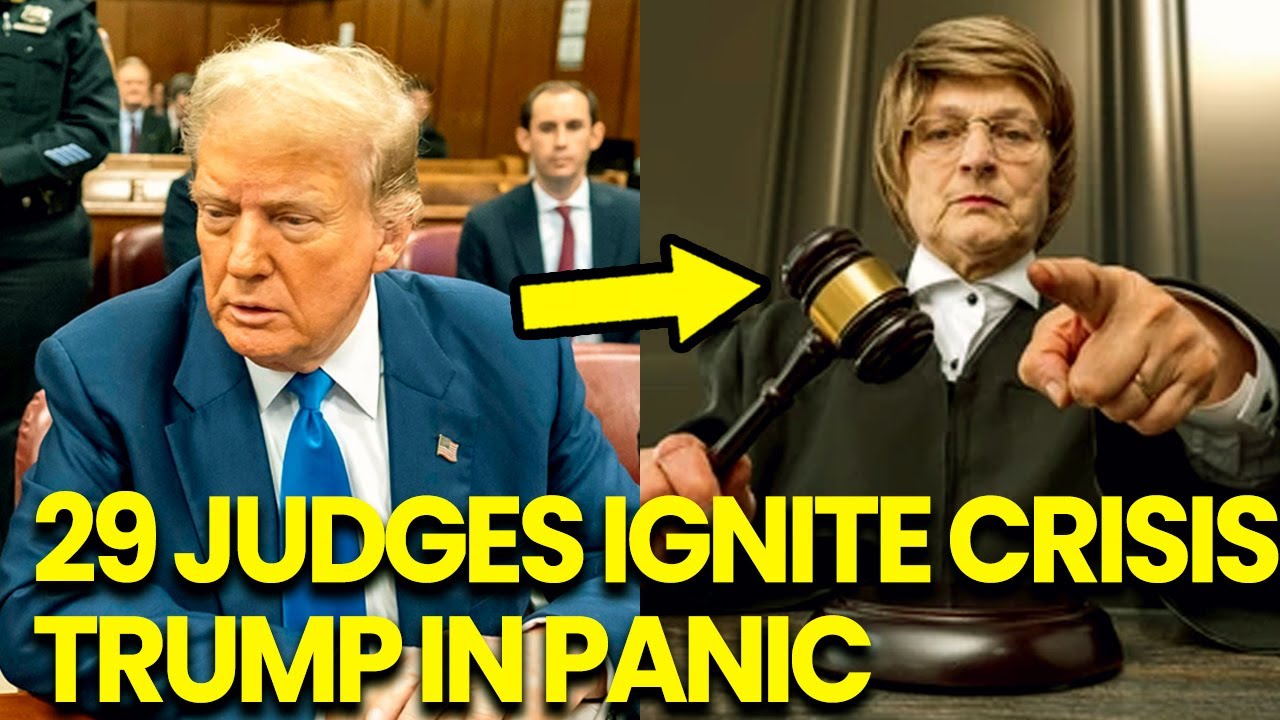
President Donald Trump is confronting an escalating clash with the federal judiciary as judges across the country repeatedly block key elements of his second-term agenda, triggering warnings from legal scholars that the United States may be drifting toward a constitutional crisis. While a viral claim that “29 judges voted to convict Trump” is false, it gained traction because it reflects a deeper and very real pattern of judicial resistance.
Since returning to office, Trump has pushed aggressively on immigration enforcement, protest restrictions, and expanded executive authority—often through sweeping executive orders. Almost immediately, federal judges in multiple districts and circuits issued nationwide injunctions halting those policies, ruling that they likely violate the Constitution or federal law. The scale and speed of the pushback has been striking, cutting across geography and ideology.

The White House response has been unusually combative. Administration officials have accused district judges of abusing their power and claimed that the “real constitutional crisis” lies within the judicial branch itself. Senior aides, according to multiple reports, are openly bristling at court orders that have frozen Trump’s initiatives, raising alarm about whether the administration will continue to comply with unfavorable rulings.
At the heart of the controversy is the growing use of nationwide injunctions, a legal tool that allows a single federal judge to block a policy across the entire country. Trump and his allies argue this represents judicial overreach, claiming unelected judges should not be able to stop a president’s agenda nationwide. Critics counter that constitutional rights should not depend on geography and that unlawful policies must be halted everywhere, not just in select districts.

The viral “29 judges” narrative resonated because appellate courts often rule in panels—three judges at a time, or larger en banc panels of 11 or more. In case after case, different panels in different circuits have reached similar conclusions: Trump overstepped his authority. Add those judges together across immigration, protest, and executive power cases, and the cumulative rebuke becomes impossible to ignore.
Some of the language coming from the courts has been unusually severe. The Fourth Circuit, for example, described administration conduct as “shocking,” warning that the executive and judicial branches were grinding dangerously against one another in a way that could diminish both. Legal experts note that such blunt language is rare and signals deep concern about institutional stability.
Rather than recalibrating, Trump has doubled down—attacking judges as activists, questioning their legitimacy, and hinting that court orders themselves may be the problem. Analysts warn that this rhetoric risks laying the groundwork for defiance: if a president openly ignores a federal court ruling, the judiciary has no army to enforce its decisions, pushing the system into uncharted territory.
The stakes extend far beyond Trump. If judicial authority is weakened or ignored now, that precedent would empower future presidents of any party to sidestep court oversight. What is unfolding is not just a series of legal defeats, but a stress test of America’s checks and balances—one that may determine whether constitutional limits on executive power endure or erode in the years ahead ⚖️🔥