MAGA Republicans Block Public Testimony From the Clintons on Epstein — While Donald Trump Refuses to Testify Under Oath
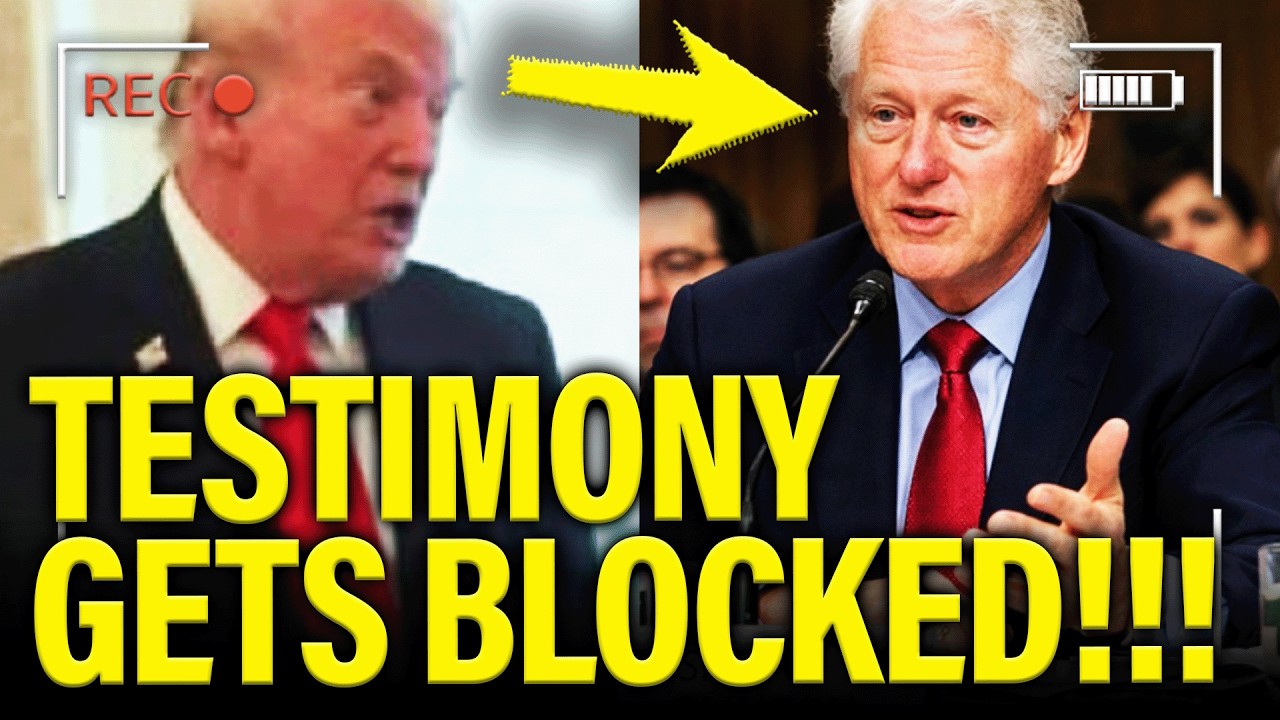
In a move that is sending shockwaves through Washington, Donald Trump and MAGA Republicans are now actively blocking former President Bill Clinton and former Secretary of State Hillary Clinton from testifying publicly about Jeffrey Epstein and the Epstein files — even as Republicans continue to insist that the scandal is “all about the Clintons.”
The reversal has exposed a political strategy that many observers say is rapidly backfiring.
For months, Republican leaders claimed that transparency was their goal. But now, as the Clintons openly demand to testify under oath, in public, on live television, MAGA leadership is suddenly arguing that public hearings are unnecessary — and even undesirable.

Clintons Say “Cameras On.” MAGA Says “Behind Closed Doors.”
Bill Clinton has stated repeatedly that he is willing to answer any questions related to Epstein. Hillary Clinton went further, calling for a fully public congressional hearing, stating plainly:
“If you want this fight, let’s have it in public. Cameras on. We will be there.”
Instead of welcoming that transparency, House Oversight Chairman James Comer announced that any testimony would take place in closed-door depositions, with the committee deciding later what — if anything — the public would be allowed to see.
Critics immediately questioned the logic:
Why block public testimony from witnesses who are volunteering to testify under oath?
Trump’s Name Dominates the Epstein Files
The controversy is magnified by one inconvenient fact Republicans have struggled to explain.
According to multiple reports, Donald Trump is referenced tens of thousands of times across thousands of Epstein-related documents already released — and those documents represent only a fraction of the full archive.
Roughly three million pages have been partially released, while estimates suggest millions more documents remain unreleased, possibly totaling 25 to 50 million pages.
Despite this, Trump and his allies continue to insist the investigation has “nothing to do with Trump” — a claim that grows harder to defend as more records surface.
The Transparency Argument Collapses
James Comer has attempted to justify secret depositions by arguing that hearings are “for entertainment,” while depositions are “for substance.”
But congressional historians and legal experts note that public hearings are precisely how Congress has historically handled matters of major national interest, particularly when allegations involve powerful figures and systemic failures.
Public testimony allows:
-
Real-time accountability
-
Direct questioning
-
Public trust
-
Prevention of selective leaks
Private depositions allow:
-
Narrative control
-
Delayed releases
-
Redactions
-
Selective disclosure
That contrast has not gone unnoticed.
If This Is About the Victims — Why Hide the Testimony?
MAGA leaders repeatedly claim the investigation is about justice for Epstein’s victims. Yet survivor advocates have criticized the approach, warning that weaponizing victims’ names while blocking transparency retraumatizes survivors rather than protects them.
If accountability is truly the goal, critics ask, why not allow testimony to occur in the open — where facts cannot be selectively edited or buried?
The Trump Question MAGA Won’t Answer
As pressure mounted, reporters directly asked Republican leaders a simple question:
If Bill Clinton must testify, shouldn’t Donald Trump testify under oath as well?
House Speaker Mike Johnson sidestepped the question, arguing that Trump “answers questions from the press every day” — a statement that drew immediate backlash.
Answering questions at rallies or press gaggles is not testimony.
Testifying under oath carries legal consequences.
The distinction matters.
Trump’s Sudden Defense of Bill Clinton Raises Eyebrows
In an unexpected turn, Trump publicly stated that it “bothers” him that Bill Clinton is being investigated.
He even praised Clinton personally, saying he “liked him” and felt Clinton “understood” him — comments that stunned observers given Trump’s long history of attacking the Clintons.
Critics argue the sudden warmth may reflect fear rather than friendship — concern that truthful, sworn testimony from Clinton could further entangle Trump in the Epstein record.
Selective Accountability and Political Theater
Just days earlier, James Comer led hearings accusing the Clintons of defying subpoenas — despite the fact that the Clintons had already engaged with investigators and were actively negotiating testimony terms.
Now that the Clintons are calling MAGA’s bluff and demanding public hearings, Republicans are retreating behind closed doors.
To many Americans, the message is clear:
-
Public testimony is acceptable — unless it risks implicating Donald Trump.
-
Transparency is encouraged — until it becomes inconvenient.
-
Accountability applies — but selectively.
Why This Strategy Is Backfiring
Republicans initially believed shifting attention to the Clintons would deflect scrutiny from Trump. Instead, it produced the opposite effect.
Now:
-
The Clintons are asking for cameras.
-
Trump is refusing to testify under oath.
-
MAGA is blocking public hearings.
-
The Epstein files continue to grow.
Rather than weakening the Clintons, the strategy has re-centered Trump in the story — exactly where Republicans hoped he wouldn’t be.
The Bigger Question Facing America
This moment is no longer just about Epstein.
It is about whether Congress serves truth or power, and whether the public is entitled to see sworn testimony from political elites whose names appear in one of the most disturbing criminal scandals in modern history.
If public testimony is good enough for some, it must be good enough for all.
And if transparency is the standard, it cannot be optional.
Conclusion
By blocking public testimony from the Clintons while shielding Donald Trump from oath-bound questioning, MAGA Republicans have created a political contradiction that grows harder to defend by the day.
The more they resist public accountability, the louder the question becomes:
What, exactly, are they afraid the American people might see?