The Justice Department is facing one of the most acute institutional crises in its modern history, after senior lawmakers from both parties accused Attorney General Pam Bondi of defying a clear statutory mandate to release records related to Jeffrey Epstein, and a federal judge warned that continued noncompliance could result in contempt sanctions carrying serious criminal penalties.
The confrontation stems from the Epstein Files Transparency Act, a bipartisan law passed in late 2025 and signed by President Donald Trump, which required the Justice Department to release all federal records connected to Epstein’s investigations in a searchable public format by early January 2026. Lawmakers described the measure as an effort to restore public trust by shedding light on Epstein’s network, including potential co-conspirators who were never charged.
That deadline passed without compliance. To date, the department has released less than one percent of the roughly five million documents covered by the law, according to congressional staff estimates. The material made public has been heavily redacted and largely administrative, containing little of the substantive evidence lawmakers expected.
Late Wednesday, Representative Ro Khanna, a Democrat, and Representative Thomas Massie, a Republican, announced they would move to initiate inherent contempt proceedings against Ms. Bondi. In a joint statement, Mr. Khanna called the failure to comply “obstruction of justice,” arguing that Congress’s authority to compel disclosure was being openly disregarded.
“This is not about partisan advantage,” Mr. Massie said in a court filing. “It is about whether the attorney general can simply ignore a law passed by Congress and signed by the president.”
Under House rules, inherent contempt could expose an executive official to daily fines—potentially $5,000 per day after a 30-day grace period—or, in extreme circumstances, detention until compliance is achieved. While rarely used in modern times, the mechanism remains a constitutional tool available to Congress when other enforcement avenues fail.
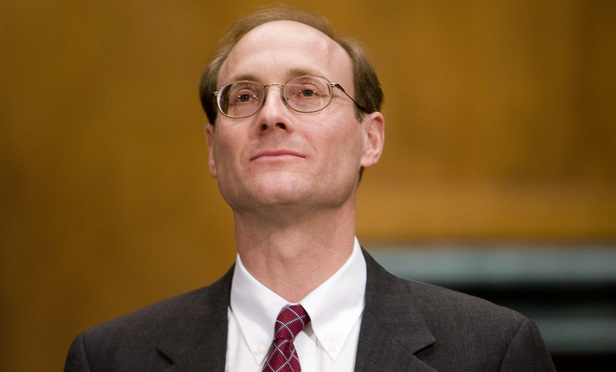
The dispute escalated dramatically during a court hearing this week, when a federal judge overseeing compliance warned that continued delay could amount to criminal contempt. According to courtroom transcripts reviewed by reporters, the judge told Ms. Bondi that obstruction of justice in such a case could carry a prison sentence of 10 to 20 years and ordered the department to demonstrate immediate, concrete progress toward full disclosure.
Justice Department officials have defended the slow release by citing the need to protect victims’ privacy and to review documents for national security concerns. But lawmakers counter that the statute explicitly accounted for those issues, allowing redaction of victims’ names while requiring disclosure of evidence related to perpetrators and facilitators.
“The law was written precisely to prevent this kind of stonewalling,” Mr. Khanna said. “Privacy was not an excuse to bury the truth.”
The political stakes are unusually high. The Epstein files are widely believed to include interview transcripts, flight logs, financial records, and communications detailing Epstein’s relationships with powerful figures in politics and business. Several lawmakers have said, citing court filings and sealed testimony, that some unreleased documents reference interactions involving President Trump, a claim the White House has denied.
The administration has not commented directly on the substance of those allegations, but the president has publicly criticized the Justice Department’s handling of the release, posting on social media that Ms. Bondi had been “disloyal” for allowing the controversy to escalate.
:max_bytes(150000):strip_icc():focal(753x285:755x287)/pam-bondi-jeffrey-epstein-111925-c3ea03a7857440a6b64618ea561997fc.jpg)
Legal analysts say the judge’s warning places Ms. Bondi in an untenable position. If she orders full compliance, the documents could trigger further investigations and political fallout. If she continues to resist, she risks personal criminal exposure and removal from office.
“This is the rare situation where both compliance and noncompliance carry severe consequences,” said a former federal prosecutor who spoke on the condition of anonymity. “That’s why the court’s language matters so much. It signals that delay is no longer an option.”
Adding to the pressure is a sealed court verdict from November 2025 that the judge referenced during the hearing. While details remain confidential, the court suggested that the finding—described as involving evidence handling—could be unsealed if noncompliance continues, potentially compounding Ms. Bondi’s legal exposure.
The controversy has also intensified scrutiny of President Trump as the House moves toward a vote on articles of impeachment later this month. One article centers on obstruction of justice, and lawmakers have indicated that the Justice Department’s handling of the Epstein files could be incorporated if evidence shows presidential involvement in directing the delay.
Beyond politics, advocates for Epstein’s victims say the prolonged secrecy has exacted a human cost. Attorneys representing several survivors have filed motions urging immediate disclosure, arguing that continued suppression of evidence retraumatizes victims and shields abusers.
“For years, survivors were told to wait,” said one lawyer involved in the filings. “Now Congress has ordered transparency, and the government is still saying ‘not yet.’ That is unacceptable.”

What happens next may hinge on a contempt hearing scheduled for Thursday morning. The judge has given the department one final opportunity to demonstrate substantial compliance. Failure to do so could result in immediate sanctions against the attorney general.
Either outcome would mark a watershed moment. The incarceration of a sitting attorney general, even briefly, would be unprecedented in modern times. Full disclosure of the Epstein files, meanwhile, could reshape public understanding of one of the most notorious criminal cases in recent history and reverberate through an already volatile political landscape.
As one senior lawmaker put it, “This is no longer just about Epstein. It’s about whether the rule of law still applies when the stakes are highest.”
By this time tomorrow, that question may have an answer.