In Washington, irony is rarely subtle — but sometimes it is formally entered into the record.
Sen. Sheldon Whitehouse, a Rhode Island Democrat, told colleagues this week that he considered the previous day “an awful day” for the Senate committee before which the attorney general had just testified. His complaint was not simply that the hearing had been partisan or chaotic. It was that it had revealed something more basic: that truth in oversight has started to function like a political accessory — brandished when convenient, ignored when inconvenient, and rarely enforced evenly.
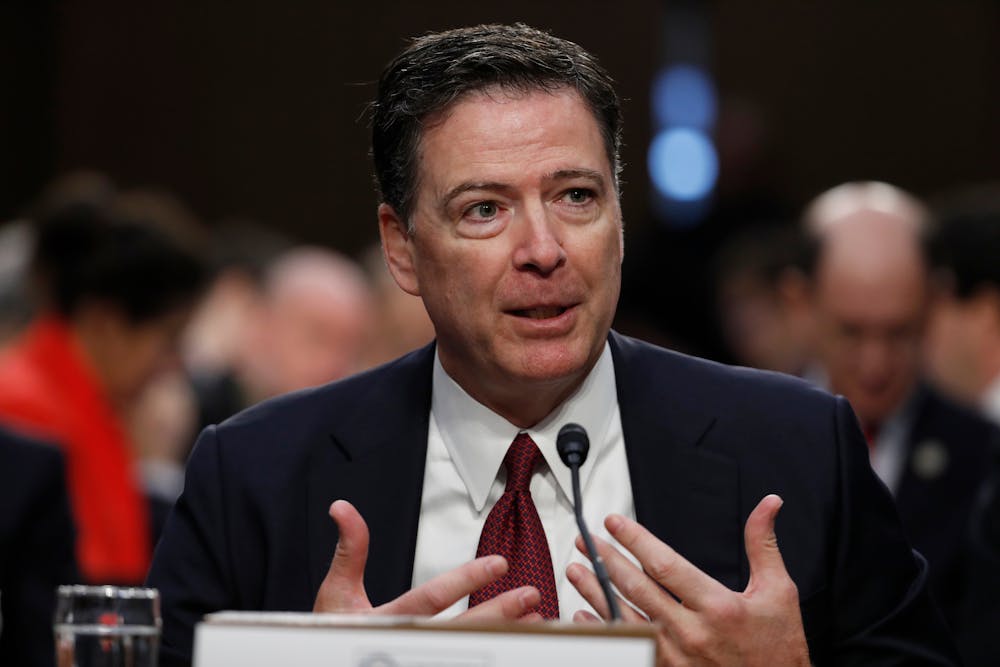
Whitehouse’s argument hinged on a timeline he described as almost absurd in its symmetry. The day after the Justice Department arraigned a former F.B.I. director for allegedly making false statements to Congress, the attorney general, Pam Bondi, appeared before lawmakers and, in Whitehouse’s telling, made false statements of her own.
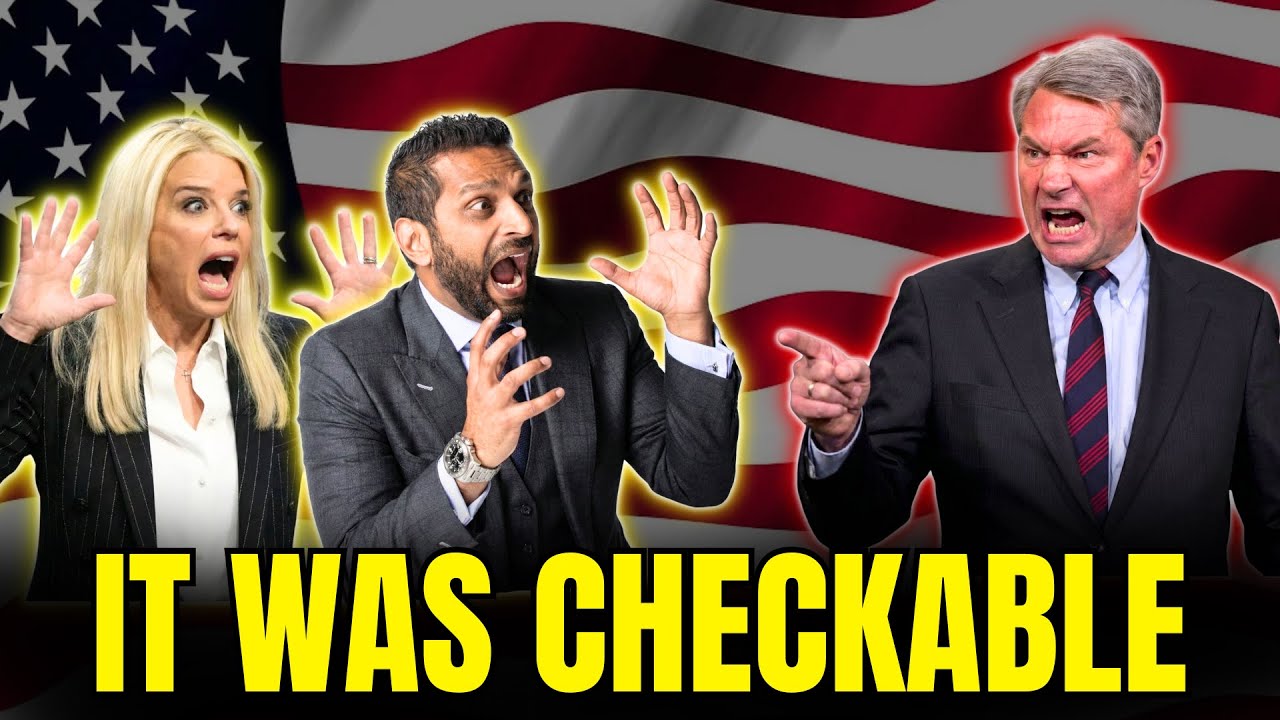
He did not present it as a matter of spin or interpretation. He presented it as a yes-or-no claim — “actually checkable,” he said — the kind of allegation that can be tested with a browser and a public database. In the hearing, Bondi accused Whitehouse and Sen. Dick Durbin, the Illinois Democrat who chairs the Judiciary Committee, of taking campaign money from a donor Bondi characterized as an “Epstein associate” or “close confidant,” referring to Jeffrey Epstein, the financier whose sex-trafficking network has become a recurring motif in America’s political conspiracies.
Whitehouse’s response was devastating not because it was theatrical, but because it was procedural. The Federal Election Commission maintains public records of campaign contributions. If Bondi’s claim was true, it would be there. If it was false, that would also be clear. An intern could check it, Whitehouse said. The point was not merely that Bondi’s accusation was wrong — it was that if the Justice Department’s top official was willing to repeat a claim that could be verified in minutes, then the committee’s hearing room was no longer a venue for accountability. It was a stage for insinuation.
The episode landed amid a broader, increasingly common pattern in which hearings resemble viral content more than fact-finding: aggressive claims, confident delivery, and a downstream scramble to determine what, if anything, was grounded in evidence. Bondi’s own appearance came at a moment when the department she leads has been under extraordinary political pressure, and when congressional investigations are frequently used to signal allegiance, manufacture scandal, or create a public record that can be clipped and shared.
Whitehouse’s critique then widened beyond Bondi. He turned to testimony by Kash Patel, the F.B.I. director, who had told lawmakers that he could not discuss his grand jury testimony in the Mar-a-Lago documents matter because the Justice Department had sealed it and because a court order barred him from speaking. Whitehouse said that the chief judge of the federal district court in Washington later indicated that this was not true — a claim that, if accurate, would mean Patel’s explanation was not caution but misdirection.
He described a familiar Washington maneuver: invoke secrecy as a shield, blur the line between what is legally prohibited and what is politically inconvenient, and let the fog do the work. In oversight, “I’m not allowed” can be a conversation-ender. It can also be a loophole big enough to drive an entire controversy through.

The senator argued that Patel’s subsequent fallback line — that he was working with the department to have the transcript publicly released — was another example of what lawmakers increasingly confront: the rhetorical performance of transparency without the underlying act. “Working on releasing it” is not the same as “it has been released,” Whitehouse said. In his telling, the answer lawmakers needed was binary. Either the material is public or it is not.
The deeper complaint, though, was not about one attorney general or one director. It was about a standard that has become selective. Whitehouse warned that if Congress punishes falsehoods only when they come from the opposing party, then truth is no longer a principle. It is a weapon — and the institution’s credibility collapses with it.
That collapse has practical consequences. When officials believe that misleading Congress carries no meaningful penalty as long as the deception serves the dominant political coalition, hearings become less useful at determining facts and more useful at laundering narratives. Even when corrections arrive — through court orders, public records, or later reporting — they arrive after the moment of maximum attention has passed. The claim spreads faster than the cleanup.
Bondi’s defenders have argued that the attorney general is operating in a uniquely hostile environment, facing lawmakers who want to trap her in gotcha moments. Her critics counter that this is precisely why the rule is supposed to be simple: if an allegation can be verified through official records, it should be verified before it is said — especially from the seat of the nation’s chief law-enforcement officer.
What Whitehouse effectively described was a civic version of moral hazard. If there is no cost to making checkable claims that turn out to be false, then officials will continue doing it — because the incentive structure rewards the accusation and rarely punishes the inaccuracy. And if Congress, the body constitutionally charged with oversight, cannot commit to one rule for everyone — witness and questioner alike — then the hearing room becomes, in essence, a content studio.
For now, the tangible question is less philosophical: will the committee do anything at all? Historically, Congress has treated contempt and false-statements referrals as serious but politically fraught tools, deployed unevenly and often after long delays. In the modern era, in which investigations are conducted partly for public consumption, the choice to enforce a standard can look to partisans like betrayal — and the choice not to enforce it can look to the public like surrender.
Whitehouse’s warning was framed as a plea for symmetry: if lawmakers claim to care about truth, they must care when it is inconvenient. Otherwise, “oversight” becomes another term that sounds noble in a press release but functions mainly as a cudgel in the hands of whichever side has the votes.
In the hearing room, he was essentially arguing that Congress has reached a crossroads familiar to institutions in late-stage polarization. It can reassert that testimony is evidence and that evidence is accountable. Or it can accept that “checkable” is just another rhetorical flourish — and that the record is less a repository of truth than a battlefield of competing fictions.
The country has watched enough hearings to know how this usually ends: with outrage, clips, counter-clips, and little else. Whitehouse’s speech suggested that what happens next is not merely about Pam Bondi or Kash Patel. It is about whether Congress still intends to mean what it says when it demands the truth.