In Washington, evasions are often dressed up as prudence. But during a recent Senate hearing, the attorney general’s refusal to answer a single, binary question exposed something far more consequential than caution: the mechanics of protection.
The question was straightforward. Did Attorney General Pam Bondi advise President Donald Trump on the blanket pardons issued on January 20 for people convicted in connection with the January 6 attack on the Capitol?
“Yes or no?” the senator asked.
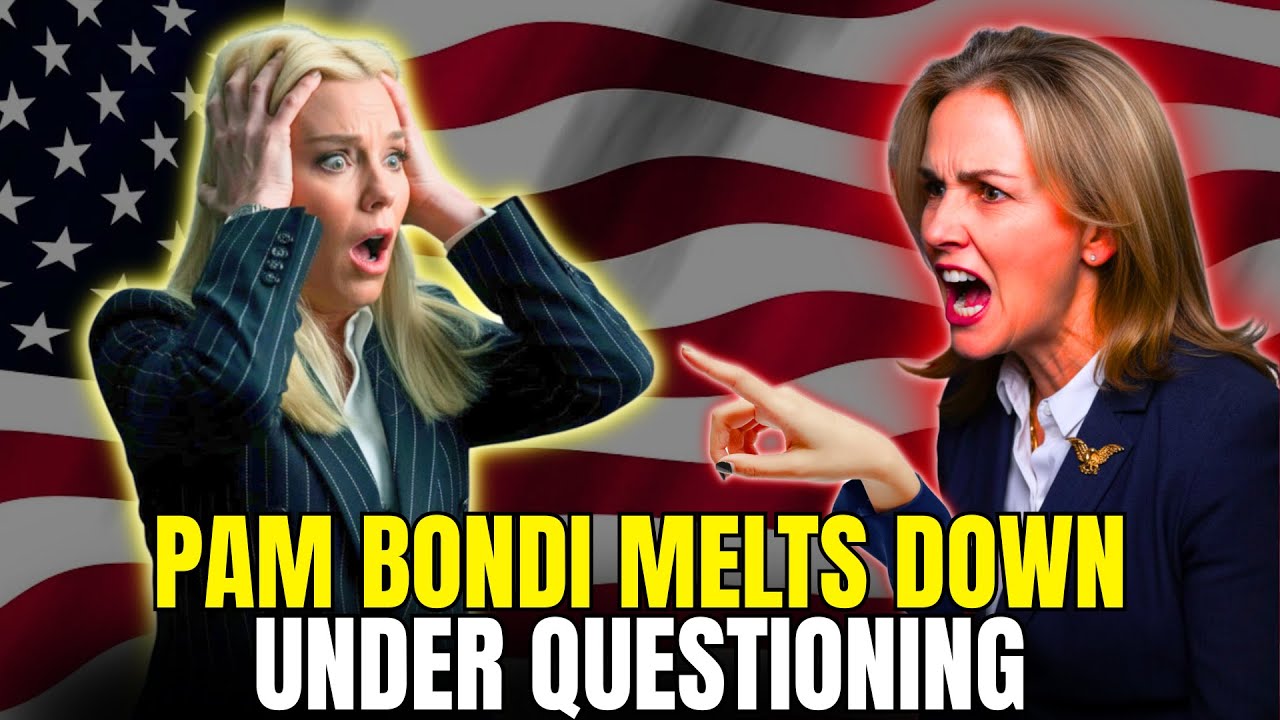
Bondi did not say yes. She did not say no. Instead, she retreated into a familiar refrain: she would never discuss conversations with the president of the United States. The sentence was delivered carefully, repeated several times, and offered as a substitute for an answer. In the hearing room, it passed as compliance. To anyone watching closely, it was something else entirely.
The exchange mattered not because of its theatrics, but because of its implications. The attorney general had just presented herself as a champion of law and order, vowing to pursue anyone who assaulted a police officer. Yet her principal had, on the first day of his term, erased the convictions of all January 6 defendants — including those who attacked law enforcement officers defending the Capitol. Five Capitol Police officers later died by suicide or medical complications linked by colleagues to the trauma of that day.
The contradiction was not abstract. It was personal, institutional and moral. When the senator invoked fallen officers, the hearing briefly shifted from politics to consequence. Bondi expressed sincerity about protecting police. But sincerity, as the senator pointed out, rings hollow when policy moves in the opposite direction.
That is why the question about advice was unavoidable. If Bondi advised the president on the pardons, then her law-and-order posture is compromised by partisan loyalty. If she did not, then her authority to lecture Congress about protecting police is undermined by irrelevance. Either answer would have clarified her role. The refusal clarified something else: that clarity itself was the threat.
In Washington, “I cannot discuss conversations” is not a neutral phrase. It is a device. It allows an official to avoid perjury while denying Congress the information it needs to assess responsibility. It is especially potent when the underlying question is not classified, sensitive or operational, but ethical. Did you advise? Yes or no. The evasion was not about national security. It was about insulation.
The hearing then moved to a second line of inquiry, one that connected ethics, money and foreign influence. A senator asked whether Bondi had ever been registered under the Foreign Agents Registration Act. The answer, eventually, was yes: she had previously represented Qatar, work she described as brief and focused on anti–human trafficking efforts tied to the World Cup.
The distinction was not irrelevant, but it was also not dispositive. FARA registration is not about moral judgment; it is about transparency. The question that followed was sharper: Did Bondi fully disclose that relationship during her Senate confirmation process?
Here, again, the answer was not volunteered cleanly. Under questioning, it emerged that the relationship was discussed but not clearly flagged as a conflict. That distinction matters because of what came next.
President Trump has publicly said he would accept a $400 million aircraft from Qatar, describing it as “prettier” than the plane he was using. The comment was flippant. The implications were not. A foreign government offering an extraordinarily valuable gift to a sitting American president raises textbook ethics concerns. Whether the attorney general advised on the legality of accepting such a gift, and whether she recused herself from that advice given her prior relationship with Qatar, are not trivia. They go to the heart of public trust.
Bondi refused to answer those questions as well. She would not discuss advice given by her office. She would not say whether she recused herself. When the senator quoted Trump’s own words about the plane, Bondi objected to the tone, calling it unprofessional.
This is another familiar move. When substance becomes dangerous, decorum becomes the shield. The conversation shifts from conduct to manners, from ethics to etiquette. It is an inversion that rewards those who control the process rather than those who seek answers.
What emerged over the course of the hearing was not a single scandal, but a pattern. Blanket pardons for allies. Refusal to clarify the attorney general’s role in those pardons. Prior financial relationships with a foreign government. Silence on whether ethical safeguards were triggered when that same government offered an extravagant gift to the president. Each piece, on its own, might be explained away. Together, they form a picture of an administration in which loyalty outranks disclosure and power outranks principle.
The senator summarized the administration with three words: incompetence, corruption and cruelty. It was a harsh assessment, but the hearing itself illustrated the logic behind it. Incompetence is not merely the failure to administer policy; it is the failure to reconcile words with actions. Corruption is not always a brown envelope; it is the quiet refusal to explain decisions that benefit the powerful. Cruelty is not only physical harm; it is the dismissal of real loss — the deaths of officers, the trauma of an attack — as collateral damage in the defense of a political narrative.
None of this required speculation. The questions were narrow. The answers could have been simple. Instead, what the public saw was a master class in strategic non-response. The attorney general did not lie. She did not confess. She did something more effective: she denied Congress the ability to draw a conclusion.
This is how accountability erodes in modern Washington. Not with dramatic cover-ups, but with procedural fog. Not with shouting matches, but with carefully rehearsed refusals. Oversight becomes theater when witnesses are allowed to substitute silence for substance and when colleagues rush to declare that a non-answer is, somehow, an answer.
The danger is not limited to one hearing or one official. When the Justice Department’s top lawyer treats ethical questions as optional and disclosure as discretionary, the signal travels downward. Rules become suggestions. Transparency becomes branding. Law and order becomes conditional.
For decades, Congress has insisted that no one is above the law. That principle is easy to applaud and hard to enforce. It is enforced not in slogans, but in moments like this — when a witness is asked a question that can be answered, and chooses not to. Whether Congress accepts that choice will determine whether oversight remains a constitutional duty or devolves into performance art.
If law and order is to mean the same thing for everyone, then “yes or no” must still mean something. If it does not, the erosion will continue quietly, politely, and in plain sight.