The Crumbling Colossus: America’s F-35 Program Faces Unprecedented Strain

In the shadowy corridors of the Pentagon, alarm bells are ringing louder than ever. The Lockheed Martin F-35 Lightning II, long hailed as the pinnacle of American air dominance and the cornerstone of NATO’s future fighter fleet, is suddenly under siege—not from enemy missiles, but from a sleek, pragmatic Swedish challenger that threatens to unravel decades of U.S. defense orthodoxy. Recent assessments from the Government Accountability Office paint a grim picture: the F-35 program’s lifetime sustainment costs alone now hover at least $1.58 trillion, pushing the total program expenditure well beyond $2 trillion across its extended 94-year lifecycle. This staggering figure, ballooned by persistent delays, upgrade overruns, and relentless maintenance demands, has transformed what was once touted as a revolutionary fifth-generation platform into a symbol of fiscal excess and operational frustration.
The F-35’s per-flight-hour costs remain punishing, often exceeding $40,000 in recent estimates, with readiness rates that have historically dipped into the 30-50% range for key variants. Squadrons sit grounded for extended periods, pilots log fewer training hours, and allied nations grapple with budgets strained by the jet’s insatiable appetite for specialized support, proprietary software updates, and U.S.-controlled supply chains. In an era of tightening defense dollars and geopolitical uncertainty, this dependency model—where partners must seek Washington’s approval for even routine modifications—has begun to feel less like strategic partnership and more like strategic straitjacket.
Sweden’s Gripen Strikes at the Heart of U.S. Air Power Philosophy
Enter the Saab JAS 39 Gripen, a fighter born from Sweden’s Cold War-era commitment to armed neutrality and self-reliance. Unlike the F-35’s emphasis on stealth supremacy and network-centric warfare, the Gripen prioritizes ruthless efficiency, rapid deployment, and operational resilience. It can operate from highways as short as 800 meters, with turnaround times measured in minutes by small crews using minimal specialized equipment. Recent data from Saab and operating air forces place its cost per flight hour in the $20,000–$22,000 range for the advanced E/F variants—roughly half that of the F-35—while delivering mission readiness rates consistently in the 80-90% bracket.
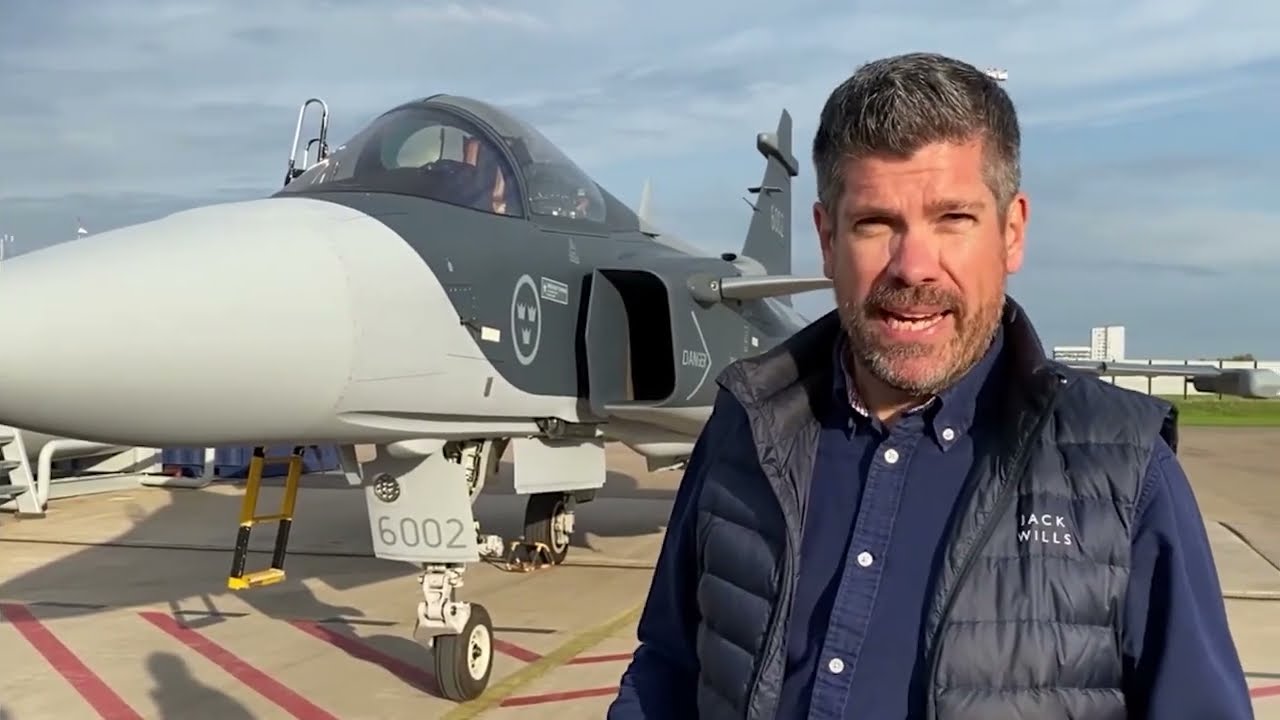
This cost-performance gap is no minor technical footnote; it represents a philosophical rupture. Nations acquiring the Gripen gain not just an aircraft, but full technology transfers, local assembly lines, and industrial participation that build domestic capabilities rather than perpetuate foreign dependence. Brazil’s ongoing Gripen production program exemplifies this: domestic manufacturing and subsystem development have fostered a self-sustaining aerospace sector. Similar arrangements in the Czech Republic and potential expansions elsewhere underscore a pattern—Sweden offers sovereignty alongside capability, allowing buyers to maintain fleets without constant deference to overseas contractors.
The Pentagon’s unease is palpable. Analysts inside the building acknowledge that the Gripen does not outmatch the F-35 in raw stealth or sensor fusion. Yet it excels in the metrics that increasingly define real-world air power: sustained availability, frequent sorties, pilot proficiency through extensive flying hours, and the flexibility to endure contested logistics in prolonged conflicts. For smaller or mid-sized nations facing budget constraints, the Gripen delivers credible deterrence without the financial hemorrhage or political leverage that accompanies F-35 ownership.
A Geopolitical Reckoning: Allies Rethink Dependence on Washington
The drama has spilled into the open in recent months, most dramatically in Canada, where Prime Minister Mark Carney’s administration has reopened debate over its planned 88-jet F-35 purchase. Committed to only 16 aircraft so far, Ottawa faces mounting domestic pressure amid trade tensions with the United States and public polls showing strong support for pivoting to the Gripen. Saab’s bold promise of up to 10,000 Canadian jobs through local production has intensified the stakes, pitting economic nationalism against alliance obligations. Leaked internal evaluations from Canada’s earlier competition highlight the F-35’s superior technical scores, yet the narrative has shifted toward affordability, independence, and resilience in an uncertain world.
This is no isolated case. Across Europe, Latin America, and beyond, defense ministries quietly weigh the Gripen’s appeal against the F-35’s promise. The Swedish jet’s NATO compatibility—seamless data links with allied platforms—combined with its lower lifecycle demands makes it an increasingly attractive hedge. Every new Gripen sale chips away at the assumption that advanced air power must flow through American channels, potentially reshaping procurement patterns, alliance dynamics, and the very distribution of global military influence.
As Washington confronts this quiet rebellion, the question looms larger: Can the United States maintain its grip on air superiority when rivals offer a compelling alternative that prioritizes autonomy over absolute dominance? The F-35 empire, once unassailable, now teeters on the edge of a profound transformation—one driven not by battlefield defeat, but by the inexorable logic of economics, strategy, and sovereign choice.