The Bigger Problem For Australian Politics May Not Be The Billboard Itself
Australian politics is once again debating where criticism ends and personal attacks begin.
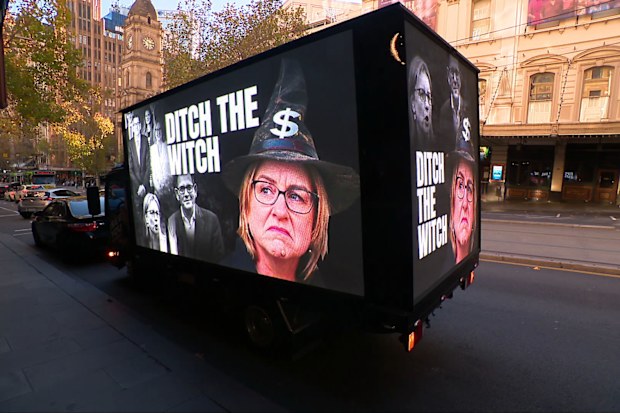
The latest controversy erupted after a billboard campaign targeting Victorian Premier Jacinta Allan drew condemnation from leaders across the country.

Prime Minister Anthony Albanese joined former Prime Minister Julia Gillard and politicians from both major parties in criticising the campaign, arguing that personal attacks against political figures had gone too far and risked damaging public discourse. Reports indicate the advertisements portrayed Allan as a witch and carried the slogan “Ditch the Witch”, a phrase that has previously appeared in Australian political debates.
The immediate argument centres on whether the campaign was offensive, sexist or simply part of robust political criticism.
But the larger question extends well beyond a single billboard.
What kind of political culture do Australians want?
That question has become increasingly important as public trust in politics continues to face pressure.
Australians expect politicians to disagree.
They expect fierce debates over taxation, housing, migration, crime and government spending.
Democracy depends on competing ideas.
Yet many voters appear increasingly frustrated when political discussion shifts away from policy and toward personal attacks.
The concern is not confined to one side of politics.
Politicians from Labor, the Coalition, minor parties and independent ranks have all faced personal abuse at different times.
Social media has amplified the problem dramatically.
Messages that once would have reached a limited audience can now spread nationwide within hours.
Political disagreements often become more personal, more emotional and more divisive.
For many Australians, that trend is becoming exhausting.
People want solutions to real problems.
They want answers on housing affordability.
They want action on cost-of-living pressures.
They want safer communities and stronger economic opportunities.

Instead, political headlines are increasingly dominated by arguments over personalities and insults.
The impact goes beyond political point-scoring.
Many former politicians have spoken openly about the personal toll of public life.
Online harassment, abuse and targeted campaigns can affect not only elected representatives but also their families.
Some analysts worry that increasingly hostile political environments discourage capable people from entering public service altogether.
If talented individuals decide politics is simply not worth the personal cost, voters ultimately lose potential leaders.
The debate has also revived discussion about the treatment of women in politics.
Australia has made significant progress in increasing female representation across parliaments and public institutions.
However, many women who enter public life continue to report experiences that their male colleagues rarely face to the same degree.

Gendered insults, personal attacks and commentary about appearance remain recurring complaints.
That reality explains why the latest controversy has generated such strong reactions.
Supporters of stronger standards argue that disagreement should focus on decisions, policies and performance rather than personal ridicule.
Others worry that efforts to police political language too aggressively could undermine free expression and legitimate criticism.
Finding the right balance is not easy.
Politics is inherently confrontational.
Governments must be held accountable.
Oppositions must challenge those in power.
Public figures should expect scrutiny.
Yet most Australians also expect a basic level of respect.
The challenge is ensuring that those standards are applied consistently.
Voters are often quick to detect perceived double standards.
When leaders condemn one form of behaviour but remain silent about another, accusations of hypocrisy inevitably follow.
That can further erode public confidence in political institutions.
Trust remains one of the most valuable assets in democratic government.
Without trust, every controversy becomes larger.
Every disagreement becomes more toxic.
And every political decision becomes harder to explain.
The billboard controversy will eventually disappear from the headlines.
Another political dispute will replace it.
But the broader debate is likely to remain.
Australians are increasingly asking whether political culture is becoming more hostile, more personal and less focused on solving real-world problems.
For many voters, that question matters far more than any individual slogan or advertisement.
Because in the end, the health of a democracy is not measured by how loudly politicians attack each other.
It is measured by whether debate helps the country move forward.