The latest confrontation between Donald Trump’s Justice Department and the Federal Reserve landed this week with the kind of jolt that normally belongs to market panics, not politics: subpoenas for the sitting chair of the central bank.
According to Reuters, the Justice Department has issued subpoenas related to statements Jerome H. Powell made to Congress last summer about cost overruns tied to a major renovation of the Federal Reserve’s headquarters in Washington. Powell described the move as a “pretext” — an attempt to use the threat of criminal charges to influence how the Fed sets interest rates.
On its face, the underlying subject sounds technocratic, even dull: a renovation budget, a number that moved, a dispute about what was said in testimony. But the force of the moment comes from what the probe implies about power — and where it aims that power. The Federal Reserve is designed to be insulated from day-to-day political pressure so that monetary policy is not reduced to campaign-season impulse. When a Justice Department begins leaning on a Fed chair with subpoenas, the story stops being about construction management and becomes a test of institutional independence.
Powell’s pushback has been unusually direct. In the statement reported by Reuters, he framed the threat of criminal charges as retaliation for doing precisely what his job requires: setting interest rates based on the Fed’s best assessment of the public interest rather than the president’s preferences. In other words, Powell is not simply contesting the facts of the renovation dispute; he is arguing that the investigation itself is the instrument — that the process is the punishment.
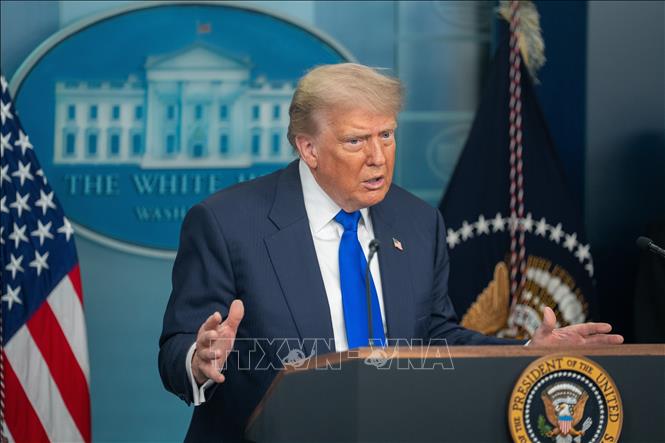
The White House, for its part, has tried to create distance. Reuters reported that White House press secretary Karoline Leavitt said Trump did not direct Justice Department officials to investigate Powell. The denial is not merely procedural. It is political: an acknowledgment that the optics of a president’s DOJ pressing the nation’s central banker are combustible enough that the administration does not want ownership of the match.

The market reaction captured the wider anxiety. Reuters reported that the dollar slipped after the news, with analysts citing fears about the Fed’s independence and what that could mean for long-run confidence in U.S. economic governance. The signal to investors is not that Powell will be indicted tomorrow, but that the boundary between political muscle and economic stewardship is being tested in public.
Then came the most revealing part: the first meaningful Republican pushback.
Reuters reported that Senator Thom Tillis, a Republican with a role in banking oversight, said he would move to block Trump’s nominees to the Federal Reserve in response to the Justice Department’s investigation — an escalation beyond the usual “concerned” statement. The report also noted that Senator Lisa Murkowski backed Tillis’s plan. In Washington terms, this is not symbolic dissent. It is leverage: a senator saying, in effect, you want to control the Fed; Congress has a say; try this and we will use it.
That matters because it clarifies what this fight is actually about. If the probe were widely believed to be a routine integrity check, senators would demand facts and urge calm. Instead, Tillis and Murkowski are treating it as an attempted coercion — an effort to bend a monetary authority that is supposed to resist bending.
The episode also arrives in a larger context that makes “one more investigation” feel less like accountability and more like a governing style. Trump has long spoken in the language of enemies lists, and in his first term he repeatedly criticized Powell by name, sometimes publicly urging rate cuts. What Reuters adds now is the new ingredient: not rhetoric, but subpoenas — the machinery of law turned toward a policy dispute.

It is hard to miss the asymmetry. In a functioning system, there are many legitimate ways to contest a central bank’s choices: appoint different governors when terms expire, argue publicly, propose reforms through Congress, persuade. A criminal probe is not normally on that list, especially one tied to testimony about renovation costs. That is why Powell’s argument — that the stated rationale is thin — is so consequential. If the public begins to accept that prosecutions can be initiated as pressure tactics, the chilling effect extends far beyond the Fed. The lesson becomes: independence has a price, and the bill may arrive in the form of a subpoena.
The personnel details further complicate the credibility question. ABC News has reported that Trump appointed longtime ally and former Fox News host Jeanine Pirro as interim U.S. attorney for the District of Columbia in 2025. That appointment does not prove anything about any specific case. But it does deepen the impression of a Justice Department shaped less like a neutral institution and more like a political instrument staffed by loyalists — precisely the concern Powell is raising.
None of this guarantees an indictment. It does not even guarantee a formal charge. But the damage can be done long before a courtroom. Subpoenas alone can intimidate, distract, and signal to other officials that resisting presidential demands could trigger legal jeopardy. That is what makes this story bigger than Powell, bigger than the Fed’s marble corridors, and bigger than the question of whether a renovation number was described with perfect precision in congressional testimony.
Powell’s term as Fed chair is set to end in May, Reuters reported, with Trump expected to consider replacements. That fact would ordinarily make this a transition story: the incoming administration signaling the direction of monetary policy by choosing a new leader. Instead, the transition is now entangled with coercion claims and legal threats — which raises a stark question: is the goal to change leadership through the normal process, or to discipline leadership through fear?
In the coming weeks, the most important development may not be what Trump says on television or what Powell says in a carefully worded statement. It may be whether Tillis’s threat becomes real — whether Senate Republicans will actually use institutional power to defend the institutional independence they often praise in theory. Reuters has reported the vow; Washington will now watch the follow-through.
Because if this turns out to be a moment where elites find their spine only when the target is a central banker — not a protester, not an immigrant, not a less powerful official — it will still matter. Not because it is morally tidy, but because it reveals how democracies fracture: first at the margins, then at the center, and finally everywhere.