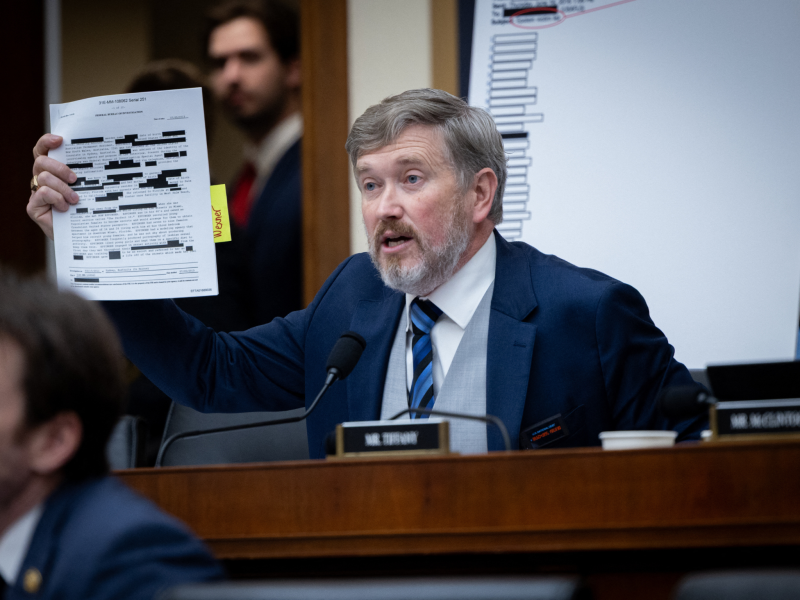
The confrontation unfolded not in a courtroom but beneath the fluorescent lights of a congressional hearing room, where stacks of paper became political instruments. Representative Thomas Massie, Republican of Kentucky, held up three documents he said illustrated a fundamental breakdown in the Justice Department’s handling of files related to Jeffrey Epstein. Across the dais sat Attorney General Pam Bondi, defending an agency accused of failing to comply fully with the Epstein Files Transparency Act — legislation Congress passed with near unanimity to force broader disclosure of investigative records.

At issue is not whether the Epstein investigation was mishandled years ago — that debate has raged since the financier’s death in federal custody — but whether the government’s long-promised transparency has itself faltered. Mr. Massie presented what he described as emblematic examples: an email from victims’ lawyers listing names that should not be publicly released, which the department allegedly disclosed without fully redacting survivor identities; a document titled “Child Sex Trafficking Co-Conspirators” in which names were blacked out; and heavily redacted FBI interview summaries, known as FD-302 forms, that appeared, in his telling, to conceal more than they revealed.
The Justice Department has argued that it faced an immense logistical burden. Officials say they were required to review millions of pages under a compressed deadline and that the error rate in redactions was minimal relative to the volume processed. Ms. Bondi, in testimony, contended that any mistakes were corrected swiftly and denied that the department had deliberately shielded prominent individuals from scrutiny. “Within 40 minutes,” she said of one challenged redaction, “it was fixed.”
But the exchange did not hinge on administrative speed. It centered on trust. Mr. Massie and other lawmakers questioned whether the department applied its redaction standards consistently — protecting the privacy of victims while withholding names of individuals described in investigative materials as potential co-conspirators. In the charged atmosphere of the hearing, interruptions and accusations replaced technical debate. Mr. Massie accused the department of violating both the letter and spirit of the law. Ms. Bondi countered that critics were politicizing a complex review process.
The Transparency Act requires the attorney general to provide Congress with a report explaining the legal basis for redactions. Lawmakers from both parties have signaled frustration that such documentation has not been delivered in full. Representative Ro Khanna, a co-sponsor of the measure, has joined calls for independent oversight, while Representative Jamie Raskin has described the department’s approach as insufficiently forthcoming. Their concerns are procedural but profound: whether an agency tasked with enforcing federal law can be relied upon to execute a congressional mandate without selective interpretation.
Complicating the matter is the enduring sensitivity of the Epstein case. The records span decades, involve prominent figures and intersect with sealed grand jury material, privacy statutes and ongoing civil litigation. Justice Department officials argue that redactions are legally required to protect uncharged individuals and to comply with court orders. Critics respond that the law explicitly bars withholding information solely to prevent embarrassment or reputational harm.
The clash has already moved beyond rhetoric. Lawmakers have asked a federal judge to appoint a special master — an independent legal authority — to oversee review of the remaining files. Such a step would be extraordinary but not unprecedented in disputes involving executive compliance. The judge would have to weigh separation-of-powers concerns against Congress’s explicit directive for disclosure.
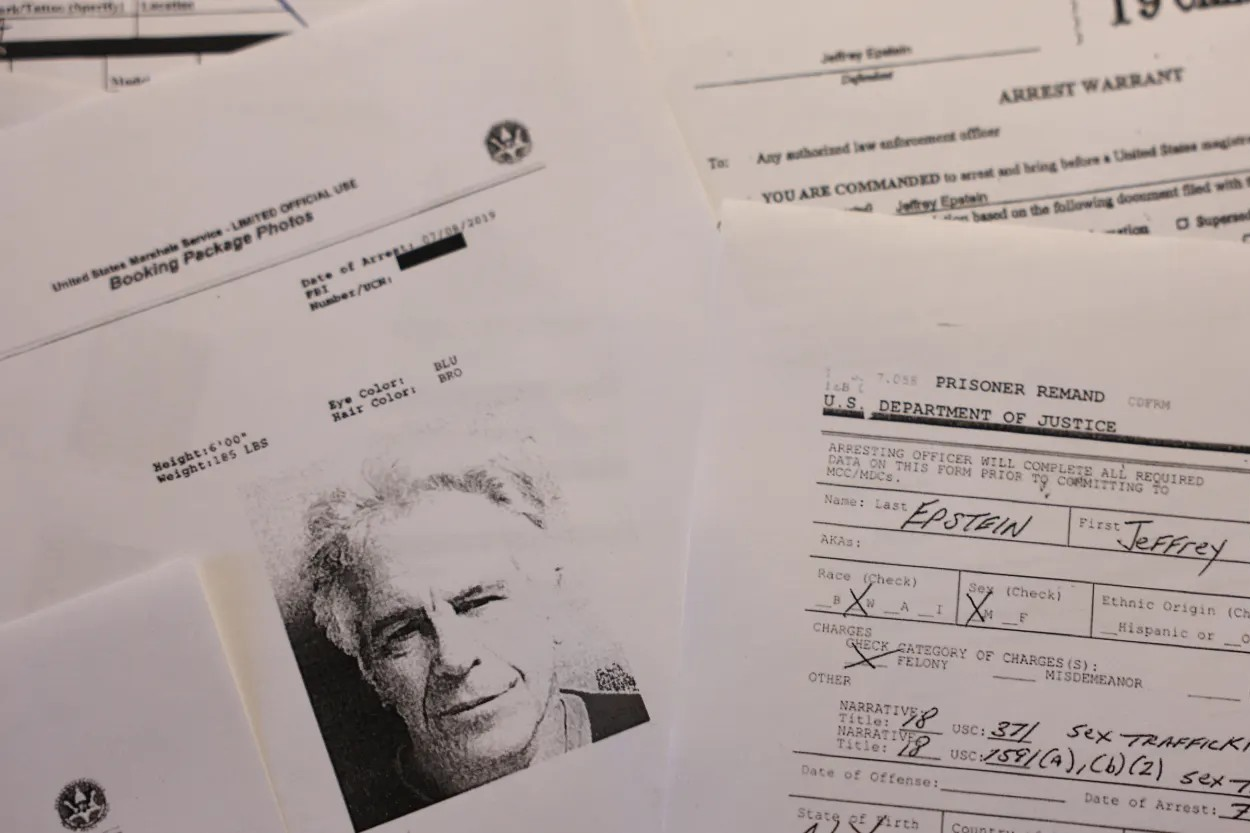
For survivors of Epstein’s abuse, the debate carries personal stakes. Some have said that inadvertent release of identifying information exposed them to unwanted contact and renewed trauma. Others argue that continued redaction of investigative details perpetuates the opacity that allowed the network to operate for years. The Justice Department insists it is balancing transparency with privacy and due process. Yet each additional dispute over a blacked-out name reinforces suspicion among those who believe the system has historically favored the powerful.
The hearing underscored a broader tension in American governance: transparency laws can compel disclosure, but they cannot compel public confidence. Even a small redaction error, in a case already steeped in distrust, can assume symbolic weight. Whether the courts intervene or Congress revisits its mandate, the episode has reopened questions about how institutions manage truth when it collides with politics.
For now, the files remain partially sealed, the arguments ongoing. The Justice Department maintains that it is in substantial compliance with the law. Lawmakers challenging that claim say compliance must be complete, not approximate. Between those positions lies a fragile space where legal obligation, bureaucratic capacity and public expectation converge — and where, once again, the Epstein case tests the credibility of the institutions charged with delivering justice.