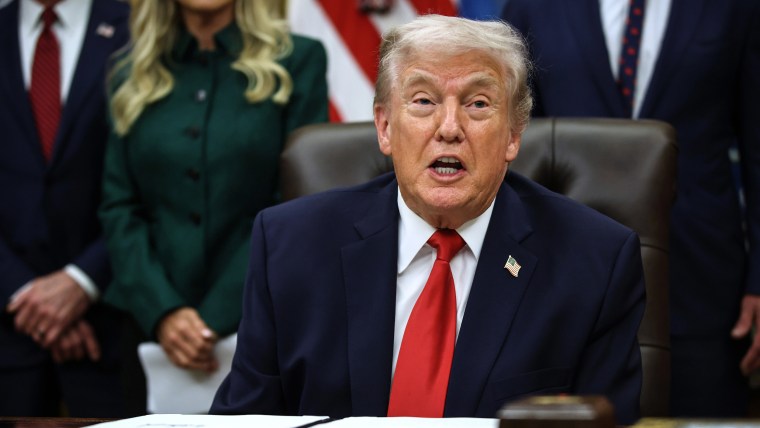
The saga traces back most prominently to Mr. Trump’s New York hush-money criminal trial, where Judge Juan Merchan held the former president in contempt on multiple occasions for violations of a gag order designed to protect the integrity of the proceedings. By mid-2024, the count had reached ten documented instances of contempt, each tied to public statements that disparaged witnesses, jurors, or court personnel in defiance of explicit judicial directives. Fines, initially levied at $1,000 per violation under New York law, proved insufficient as a deterrent. The court imposed a total of $10,000 in one ruling alone, following nine prior infractions fined at $9,000 collectively, yet the pattern of noncompliance persisted.
In a tense courtroom moment that drew widespread attention, Judge Merchan addressed Mr. Trump directly from the bench. He articulated the gravity of the situation with measured but unmistakable language: “I don’t want to jail a former president — but I will if necessary.” The statement marked a pivotal escalation. It signaled that monetary sanctions, while symbolically significant, had failed to compel adherence to the court’s authority. The judge emphasized that continued willful violations would force consideration of jail as the only remaining effective remedy, underscoring the principle that no individual — regardless of past office or current political prominence — stands above the rule of law.
This judicial posture extended beyond the hush-money case. Mr. Trump faced similar confrontations in other civil and criminal matters, including his New York civil fraud trial, where Judge Arthur Engoron warned of contempt and potential incarceration for failing to promptly remove disparaging posts about court staff as ordered. Across these proceedings, the recurring theme has been defiance: court orders to testify, produce documents, or refrain from certain public commentary met with resistance, prompting prosecutors and judges to invoke contempt powers more aggressively.
The implications reach far beyond any single courtroom. A former commander-in-chief facing the prospect of jail for contempt represents an unprecedented test of institutional resilience. Legal scholars note that while contempt findings against high-profile figures are not unknown — advisers to Mr. Trump, such as Steve Bannon, served prison time for contempt of Congress — the direct application to a former president carries symbolic weight. It raises profound questions about executive accountability, the separation of powers, and whether traditional deterrents suffice when political stakes are extraordinarily high.

Mr. Trump has consistently framed these rulings as politically motivated attacks, often characterizing them as interference in his campaigns and efforts to undermine democratic processes. Supporters echo this view, portraying the escalating judicial responses as evidence of bias within the legal system. Critics, however, point to the detailed findings in each contempt ruling — supported by evidence of specific violations — as affirmation that the courts are upholding impartial standards.
As proceedings continue to unfold, the central tension remains unresolved: compliance versus confrontation. The judiciary’s increasing willingness to contemplate incarceration reflects a determination to preserve the authority of the courts in an era of polarized politics. Whether future orders will trigger the ultimate sanction — or whether Mr. Trump will adjust his approach — has become a focal point of national debate.
What happens the next time a court issues a directive and defiance follows is no longer hypothetical. It stands as a measure of whether the rule of law can withstand the pressures of extraordinary circumstances, where the defendant is not merely a private citizen but a figure who once held the nation’s highest office. The line from the bench — reluctant yet resolute — captures the gravity: restraint is preferred, but necessity may demand otherwise. In this evolving chapter of American legal history, the balance between accountability and precedent continues to be tested in real time.