BREAKING: Supreme Court Tariff Arguments Trigger Viral Panic—but the Legal Reality Is Far More Ordinary
Washington, D.C. — The Supreme Court is currently hearing arguments over a question with enormous economic and constitutional consequences: Does President Donald Trump have the authority to impose sweeping tariffs without congressional approval by invoking a national emergency statute?
For President Trump, the case strikes at the heart of his governing strategy. Tariffs are not merely an economic tool for him; they are the central lever of his foreign policy, diplomacy, and trade negotiations. Earlier today, Trump described the case and the Court’s forthcoming decision as “life or death” for his presidency.
Based on the arguments heard so far, however, the outlook appears uncertain at best for the administration.
Yet online, the legal reality has been almost entirely eclipsed by sensationalism.
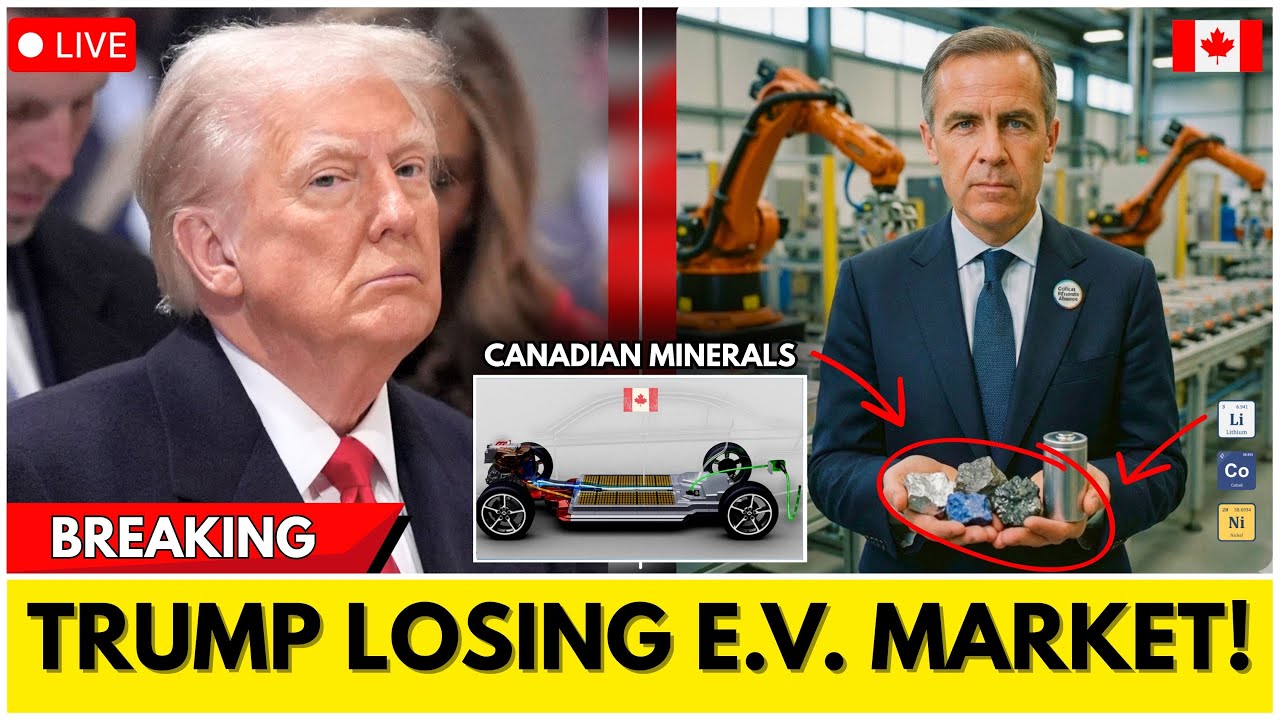
Across YouTube, X, and political media feeds, users have been inundated with explosive headlines: “Supreme Court Devastates Administration,” “29 Judges Vote Removal,” “Trump’s Power Stripped.” Thumbnails depict gavels slamming down, courtrooms in chaos, and dramatic red-and-blue graphics suggesting an imminent constitutional collapse.
If one were to rely solely on those headlines, it would be easy to believe the Supreme Court had just voted to remove Donald Trump from office—perhaps the most serious constitutional crisis since Watergate.
That is not what is happening.
What the Supreme Court Is Actually Considering
At its core, the tariff case is about presidential emergency powers. Trump has relied on a national emergency statute to declare economic emergencies and then impose tariffs without going through Congress. The administration argues that the law grants the president broad discretion in moments of national economic threat.
The justices are now examining whether that interpretation stretches the statute beyond its constitutional limits. If the Court narrows or rejects Trump’s reading of the law, it would not remove him from office, invalidate his presidency, or undo past elections. It would simply restrict how far a president may go when invoking emergency powers to reshape trade policy.
This is a serious legal question—but it is also a familiar one. Courts routinely evaluate whether presidents have exceeded the authority granted to them by Congress.
How a Viral Narrative Was Manufactured
The explosive online narrative did not emerge from the tariff case alone. Instead, it was constructed by blending multiple unrelated legal developments into a single misleading story.
First, the Supreme Court is hearing cases involving presidential removal power—specifically, whether a president may fire leaders of independent agencies such as the Federal Trade Commission or the Federal Reserve. These cases raise long-standing constitutional questions about the balance of power between the presidency and regulatory agencies designed to operate with some political insulation.
Second, lower federal courts have issued more than 1,600 rulings against Trump administration policies over the past year. One particular set of rulings involved 29 federal judges blocking a policy that required mandatory detention of certain immigrants, citing due process concerns.
Online, these two developments were fused into a single claim: that the Supreme Court had “devastated” the administration and that “29 judges voted for removal.”
That claim is false.

The Truth About the ‘29 Judges’
The 29 judges in question did not vote on Trump’s presidency. They did not rule on impeachment, removal, or executive legitimacy. They ruled on one specific immigration policy.
The Trump administration sought to require mandatory detention for certain immigrants while their cases were pending. Civil liberties groups challenged the policy, arguing that automatic detention without individualized hearings violated constitutional due process protections.
Judges in multiple jurisdictions agreed and blocked the policy. This is not extraordinary. Every administration—Republican and Democratic—faces similar judicial pushback when courts determine that executive actions exceed statutory or constitutional bounds.
Calling this “29 judges voting for removal” is not interpretation. It is misrepresentation.
The Supreme Court Cases Are Not an Attack on Trump
Ironically, some of the Supreme Court cases fueling the viral panic were brought by Trump himself.
In disputes involving independent agencies like the FTC, Trump is arguing that restrictions preventing him from firing agency heads violate the Constitution. If the Court rules in his favor, it would expand presidential authority, overturning legal precedents that have stood since the 1930s.
A ruling for Trump in these cases would strengthen—not weaken—the presidency.
Yet online coverage often frames the Court’s involvement as an assault on Trump, rather than acknowledging that he is asking the justices to grant him more power.
Trump’s Appointees and Judicial Independence
Adding to the confusion is the claim that Trump’s own Supreme Court appointees—Justices Neil Gorsuch, Brett Kavanaugh, and Amy Coney Barrett—are “turning against him.”
This framing misunderstands the role of the judiciary. Supreme Court justices are not political operatives. They hold lifetime appointments precisely so they are insulated from loyalty to the president who appointed them.
That Gorsuch or Kavanaugh might rule against Trump in certain cases is not evidence of betrayal or conspiracy. It is evidence that the judicial system is functioning as designed.
Why This Is Not a Constitutional Crisis
There is no coordinated judicial coup underway. There is no secret vote to remove the president. There is no collapse of constitutional order.
What is happening is far more ordinary—and far more consequential in the long term. Courts are reviewing executive actions. Judges are interpreting statutes. The Supreme Court is clarifying the boundaries of presidential power.
This process may frustrate presidents. It may slow agendas. It may produce political backlash. But it is not abnormal. It is the separation of powers at work.
The Real Stakes
The tariff case and the removal-power cases matter not because they threaten Trump personally, but because their outcomes will shape presidential authority for decades to come.
If the Court limits emergency powers, future presidents—of both parties—will face similar constraints. If it expands removal authority reinforcing executive control over independent agencies, that power will not disappear when Trump leaves office.
These are structural decisions about how American government functions.
The Bottom Line
The Supreme Court has not voted to remove Donald Trump.
No judges have stripped him of office.
No constitutional collapse is underway.
What the public is witnessing is the routine—but essential—process of courts reviewing executive power, stripped of context and inflated into crisis by viral misinformation.
In an era dominated by outrage-driven headlines, the most important skill may be recognizing the difference between dramatic fiction and the often boring procedural truth.
Because the truth, while less exciting, is the only thing that actually governs what happens next.