Trump’s 100% Tariff Threat Exposes a Hard Truth: The U.S. Needs Canada More Than Canada Needs Trump
Donald Trump wanted to hurt Canada. He believed that threatening a 100% tariff on all Canadian goods entering the United States would force Ottawa back into line. Instead, the threat is rapidly becoming a lesson for Trump himself—one that exposes not American strength, but dependence, hypocrisy, and a shrinking margin for coercion.
Far from demonstrating leverage, Trump’s latest outburst highlights a reality he has spent years denying: the U.S. economy is deeply reliant on Canada, and a trade war of this scale would harm Americans first, fastest, and hardest.
A Blunt Threat Rooted in Political Anger, Not Trade Law
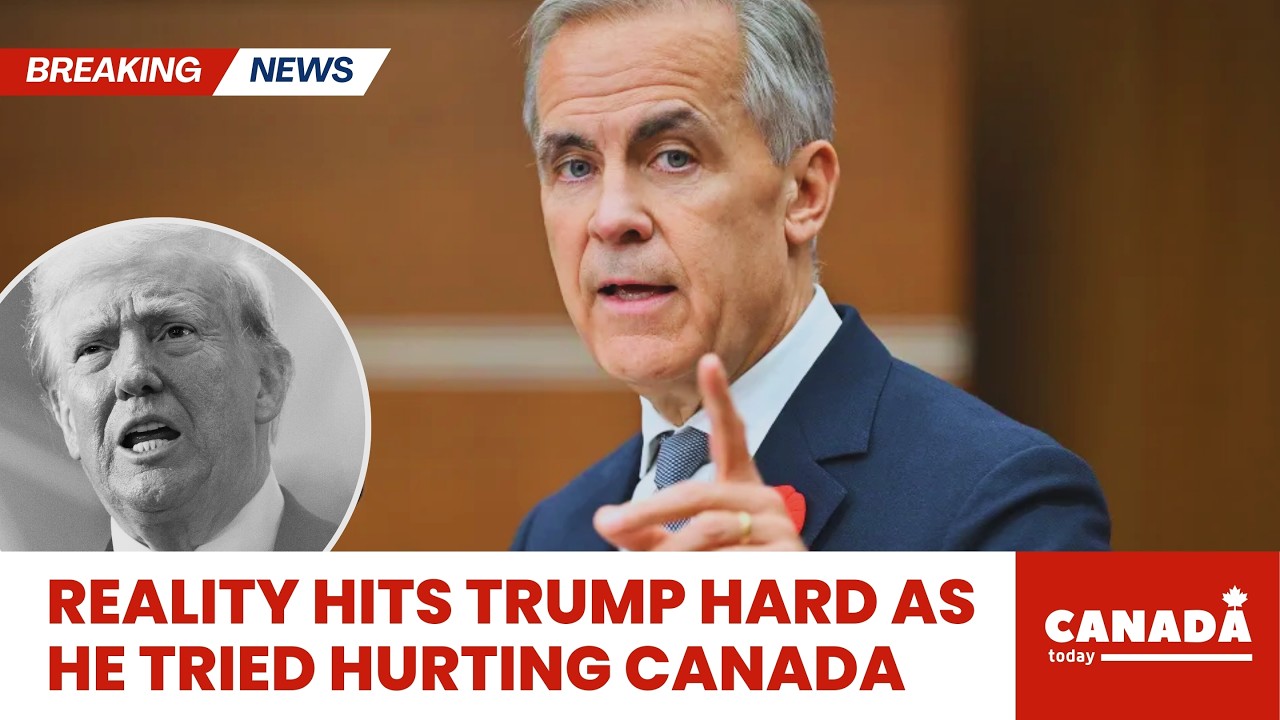
Trump’s warning was explicit. If Canada continues any form of trade engagement with China, he claims that every Canadian product entering the United States will face a 100% tariff. This was not framed as a legal complaint, a WTO challenge, or a rules-based dispute. It was framed as punishment.
Trade experts have been clear: Canada’s move involves a limited tariff relief arrangement, not a sweeping new trade deal with Beijing. Trump deliberately exaggerated it to justify an emotional response to something else entirely—Canada refusing to bow to him politically.
The real trigger was not trade policy. It was Prime Minister Mark Carney’s public defiance, most notably on the world stage at Davos. Trump does not react well to being challenged openly, especially by countries he assumes should comply quietly.
This is not enforcement. It is economic intimidation, dressed up as policy.
Why a 100% Tariff on Canada Is Economically Self-Destructive
Let’s slow this down and be clear. A 100% tariff on Canada is not just unrealistic. It is self-destructive for the United States.
Canada is not a replaceable supplier. It is embedded in the American economy at a structural level.
Canada supplies roughly 40% of all the oil consumed by the United States, much of it flowing directly into Midwest refineries that are specifically engineered for Canadian crude. There is no short-term substitute. If Trump imposed a 100% tariff on Canadian oil, gasoline prices would spike within days. Heating costs would rise. Inflation would surge. That pain would hit American consumers immediately.
And energy is only the beginning.

A Shared Production System Trump Can’t Break
Canada and the United States do not simply trade finished goods. They operate a shared production system.
Canadian steel, aluminum, auto parts, lumber, fertilizers, and critical minerals cross the border multiple times before becoming final products. A 100% tariff would explode costs for:
-
U.S. automakers
-
U.S. construction firms
-
U.S. farmers
-
U.S. defense contractors
This would not weaken Canada. It would cripple American industry.
Then there is food. Canada is a major supplier of wheat, canola, beef, and agricultural inputs. Tariffing those goods would drive grocery prices higher across the United States almost overnight.
Trump knows all of this. Which is precisely why this threat is not a serious policy plan.
A Bluff Built on Fear, Not Feasibility
Trump is counting on fear. Not feasibility.
The moment a 100% tariff is actually implemented, the backlash would not come from Ottawa. It would come from U.S. oil companies, U.S. manufacturers, U.S. farmers, U.S. governors, and ultimately American voters.
That is why this threat functions as a bluff. Trump can threaten Canada rhetorically, but he cannot economically afford to follow through. And that reality gives Canada more leverage than Trump wants to admit.
If Canada were truly expendable, there would be no need to threaten at all.
The Real Fear: Canada’s Diversification
Underneath Trump’s escalation is a deeper concern. He is worried that Canada and Mexico could become alternative trade gateways as global supply chains shift.
Trump does not want diversification. He wants control.
Canada signaling that it has other economic partners weakens Trump’s pressure tactics. Pressure only works when the other side has nowhere else to turn. Ottawa’s message—that Canada is building options—undermines that strategy entirely.
That is why Trump’s rhetoric is intensifying. It is not confidence. It is anxiety.
CUSMA and the Strategy of Coercion
As CUSMA (USMCA) renewal talks approach, Washington’s message is becoming clearer: stay inside the American tariff wall or face consequences.
This is not about improving trade terms. It is about forcing alignment.
Trump understands that roughly 75% of Canada’s trade still flows to the United States, and he is trying to weaponize that reality. But dependence cuts both ways—and in key sectors, America is the more vulnerable party.
The Hypocrisy Trump Can’t Explain Away
The contradiction at the heart of this threat is impossible to ignore.
Just months ago, Donald Trump struck his own understanding with Beijing, easing tariffs on both sides. He publicly claimed he “won” the trade war with China. He has spoken openly about visiting Beijing again. Deals were signed.
Yet Canada restoring limited, pre-trade-war conditions with China is suddenly framed as betrayal.
Trump eases tariffs with China and calls it victory. Canada does far less and gets threatened with economic annihilation.
This is not consistency. It is hypocrisy.
Power Revealed Through Constraint
Trump threatened Canada to demonstrate dominance. Instead, he revealed constraint.
He warned of 100% tariffs knowing he cannot afford to implement them. He attacked Canada for China engagement while cutting his own deals with Beijing. And in doing so, he reminded everyone watching of a basic truth in geopolitics: pressure politics only work when the other side is weak.
Canada isn’t.
This moment may end up teaching Trump that reality—whether he likes it or not.