Trump’s 100% Tariff Threat Exposes Panic as Canada Breaks Free
From Praise to Punishment in Eight Days
“If Canada makes a deal with China, it will immediately be hit with a 100% tariff against all Canadian goods and products coming into the United States of America.”
That was Donald Trump on Saturday morning, threatening to cripple the entire Canadian economy over a trade agreement he had openly praised just one week earlier.
This was not a strategic policy shift. It was pure panic.
Because Mark Carney did exactly what Trump claims to want: he negotiated a bilateral trade deal that benefits Canadian farmers and businesses. And then Trump realized what that deal actually meant. It made Canada less dependent on the United States.
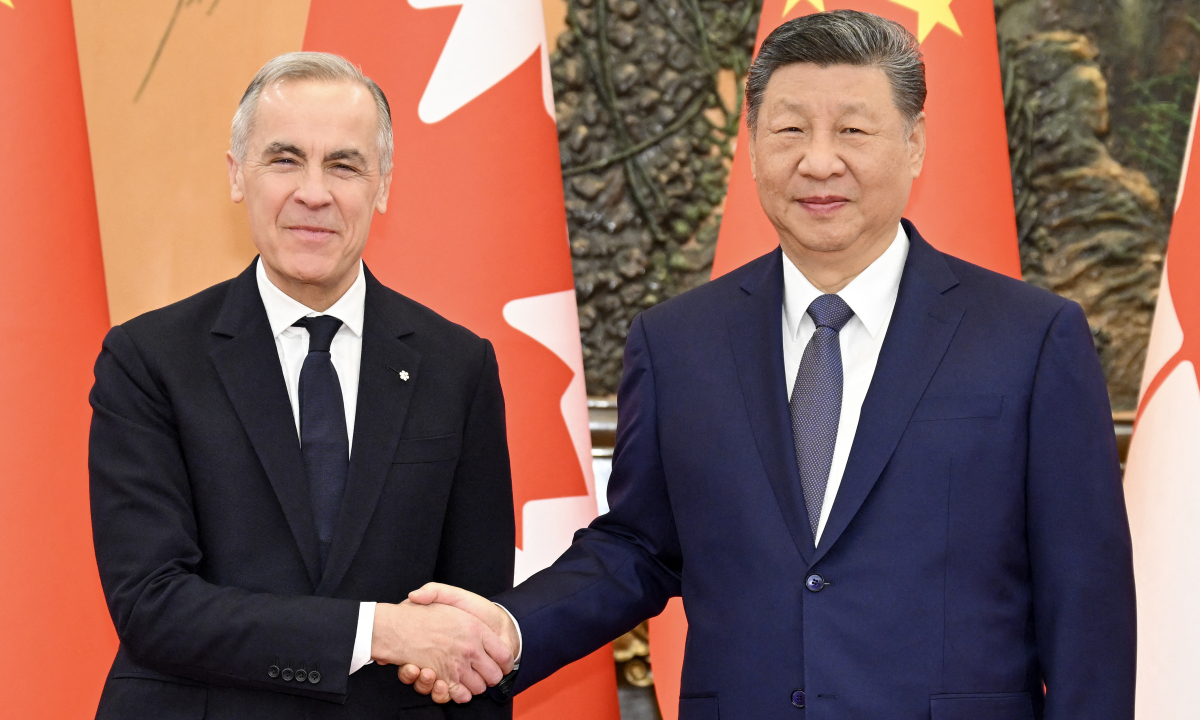
The whiplash is extraordinary. On January 16, after Carney announced the China deal following meetings with President Xi Jinping in Beijing, Trump told reporters at the White House that it was a good thing. “That’s what he should be doing,” Trump said. “If you can get a deal with China, you should do that.”
Eight days later, after Carney stood on the world stage at the World Economic Forum in Davos and received international praise and a standing ovation, Trump completely reversed himself. Suddenly, the same deal was framed as an existential threat. Canada, Trump claimed, was becoming a “drop-off port” for Chinese goods. China would “eat Canada alive,” destroy its businesses, its social fabric, even its way of life.
Nothing about the deal changed. What changed was Carney’s posture.

What Carney Actually Negotiated in Beijing
Let’s be clear about what this agreement is and what it is not. This was not Canada becoming a Chinese satellite. It was targeted trade diplomacy designed to stop real economic damage to Canadian farmers.
In 2024, the Trudeau government imposed 100% tariffs on Chinese electric vehicles, mirroring policies adopted by the United States and the European Union. Canada was following Washington’s lead, coordinating China policy as a loyal ally. China retaliated in March 2025 with punishing tariffs on Canadian agriculture: 100% on canola oil and peas, 25% on pork and seafood, and nearly 76% combined tariffs on canola seed by August.
The impact was severe. Saskatchewan produces over half of Canada’s canola. China had been a $4 billion market. Without Chinese buyers, canola exports fell by more than two million tons. Pork exports collapsed. Lobster and crab fisheries in Atlantic Canada lost key markets. An anti-dumping investigation threatened to make those tariffs permanent by March 2026.
Carney went to Beijing and negotiated relief. Canada agreed to allow up to 49,000 Chinese electric vehicles per year into the Canadian market at a 6.1% tariff, down from 100%. That volume represents less than 3% of Canada’s auto market and roughly matches pre-tariff import levels. In exchange, China agreed to reduce canola seed tariffs to roughly 15% by March 1, and to suspend discriminatory tariffs on canola meal, peas, lobster, and crab through at least the end of 2026.
Nearly $3 billion in Canadian agricultural exports were unlocked. Saskatchewan Premier Scott Moe, who joined the delegation, called it “very good news for Canada and Saskatchewan.” This was basic trade problem-solving. Trump initially agreed.
Davos Changed Everything
Then came Davos.
On January 20, Carney delivered a speech titled “Principled and Pragmatic: Canada’s Path.” It will likely be studied as the moment Canada publicly broke with American economic hegemony.
Carney did not mince words. “We are in the midst of a rupture, not a transition,” he said. Over decades, crises in finance, health, energy, and geopolitics exposed the risks of extreme global integration. More recently, great powers began weaponizing that integration, using tariffs as leverage, financial infrastructure as coercion, and supply chains as vulnerabilities to be exploited.
He never said “Donald Trump.” He didn’t have to.
When you’re speaking in Davos about great powers weaponizing tariffs while the U.S. president is threatening allies over Greenland and trade, the target is obvious. Carney warned that institutions middle powers rely on, from the WTO to multilateral climate frameworks, are under threat. Countries, he said, must develop strategic autonomy in food, energy, critical minerals, finance, and supply chains.
Then came the line that echoed around the room: “If you are not at the table, you are on the menu.”
The speech received a standing ovation, unusual for Davos. European leaders echoed its themes. The message landed.
Trump’s Reaction Reveals the Fear
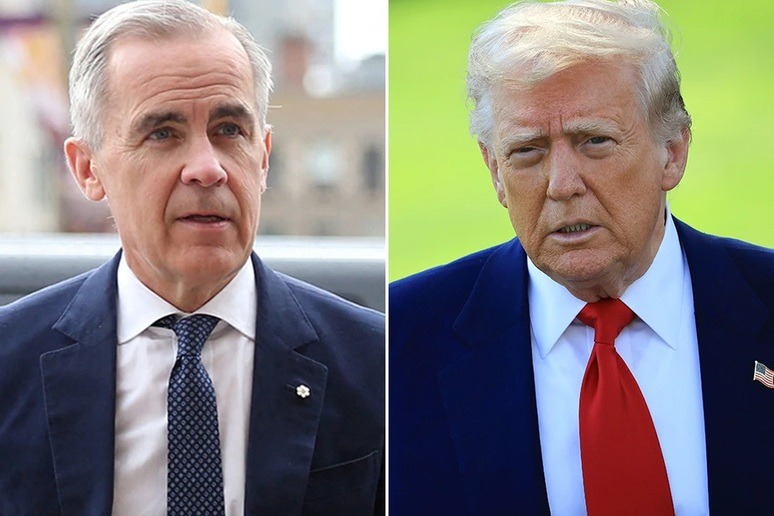
Trump spoke the next day. He was visibly angry. Canada, he said, “lives because of the United States.” Canada gets “freebies.” “Remember that, Mark,” he warned.
Carney’s response was calm but firm. Canada has a strong partnership with the United States, he said, but Canada does not live because of America. “Canada thrives because we are Canadian. We are masters in our own house.”
That was the moment Trump’s posture toward the China deal flipped.
By January 24, Trump was threatening 100% tariffs on all Canadian goods. He mocked Carney as “Governor Carney,” reviving the same language he used when joking about Canada becoming the 51st state. The threat was absurd on its face. The deal does not involve transshipment to the U.S. Chinese EVs allowed into Canada are for the Canadian market. A blanket tariff would devastate American industries that rely on Canadian lumber, aluminum, energy, and auto parts. It would violate the USMCA, the trade deal Trump himself negotiated.
But the threat was never about trade mechanics.
Why This Is Really About Control
For decades, Canada routed roughly 75% of its exports through the United States. That dependence gave Washington leverage. Threaten tariffs, and Ottawa scrambled. Demand policy changes, and Canada listened.
Carney is dismantling that leverage piece by piece. The China deal is one element. He is strengthening ties with the EU on critical minerals, with Qatar on LNG, exploring renewed engagement with India, and investing in the Port of Churchill and the Hudson Bay Railway to move Canadian resources to Europe without touching U.S. infrastructure.
Every alternative market reduces American leverage. Every supply chain that bypasses U.S. territory weakens Washington’s ability to coerce. That is what Trump fears. Not Chinese EVs. Not canola. Independence.
Trump praised the deal when he thought it was transactional. Two countries fixing irritants, no threat to hierarchy. Once Carney framed it as part of a broader strategy of strategic autonomy, the same deal became intolerable.
Panic, Not Power
Trump even revoked Canada’s invitation to his so-called “Board of Peace” the same day he threatened tariffs. Not over policy. Over a speech. Loyalty, not rules, is the currency.
The tariff threat may be unenforceable. It would face legal challenges, economic backlash, and fierce opposition from U.S. businesses. But the damage is already done. It reinforces the very lesson Carney articulated in Davos: American reliability under Trump is gone, and middle powers must prepare to withstand coercion.
On January 16, Trump said the China deal was a good thing. On January 24, the same deal justified economic annihilation. Nothing changed except Canada’s willingness to say, publicly, that it would no longer live at someone else’s pleasure.
That is not weakness. It is the moment leverage breaks.
And Trump’s 100% tariff threat proves it.