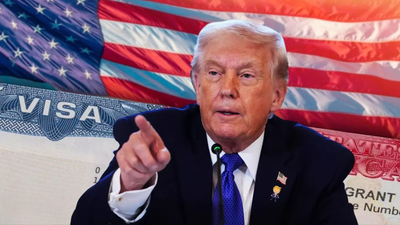
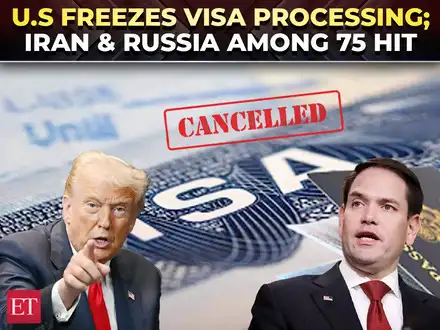
WASHINGTON — In a move that immigration advocates are describing as abrupt and destabilizing, the U.S. State Department has quietly halted immigrant visa processing for citizens of dozens of countries, triggering immediate concern among families, legal professionals, and human rights organizations around the world. The freeze, which began early this week, was implemented without a public list of affected countries, no clear timeline for resumption, and no assurances that paused applications will ever be processed under current rules.
According to internal guidance obtained by multiple sources within diplomatic and consular circles, the suspension affects immigrant visa applications from at least 75 countries spanning Africa, the Middle East, Asia, Eastern Europe, and Latin America. The official reason given in confidential State Department communications cites a crackdown on applicants deemed likely to become a “public charge” — a longstanding immigration concept that allows officials to weigh prospective immigrants’ likelihood of economic self-sufficiency.
“Embassies and consulates around the world have been instructed to suspend case scheduling and adjudications until further notice,” said one senior consular official who spoke on condition of anonymity. “There’s no final list, and there’s no end date.”
A draft list that has circulated among immigration attorneys includes countries such as Somalia, Russia, Afghanistan, Brazil, Iran, Iraq, Egypt, Nigeria, Thailand, and Yemen, among others. Many of these nations already face challenging economic or political conditions, and the visa halt threatens to separate families and derail plans for lawful resettlement, employment, and reunification.
For attorneys who specialize in U.S. immigration law, the decision represents a seismic shift. The American Immigration Lawyers Association (AILA) has already issued a statement expressing alarm, noting that the freeze could “reshape visa outcomes overnight” and leave countless applicants without recourse. AILA President Susan Cohen described the policy as “unprecedented in scope and lacking in transparency.”
Civil rights and immigrant advocacy groups have begun preparing legal challenges, arguing that the abrupt policy change violates statutory requirements and administrative procedure norms. “This is not just a policy shift,” said Omar Jadwat, director of the Immigrant Rights Project at the American Civil Liberties Union. “It is a blanket suspension that punishes individuals based on where they were born and on speculative determinations about economic worth.”

Policy analysts say the timing of the freeze — implemented days before the underlying “public charge” rules officially take effect — suggests a broader enforcement agenda within the immigration system. The new standards, which expand factors used to evaluate applicants’ economic prospects, have been criticized by immigrant advocacy groups as vague and prone to discretionary abuse.
“The fact that this comes in advance of the formal policy rollout indicates an intent to clamp down aggressively,” said David Bier, senior fellow at the Cato Institute’s immigration research initiative. “And the lack of clear guidance or published criteria makes it extremely difficult for applicants and their representatives to plan or respond.”
For families caught in the crosshairs, the consequences are immediate and deeply personal. In Nairobi, Kenya, Amina Hassan described learning that her husband’s immigrant visa interview — scheduled for next month — was abruptly canceled with no explanation. “We were given no warning,” she said. “We sold our home to pay fees, flights, and paperwork. Now we don’t know if we’ll ever be reunited.”
The State Department has issued a short public notice acknowledging “adjustments to visa processing procedures,” but it offers no specifics about affected countries or estimated timelines. A spokesperson reiterated that consular officers will continue to operate in accordance with U.S. law and policy, but declined to comment on the scope or duration of the freeze.
Republican supporters of the policy argue that tightening standards for immigrant admissions is necessary to protect American taxpayers and labor markets. They characterize the decision as part of broader, long-overdue enforcement measures. “The United States has a sovereign right to determine who can enter and why,” said one GOP immigration adviser who requested anonymity. “Ensuring that immigrants can sustain themselves is a reasonable part of that process.”
Critics, however, warn that the policy’s lack of procedural safeguards could lead to discrimination and arbitrary outcomes. Human rights organizations point to international norms that discourage discriminatory treatment based on nationality or economic status. “A blanket halt with no objective criteria contravenes fundamental fairness principles,” said Laura Reiff, senior legal director at Refugees International.
Some consular officers have privately expressed unease about the sudden directive, suggesting that diplomacy and case adjudication must balance national interest with humanitarian commitments. “We are trained to evaluate each case on its merits,” one officer said. “This suspension strips that away and places a bureaucratic barrier between families and lawful immigration pathways.”
As the freeze enters its second week, applicants, attorneys, and advocates are scrambling to interpret what it means — and what, if anything, can be done. With no public roadmap and few official answers, uncertainty continues to grow.
For millions of would-be immigrants and their families, the pause means postponed dreams, stalled reunions, and a vague sense of limbo. Whether the freeze will be reversed, narrowed, or expanded remains unknown; what is certain is that a policy implemented quietly has already sparked widespread alarm — and may shape U.S. immigration outcomes for years to come.