The Paper Bag and the Firewall: Sheldon Whitehouse’s Forensic Interrogation of Pam Bondi
WASHINGTON — In the sterile, high-ceilinged chambers of the Senate Judiciary Committee, the dry cadence of congressional oversight was shattered this week by a confrontation that felt less like a political hearing and more like a criminal deposition. Senator Sheldon Whitehouse, a former federal prosecutor with a reputation for methodological precision, spent his allotted time not in grandstanding, but in the slow, deliberate construction of a financial and institutional trap for Attorney General Pam Bondi.
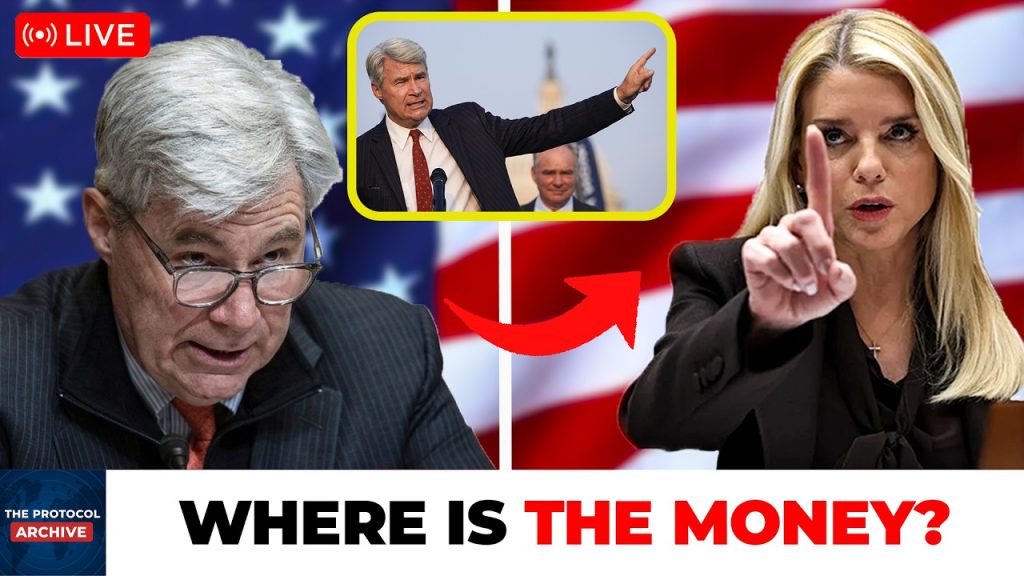
The subject of the “explosive” exchange was a $50,000 mystery that has become emblematic of the deepening rot of public distrust. Specifically, Whitehouse pressed the nation’s chief law enforcement officer on reports that the FBI delivered $50,000 in cash, contained in a paper bag, to Tom Homan—the administration’s immigration enforcement chief—during a documented transaction in 2024.
The $50,000 Accounting Void
The brilliance of Whitehouse’s interrogation lay in its simplicity. He did not ask Bondi for a legal opinion or a political defense. He asked for an audit. “What became of the $50,000?” he asked. “Did the FBI get it back? Was it declared on Mr. Homan’s tax returns?”
Bondi’s response was a study in institutional evasion. She repeatedly cited a review by Deputy Attorney General Todd Blanche—Donald Trump’s former personal defense attorney—which reportedly found “no evidence of wrongdoing.” Whitehouse was surgical in his rebuttal, noting that a legal conclusion of “no wrongdoing” is not a factual answer to the question of the money’s physical location. The refusal to state whether the funds were recovered or logged remains a gaping hole in the official record, one that Bondi attempted to fill not with facts, but with personal attacks.
The Epstein Connection and the ‘Burn Book’ Tactic

As the hearing progressed, the shadow of Jeffrey Epstein loomed over the proceedings. Whitehouse raised the issue of hundreds of Suspicious Activity Reports (SARs) automatically forwarded to the DOJ by the Treasury Department regarding Epstein’s financial accounts. He asked a pointed question: Were these reports ever reviewed by current leadership, and were physical photographs recovered during federal searches of Epstein’s properties?
Bondi’s reaction was visceral. Rather than providing a “yes” or “no” on the existence of physical evidence, she pivoted to what observers described as “opposition research.” She accused Whitehouse of taking donations from Reed Hoffman, whom she attempted to link to the Epstein circle. The tactic—using far-right internet talking points to answer a former U.S. Attorney’s factual questions—was described by Whitehouse as “completely irrelevant and not very helpful.”
The Kash Patel Contradiction
The hearing also exposed a profound incoherence regarding the testimony of Kash Patel. Whitehouse highlighted a documented contradiction: Patel testified under oath that his grand jury transcript had been “sealed” by the DOJ, yet he simultaneously claimed he worked with the department to have it released publicly.
When asked how a document can be both “legally sealed” and “publicly released through cooperation,” Bondi declined to answer, referring the Senator to Director Patel himself. For the head of the Department of Justice to decline an explanation for her own department’s decision by redirecting to the FBI Director was characterized by critics as a “collapse of institutional accountability in real time.”
Threats and the Federal Judiciary
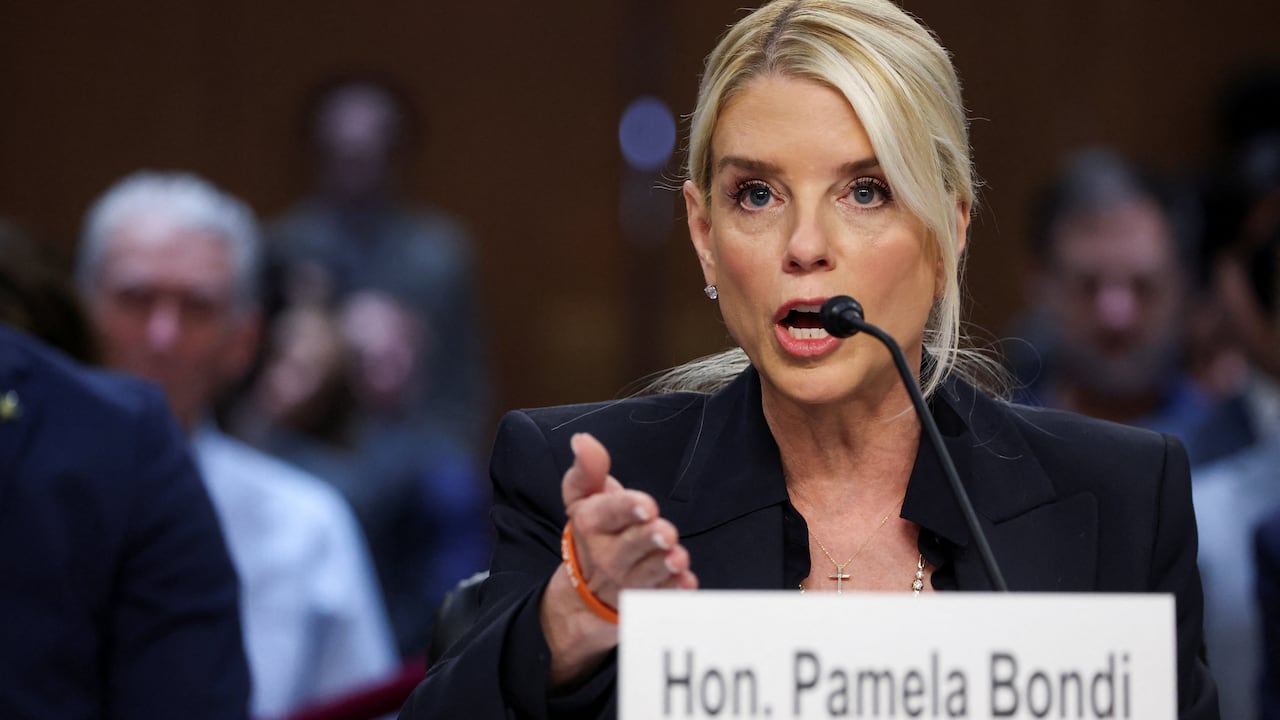
The most sobering moment arrived when the conversation shifted to the systematic intimidation of federal judges. With judges across the country receiving documented death threats—often after being named publicly by administration allies—Whitehouse asked if the U.S. Marshals Service was being permitted to investigate these threats as a coordinated criminal conspiracy.
Bondi’s initial hesitation and her subsequent look toward the chairman for a “time check” spoke volumes. Only after sustained pressure did she commit to a future meeting with Whitehouse and the Marshals Service to discuss the matter. This single, extracted commitment served as the only break in an otherwise impenetrable firewall of silence.
The Permanent Record
As the 2026 oversight cycle intensifies, the transcript of this hearing stands as a permanent indictment of the current DOJ’s posture. Every refusal to answer, every deflection toward Reed Hoffman, and every “Blanche review” cited as a neutral finding is now part of the public record.
Senator Whitehouse did not need to shout to win the exchange. By grounding his case in official records, specific dates, and dollar amounts, he demonstrated that while an Attorney General can black out a name or ignore a question, she cannot redact the pattern of her own avoidance. The $50,000 remains missing, the Epstein SARs remain unacknowledged, and the wall of ink protecting the powerful continues to grow thicker—but in the Senate Judiciary Committee, the “Paper Bag Mystery” has finally been named.