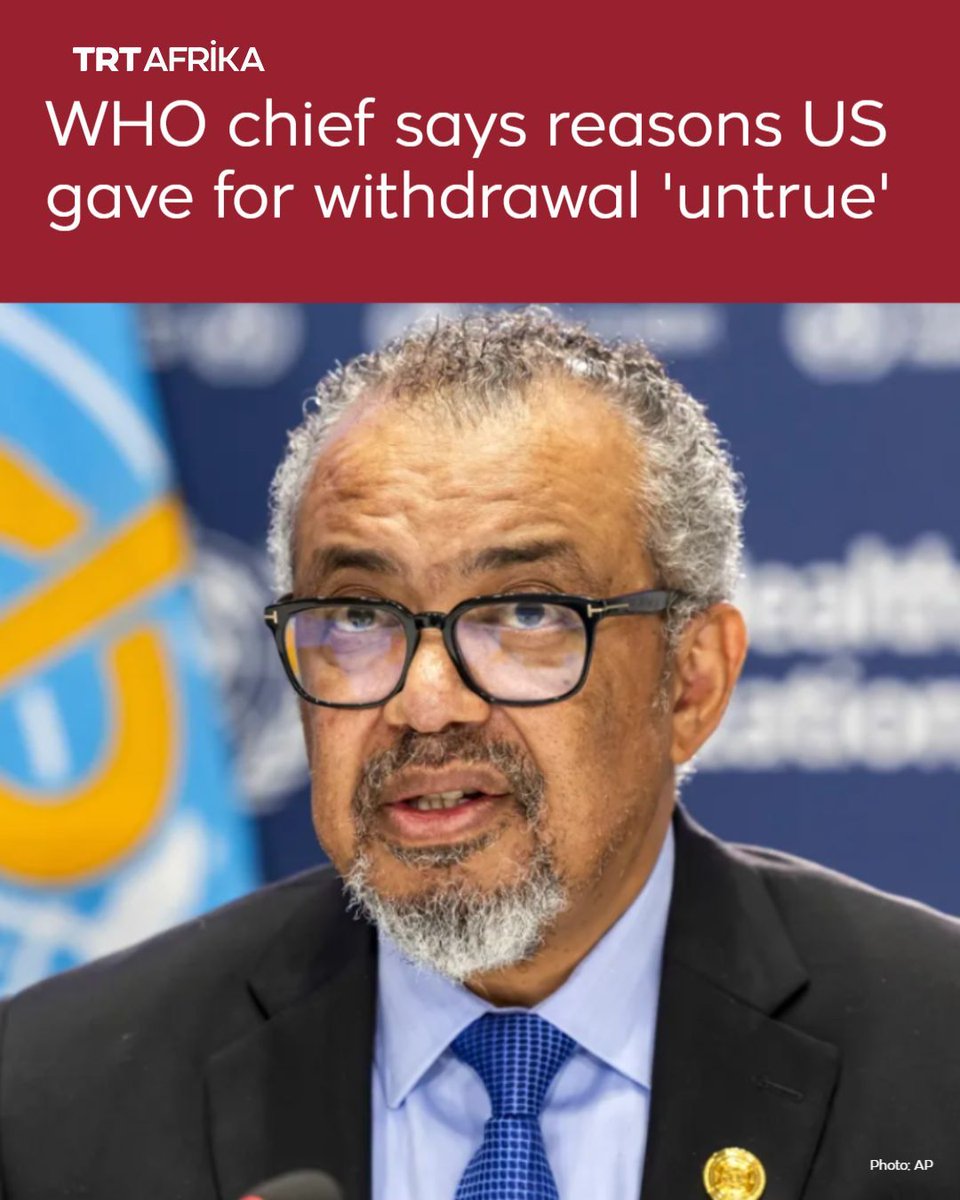
GENEVA — The head of the World Health Organization has issued a sharp rebuke to the United States following Washington’s formal withdrawal from the agency, calling the reasons cited by U.S. officials “untrue” and warning that the decision will leave both America and the wider world “less safe.” The unusually direct response underscores the growing diplomatic and public-health tensions unleashed by a move that ends nearly eight decades of U.S. membership in the WHO.
The comments came from WHO Director-General Dr. Tedros Adhanom Ghebreyesus, just days after the U.S. government confirmed that it had completed the legal process to exit the United Nations health body. The announcement, delivered in a joint statement by Secretary of State Marco Rubio and Health and Human Services Secretary Robert F. Kennedy Jr., marked the first time since the organization’s founding in 1948 that the United States is no longer a member.
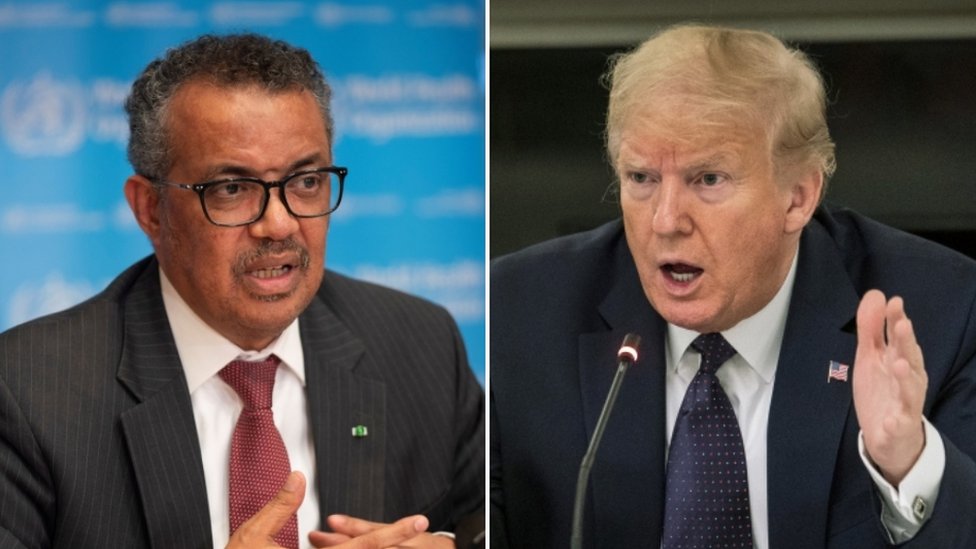
“This decision is not based on the facts,” Tedros said in remarks to diplomats and health officials. “The claims used to justify the withdrawal do not reflect the reality of the WHO’s work or the reforms already underway. The result will be a world that is less prepared for health emergencies — including the United States itself.”
A Historic Break
The U.S. has long been the WHO’s single largest funder and one of its most influential members, shaping global responses to infectious disease outbreaks, vaccination campaigns, and health system strengthening in low- and middle-income countries. Its departure represents not just a financial blow, but a political rupture that many experts say could weaken coordination during future pandemics.
In their statement, Rubio and Kennedy argued that the WHO had become “inefficient, politicized, and misaligned with U.S. priorities,” asserting that American taxpayer dollars were no longer being used effectively. They framed the withdrawal as part of a broader effort to reassess U.S. participation in international institutions deemed “redundant or mismanaged.”
Tedros rejected that framing outright. He noted that the WHO has implemented governance reforms in recent years, increased transparency around funding, and strengthened its emergency response capabilities following criticism during the COVID-19 pandemic. “Constructive engagement brings change,” he said. “Walking away does not.”
Global Health at a Crossroads
The timing of the withdrawal has heightened concerns across global health circles. The WHO is currently coordinating responses to multiple disease threats, including outbreaks of cholera, mpox, and drug-resistant tuberculosis, while also working to finalize a new international pandemic preparedness framework.
Public health experts warn that U.S. disengagement could undermine data sharing, early warning systems, and coordinated research — areas where American institutions have traditionally played a central role.
“Viruses do not respect borders,” said one senior European health official, speaking on condition of anonymity. “When the United States steps back from the table, everyone loses access to expertise, surveillance, and leadership that has historically benefited the entire world.”
Tedros echoed that concern, stressing that the U.S. itself could face increased risks. “Global health security is collective security,” he said. “No country, no matter how powerful, can protect its people alone.”
Diplomatic Ripples
Beyond public health, the U.S. exit is already rippling through diplomatic channels. Several U.N. member states privately expressed concern that the move could encourage other countries to disengage from multilateral institutions, weakening global cooperation at a time of rising geopolitical tension.
At the same time, some governments are exploring ways to offset the loss of U.S. funding, though few can match the scale of American contributions. WHO officials have acknowledged that programs in disease surveillance, maternal health, and emergency response may face budgetary strain in the short term.
U.S. officials, for their part, have insisted that Washington will continue to engage in global health through bilateral partnerships and alternative frameworks. Critics argue that such an approach risks fragmentation and duplication, reducing effectiveness precisely when coordination matters most.
Political Divisions at Home
The withdrawal has also deepened political divisions within the United States. Supporters of the decision argue that it restores sovereignty and accountability, while opponents warn it could isolate the country and weaken its ability to respond to future health crises.
Several former U.S. health officials, including veterans of both Republican and Democratic administrations, have publicly criticized the move. In open letters and interviews, they have argued that reforming the WHO from within would have been more effective than abandoning it altogether.
An Uncertain Path Forward
For now, the practical consequences of the U.S. exit are still unfolding. Legal and financial arrangements are being unwound, staff secondments reviewed, and program funding reassessed. What remains clear is that a long-standing pillar of global health governance has been shaken.
As Tedros concluded in his remarks, the issue extends beyond institutional politics. “This is about people,” he said. “It is about whether the world chooses cooperation over division when confronting threats that affect us all.”
Whether the United States’ departure proves temporary or marks a lasting realignment in global health diplomacy, the decision has already redrawn the map of international cooperation — with implications that may only become fully visible when the next global health emergency arrives.