A major political storm has erupted across Australia after Pauline Hanson delivered a fiery speech at the annual conference of Australian Energy Producers, where she declared one message loud and clear:
“More gas, not less.”
The statement instantly reignited one of the country’s most divisive debates — energy, cost of living, and Australia’s economic future.

During her address, the One Nation leader unveiled a bold new proposal aimed at dramatically expanding domestic gas exploration. Hanson said her party would introduce a 30% exploration rebate for energy companies, but with one key condition: the Australian Commonwealth would receive an equity stake in production licences in return.
According to Hanson, Australia is making a dangerous mistake by restricting gas development while families continue to struggle with soaring electricity prices and rising living costs.
“Ordinary Australians don’t want ideological slogans. They want affordable power and economic security,” Hanson reportedly told the audience.
The proposal would effectively create a partnership between government and the energy sector. Canberra would help fund exploration costs, while taxpayers would gain a financial interest in future gas production projects.
Supporters argue the plan could strengthen Australia’s energy independence while also generating long-term public revenue.
But critics say it represents a major step backward.
Environmental groups immediately condemned the announcement, accusing Pauline Hanson of trying to lock Australia into long-term fossil fuel dependence at a time when much of the world is accelerating toward renewable energy.
Several climate activists described the proposal as “a subsidy for the past.”
Economists have also raised concerns about the potential financial burden on taxpayers, questioning whether public money should be used to support high-risk fossil fuel exploration projects.
Still, Hanson’s speech struck a chord with many Australians frustrated by rising energy bills and growing uncertainty over the country’s energy grid.

Over the past few years, energy policy has become one of the most politically explosive issues in Australia. Blackout fears, inflation, geopolitical instability, and climate pressure have all collided at once, creating deep divisions across the country.
And Hanson appears determined to turn that frustration into political momentum.
According to the One Nation leader, Australia possesses enormous natural resources but has become trapped by excessive regulation and what she described as “anti-industry ideology.”
“We’re sitting on massive energy reserves while pretending we’re an energy-poor nation,” she said during the conference.
Industry representatives reportedly welcomed large parts of her speech, particularly the proposal to reduce exploration risk through government support.
For many energy companies, exploration costs have risen sharply in recent years amid political uncertainty and increasing environmental restrictions.
The proposed 30% rebate could potentially unlock billions of dollars in new investment if implemented.
But opponents warn the long-term consequences could be severe.
Environmental campaigners argue that expanding gas production would undermine Australia’s climate targets and delay investment into renewable infrastructure.
Some also fear the proposal could deepen political tensions between urban climate-focused voters and regional communities dependent on mining and energy jobs.
Meanwhile, pressure is now mounting on the federal government to respond.
Canberra has attempted to balance climate commitments with energy security concerns, but Hanson’s intervention threatens to intensify divisions within the national debate.
Social media exploded shortly after clips from the speech began circulating online.
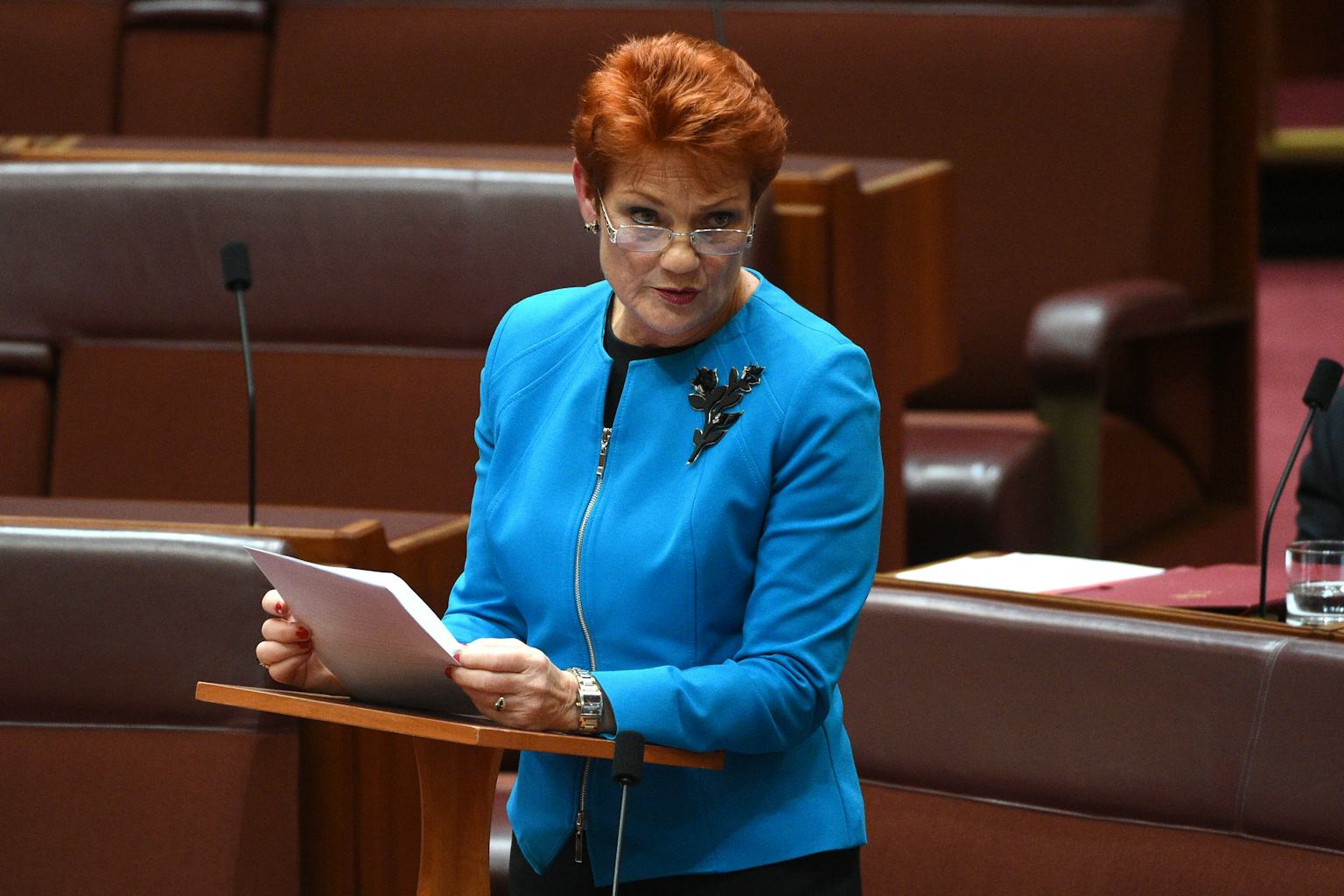
Supporters praised Pauline Hanson for addressing what they see as the real economic concerns facing ordinary Australians.
Critics accused her of exploiting cost-of-living fears to push a fossil fuel agenda many believe belongs in the past.
But regardless of political opinion, the reaction has been impossible to ignore.
The energy debate is once again dominating headlines across Australia.
And with inflation still hurting households, electricity prices remaining volatile, and global energy markets under pressure, Hanson’s message has landed at a politically sensitive moment.
Whether Australians see her proposal as economic realism or political provocation, one thing is becoming increasingly clear:
The battle over Australia’s energy future is far from over.