Senate Hearing Explodes as Ted Cruz Raises Al-Qaeda, ISIS and Citizenship Vetting Failures
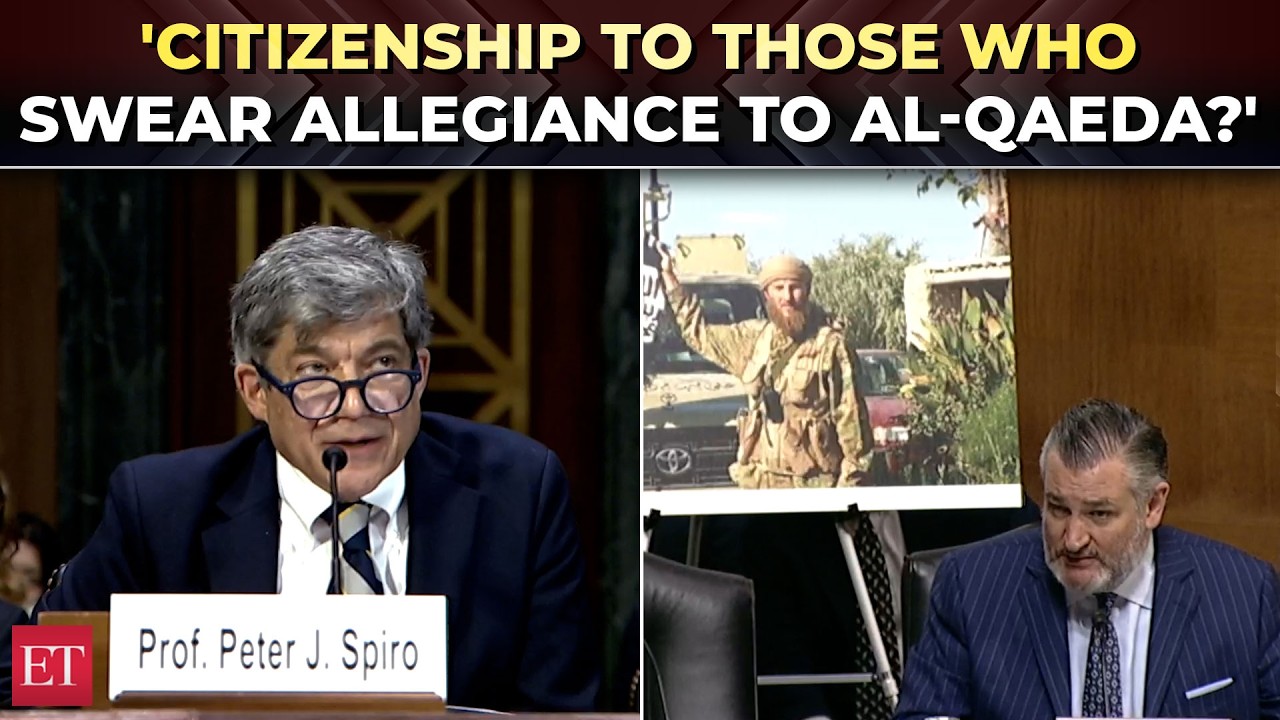
For years, America’s immigration debate has focused on the southern border. But this week, a heated Senate hearing shifted attention toward a different question: what happens after someone enters the United States and applies for citizenship?
The exchange quickly became one of the most controversial moments in Washington’s ongoing battle over immigration, national security, and the legacy of past administrations.
Senator Ted Cruz opened the hearing with a blunt challenge. Should the United States grant citizenship to someone who swears allegiance to Al-Qaeda?
The question immediately set the tone. What followed was less a discussion about immigration policy and more an argument over whether America’s naturalization system has failed to identify dangerous individuals before granting them citizenship.
Former immigration officials testifying before the committee argued that citizenship is not an automatic right for applicants seeking naturalization.
Under federal law, applicants must demonstrate good moral character, support for the Constitution, and loyalty to the United States before receiving citizenship.
Witnesses argued that if any of these requirements are not met, naturalization should be denied.
The hearing then turned to allegations that background screening procedures weakened under previous administrations.

Testimony highlighted a government review that found fingerprint records for thousands of immigrants had not been properly entered into federal databases, creating potential gaps in security screening.
According to witnesses, those failures allowed some individuals who should have been flagged by immigration authorities to move through the system undetected.
Cruz argued that such mistakes have consequences that can take years to become visible.
He pointed to several high-profile cases involving naturalized citizens who were later connected to criminal or extremist activities.
One example discussed during the hearing involved an individual who allegedly refused to recite the standard oath of allegiance during a citizenship ceremony.
Witnesses testified that despite concerns raised at the time, citizenship was ultimately granted.
According to testimony presented during the hearing, that same individual later traveled overseas and joined ISIS.
The allegation sparked one of the most dramatic moments of the session.
Several witnesses questioned how such an applicant could have passed through a process specifically designed to evaluate commitment to American constitutional principles.
The hearing also examined concerns about the citizenship test itself.
Critics argued that recent versions of the test were too easy and failed to adequately measure applicants’ understanding of American history, government, and civic values.
Supporters of current policies countered that isolated cases should not be used to judge a system that processes hundreds of thousands of successful naturalization applications every year.
That disagreement exposed a deeper divide in Washington.
One side views these incidents as evidence of systemic weaknesses that threaten national security.
The other argues that focusing on a handful of extreme examples risks creating a misleading picture of an immigration system that functions successfully for the overwhelming majority of applicants.
The discussion became even more contentious when lawmakers cited a Justice Department review that identified naturalized citizens later convicted of terrorism-related offenses.

Critics argued that those cases demonstrate the need for stronger vetting procedures and more aggressive review of past naturalizations.
Others responded that the numbers remain extremely small compared with the total number of people who become American citizens annually.
Yet the political significance extends far beyond statistics.
The debate arrives at a moment when immigration remains one of the most polarizing issues in American politics.
Questions about border security, asylum policy, deportations, and citizenship are already expected to play a major role in upcoming political battles.
For conservatives, the hearing reinforced arguments that national security concerns have been overlooked for too long.
For progressives, it raised concerns that exceptional cases could be used to justify broader restrictions affecting law-abiding immigrants.
What made the hearing particularly striking was that both sides agreed on one basic principle.
No witness defended granting citizenship to individuals who concealed criminal histories, supported terrorist organizations, or fraudulently obtained naturalization.
The disagreement centered on how frequently such failures occur and whether they reflect isolated mistakes or larger institutional problems.
As the hearing concluded, Cruz argued that denaturalization efforts are not about removing legitimate citizenship but correcting cases where citizenship should never have been granted in the first place.
Supporters described that approach as necessary to protect the integrity of the naturalization process.
Critics warned that expanding such efforts could create legal and political challenges far beyond the cases currently under review.
What is clear is that the hearing transformed a technical immigration discussion into a broader debate about national identity, security, and trust in government institutions.
And as Washington moves deeper into another contentious political season, that debate is unlikely to disappear anytime soon.