Canada-Germany LNG Agreement Signals Major Shift in Ottawa’s Trade and Energy Strategy
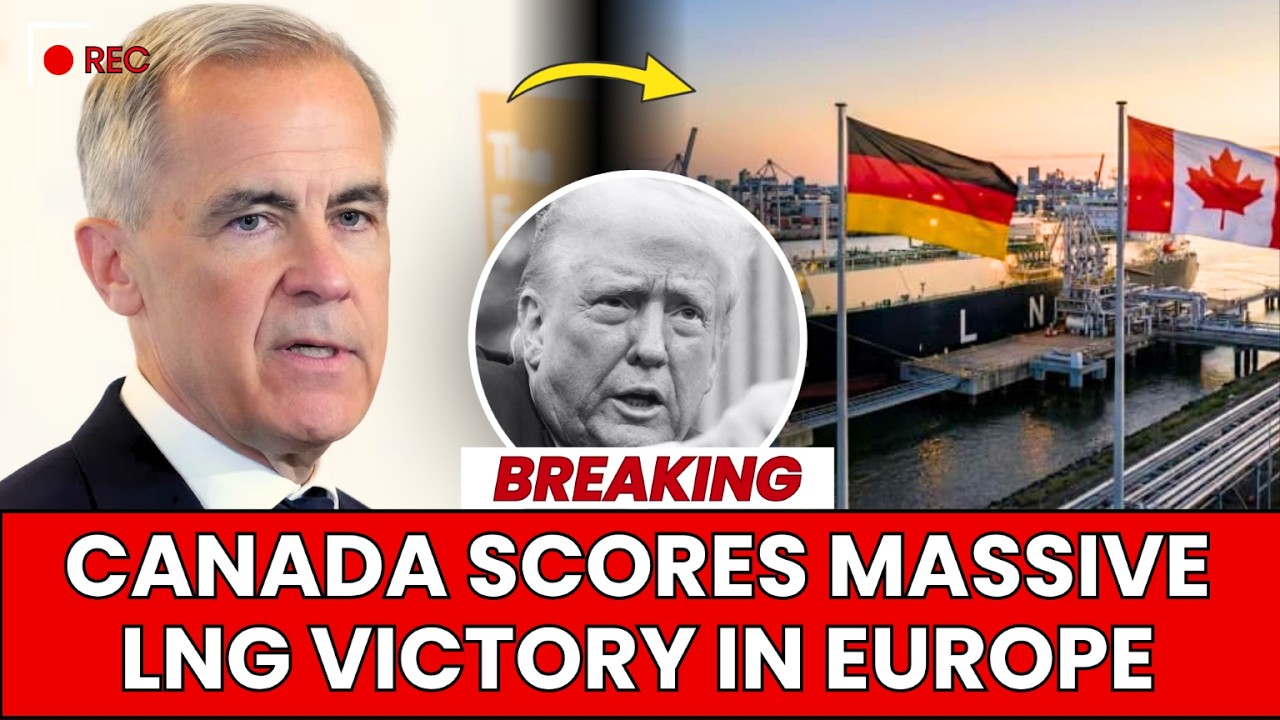
Canada’s evolving trade and energy agenda has moved into sharper focus following a significant liquefied natural gas agreement involving German energy company Sefe and major LNG developments on British Columbia’s Pacific coast. The agreement, highlighted by federal and provincial officials as a potentially transformative economic opportunity, has drawn national attention because of its implications for exports, infrastructure development, and Canada’s long-term position in global energy markets.
The central political figure in the discussion is Mark Carney, whose government has repeatedly emphasized the importance of reducing Canada’s economic dependence on the United States while expanding commercial relationships with Europe and Asia. The agreement arrives as Ottawa continues pursuing broader export diversification objectives and seeks new avenues for long-term economic growth.
According to the transcript, the arrangement involves Germany’s state-backed Sefe Group and Canadian LNG projects including Cedar LNG and Ksi Lisims LNG. Both projects are described as moving closer to final investment decisions after securing significant European interest.
For many observers, the agreement represents more than a conventional energy contract. It is closely linked to a proposed $10-billion LNG facility, expanded pipeline infrastructure, electricity transmission projects, marine upgrades, and thousands of potential construction jobs across British Columbia. Provincial officials characterized the development as one of the largest private-sector investment opportunities currently under consideration in Canada.
Germany’s interest reflects broader changes in European energy policy following Russia’s invasion of Ukraine. The transcript notes that Berlin has sought alternative long-term suppliers after reducing reliance on Russian natural gas, creating opportunities for resource-producing countries viewed as politically stable and economically reliable.
For Ottawa, the timing carries additional significance. The federal government has repeatedly promoted a strategy aimed at doubling Canada’s non-U.S. trade over the coming decade. Supporters of the LNG agreement argue that access to European buyers could help advance that objective while reducing exposure to future trade disputes with Washington.
The transcript also suggests that decades of energy infrastructure development largely oriented toward the United States created structural vulnerabilities for Canadian producers. Heavy dependence on a single export destination left the sector exposed whenever commercial tensions emerged between Ottawa and Washington.
At the same time, European demand has increasingly focused on reliability and long-term supply security. The transcript indicates that some European firms have explored shipping Canadian LNG through the Panama Canal despite higher transportation costs, reflecting a strategic priority to diversify energy sources.


The proposed projects are expected to contribute substantially to British Columbia’s industrial development. Cedar LNG would become one of the country’s largest floating LNG export facilities, while Ksi Lisims LNG could support broader investment in transportation, electricity transmission, and port infrastructure.
Supporters of the initiative argue that the economic benefits extend well beyond natural gas exports. The federal government has increasingly framed LNG development as part of a broader industrial strategy encompassing construction activity, manufacturing support, export diversification, and long-term infrastructure growth.
Political considerations have also shaped the debate. The transcript argues that growing economic tensions and tariff pressures from the United States have encouraged Canada to strengthen relationships with partners elsewhere, particularly in Europe and Asia. In this context, LNG exports are being presented as part of a wider effort to enhance national economic resilience.
The economic projections referenced in the transcript are substantial. Estimates cited suggest that a fully developed Canadian LNG sector could contribute more than $11 billion annually to national GDP, while British Columbia could experience approximately $8 billion in annual GDP growth linked directly to LNG-related activity.
Additional projections indicate that the sector could support more than 96,000 jobs across Canada each year, including roughly 71,000 positions within British Columbia. Existing investments associated with LNG Canada have already established benchmarks for large-scale private-sector spending in the country.
However, significant challenges remain. The transcript notes that proposed pipeline routes and related infrastructure projects have already prompted environmental concerns among some residents and Indigenous stakeholders. Issues raised include potential impacts on land use, water resources, and long-term ecological sustainability.
These concerns have highlighted widening divisions within public discussions surrounding major energy developments. Canada’s history of pipeline disputes demonstrates how regulatory reviews, court challenges, and public opposition can significantly affect project timelines.
Investors and market participants are closely monitoring these developments. While the agreement may signal growing international confidence in Canadian energy exports, project success ultimately depends on approvals, financing, construction schedules, and regulatory certainty.
Another important factor is intensifying global competition. Canada is entering an LNG market already dominated by the United States, while countries such as Qatar and Australia continue expanding production capacity and strengthening their positions in international markets.
The transcript argues that Canada’s competitive advantage may increasingly rest on political stability and institutional predictability rather than solely on price. German and other European buyers appear interested in long-term partnerships with countries capable of offering dependable supply arrangements over extended periods.
For the Carney government, the agreement has become closely associated with its broader economic vision. Success would strengthen Ottawa’s argument that Canada can diversify trade relationships and develop major national infrastructure projects while expanding its influence in international energy markets.
At the same time, the initiative has faced growing scrutiny in Ottawa as policymakers evaluate the balance between economic development, environmental stewardship, Indigenous consultation, and long-term energy policy. Those debates are expected to continue as projects advance through regulatory and investment stages.
Ultimately, the Canada-Germany LNG agreement has prompted renewed debate across Canada’s political landscape about the country’s future role as a global energy supplier. Whether the projects become a defining economic success or encounter familiar obstacles associated with large-scale infrastructure development, the debate remains unresolved within Canada’s broader political landscape.