While much of the world’s attention remained focused on geopolitical tensions in the Middle East, volatile energy markets, and growing uncertainty surrounding global trade, a quieter but potentially transformative development was taking place thousands of miles away.
Canadian Prime Minister Mark Carney and Indonesian President Prabowo Subianto held discussions that may ultimately become one of the most important economic milestones in Canada’s modern trade strategy.
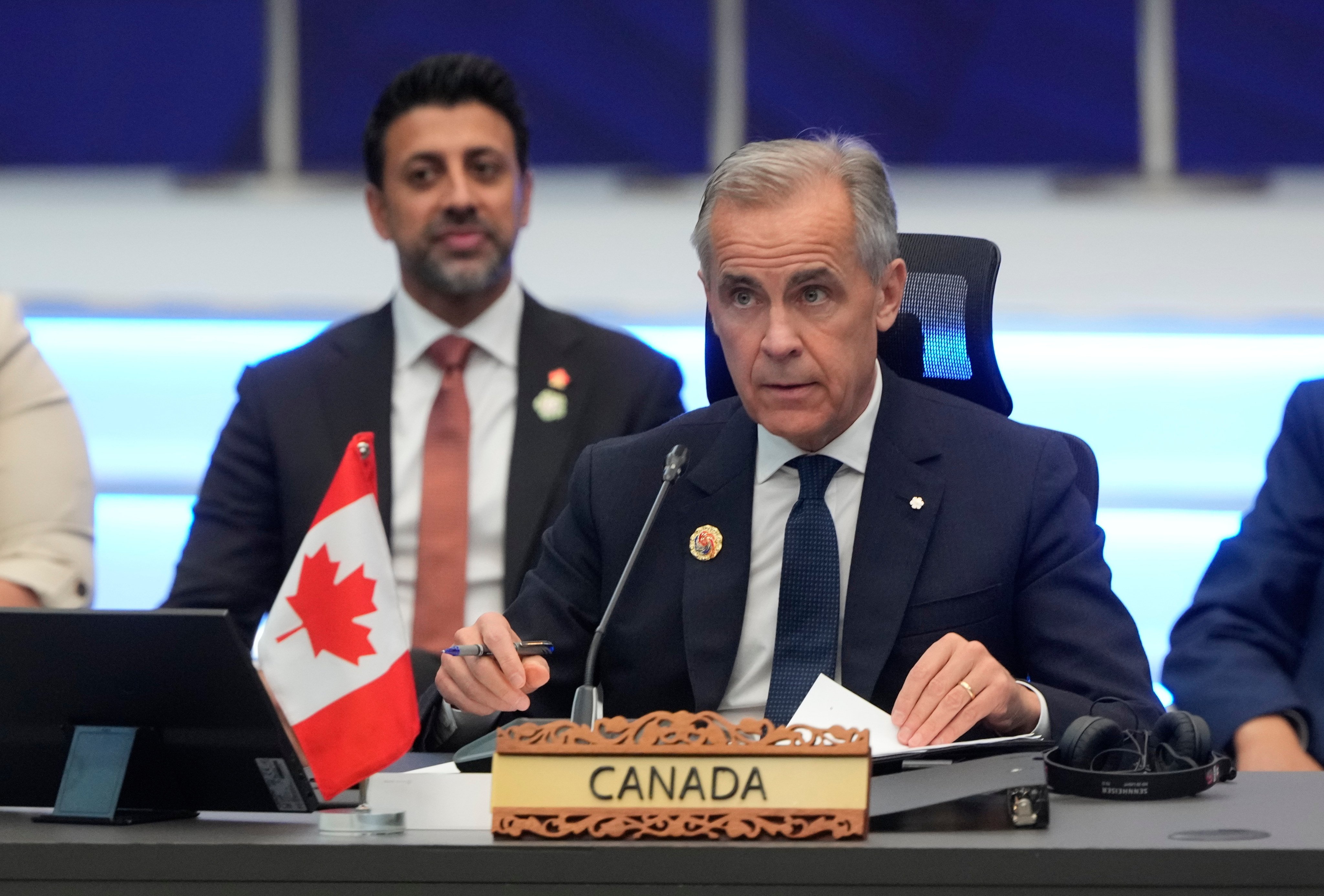
At first glance, the meeting attracted relatively little international attention.
There were no dramatic announcements.
No emergency summits.
No major diplomatic confrontations.
Yet behind the scenes, the conversation centered on a project that could reshape economic relations between Canada and Southeast Asia for decades to come.
The focus was the Canada–Indonesia Comprehensive Economic Partnership Agreement (CEPA), a landmark trade framework that would become Canada’s first bilateral trade agreement with a member of the Association of Southeast Asian Nations (ASEAN).
For Canada, the significance extends far beyond a single trade deal.
It represents a strategic shift toward one of the fastest-growing regions in the world.
For Indonesia, it offers expanded access to a major G7 economy and new opportunities for investment, technology cooperation, and market expansion.
And for businesses on both sides of the Pacific, it could unlock billions of dollars in new commercial activity.
The timing is particularly important.
The global economy is undergoing a period of profound transformation.
Supply chains that once depended heavily on a small number of markets are being reconsidered.
Governments are seeking greater economic resilience.
Businesses are diversifying their international operations.
And nations around the world are searching for reliable partners capable of supporting long-term growth.
Canada’s growing interest in Southeast Asia reflects this broader trend.
For decades, Canadian trade has been heavily concentrated in North America.
The United States remains Canada’s largest trading partner by a significant margin.
However, recent years have demonstrated the risks associated with excessive dependence on any single market.
Trade disputes, political tensions, supply chain disruptions, and shifting economic policies have all encouraged Canadian policymakers to pursue greater diversification.
Indonesia presents an especially attractive opportunity.
With a population exceeding 280 million people, it is the largest economy in Southeast Asia and one of the most dynamic emerging markets in the world.
Its rapidly expanding middle class, growing industrial base, and increasing consumer demand make it a highly attractive destination for international exporters.
For Canadian businesses, gaining improved access to such a market could generate substantial long-term benefits.
Under the proposed agreement, more than 95 percent of Canada’s current exports to Indonesia could eventually see tariffs reduced or eliminated.
That change alone could significantly improve the competitiveness of Canadian products.
Agricultural producers may benefit from lower barriers to exporting grains, meat products, and food ingredients.
Manufacturers could gain easier access to Indonesian customers.
Technology firms may find new opportunities in digital services and innovation partnerships.
Mining companies could expand cooperation in resource development.
The possibilities are extensive.
Consumers in Indonesia may also benefit.
Reduced tariffs often translate into lower costs for imported products.
Greater competition can improve product variety and availability.
Businesses gain access to new suppliers.
Consumers gain access to more choices.
In many cases, economic integration helps drive efficiency throughout supply chains.
This is one reason why supporters of the agreement describe it as a potential win-win arrangement.
Yet the bilateral agreement is only part of the story.
During their discussions, Carney and Prabowo also addressed efforts to accelerate negotiations toward a broader Canada–ASEAN Free Trade Agreement.
Such an agreement would dramatically expand the scale of economic cooperation.
ASEAN represents a market of more than 650 million people and a combined economy worth trillions of dollars.
The region includes some of the fastest-growing economies on the planet, including Vietnam, Thailand, the Philippines, Malaysia, and Singapore.
Collectively, ASEAN has become one of the world’s most important economic blocs.
Securing preferential access to that market would represent a major achievement for Canadian trade policy.
For businesses, it could create opportunities across sectors ranging from agriculture and manufacturing to financial services and clean technology.
For investors, it could facilitate greater capital flows and commercial partnerships.
For governments, it could strengthen political and economic ties across the Indo-Pacific region.
The emphasis on the Indo-Pacific has become increasingly central to Canada’s international strategy.
Canadian policymakers recognize that much of the world’s future economic growth is expected to occur in Asia.
As populations expand, incomes rise, and urbanization accelerates, demand for goods, services, infrastructure, and energy continues to increase.
Countries that establish strong relationships in the region today may be better positioned to benefit from future growth.
That reality helps explain why Canada is investing increasing diplomatic attention in Southeast Asia.
The partnership with Indonesia extends beyond traditional trade.
Both countries possess significant interests in critical minerals, a sector that has become strategically important due to the global transition toward clean energy technologies.
Electric vehicles, battery systems, renewable energy infrastructure, and advanced manufacturing all require substantial quantities of critical minerals.
Indonesia possesses some of the world’s largest reserves of nickel, a key component in many battery technologies.
Canada, meanwhile, has developed expertise in mining, processing, environmental management, and resource development.
Cooperation between the two countries could create significant opportunities within global supply chains.
Clean energy represents another area of growing collaboration.
Both governments have expressed interest in supporting sustainable development while expanding economic growth.
This includes investments in renewable energy projects, energy infrastructure, emissions reduction technologies, and environmental innovation.
As countries around the world pursue ambitious climate goals, partnerships in these sectors are becoming increasingly valuable.
Agriculture is also expected to play an important role.
Canada remains one of the world’s leading agricultural exporters.
Indonesia’s large and growing population creates significant demand for food products and agricultural inputs.
Improved market access could strengthen food security while generating economic opportunities for producers in both countries.
Infrastructure development may become another pillar of the relationship.
Indonesia continues to invest heavily in transportation systems, urban development, ports, and industrial facilities.
Canadian engineering firms, financial institutions, and infrastructure specialists may find new opportunities to participate in these projects.
Taken together, these areas of cooperation suggest that the emerging relationship is about far more than tariffs alone.
It reflects a broader effort to build long-term economic integration.
For Prime Minister Carney, the initiative aligns with a larger vision of reducing Canada’s vulnerability to economic shocks while expanding access to high-growth markets.
For President Prabowo, the agreement supports Indonesia’s ambitions to attract investment, strengthen industrial development, and accelerate economic modernization.
The geopolitical implications are also noteworthy.
As global competition intensifies among major powers, middle powers such as Canada and Indonesia are increasingly seeking to expand partnerships that support economic independence and strategic flexibility.
Rather than relying excessively on any single economic partner, both countries appear committed to broadening their international relationships.
That approach may become increasingly important in a world characterized by geopolitical uncertainty and rapidly evolving trade patterns.
Although negotiations remain ongoing and implementation will require further work, the momentum appears significant.
What began as a relatively quiet diplomatic conversation could eventually become one of the most consequential trade developments in Canada’s recent history.
If successful, the Canada–Indonesia agreement may serve as a gateway to deeper engagement with all of Southeast Asia.
And in doing so, it could help reshape Canada’s economic future while strengthening ties between two nations separated by geography but increasingly connected by opportunity.
The headlines may currently belong to global crises, political disputes, and energy market volatility.
But years from now, historians may look back on this moment and conclude that one of the most important economic stories of the decade began not with a dramatic announcement, but with a strategic conversation between Ottawa and Jakarta about the future of trade in the Indo-Pacific.






