Trump, Epstein Files and a Restive Electorate Put Republicans on the Defensive
WASHINGTON — The Justice Department’s latest release of records tied to the late financier and convicted sex offender Jeffrey Epstein has reopened a political and moral wound that many in Washington have spent years trying to cauterize: what the government knew, when it knew it, and which powerful figures appear in investigative paper trails that stretch across decades.
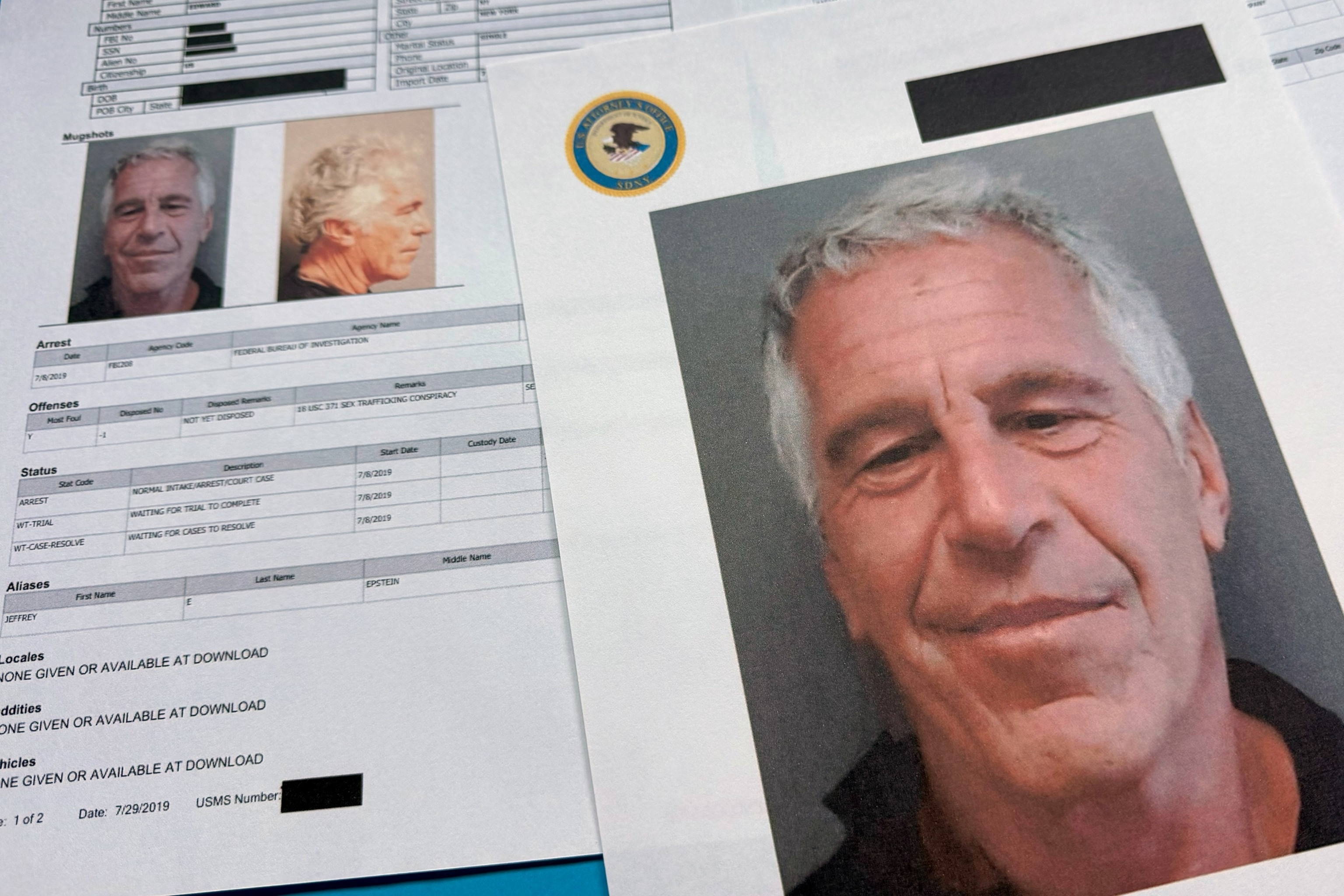
On Jan. 30, the U.S. Department of Justice said it had published “over 3 million additional pages” under the Epstein Files Transparency Act, alongside thousands of videos and a large trove of images—bringing the total release to roughly 3.5 million pages.
The disclosure, officials said, was intended to satisfy legal requirements. But the rollout quickly became a new crisis of confidence: victims’ attorneys and journalists reported major redaction failures that exposed identifying information, prompting the department to pull materials back, revise procedures and field emergency requests for corrections.
If the mishandled redactions raised alarms about competence and care for survivors, the political aftershock has centered elsewhere: the renewed attention to President Trump’s presence in the wider Epstein orbit, and whether the administration’s posture—alternating between promises of transparency and complaints of “politicization”—is convincing anyone beyond the president’s core base.
Mentions, materials and what “appearing in files” actually means
The central fact of the moment is also the easiest to misrepresent: large investigative dumps include vast quantities of references—some substantive, some incidental, some repeated because they are copied across clippings, summaries and contact logs. The Justice Department itself has urged caution in reading guilt into raw mentions; many records reflect leads, reporting, and third-party claims rather than adjudicated findings.
Still, the political problem for the White House is not a courtroom standard. It is a credibility standard—one tested in the churn of cable news and social media, where the distinction between “named” and “implicated” is often flattened into a single, viral insinuation.
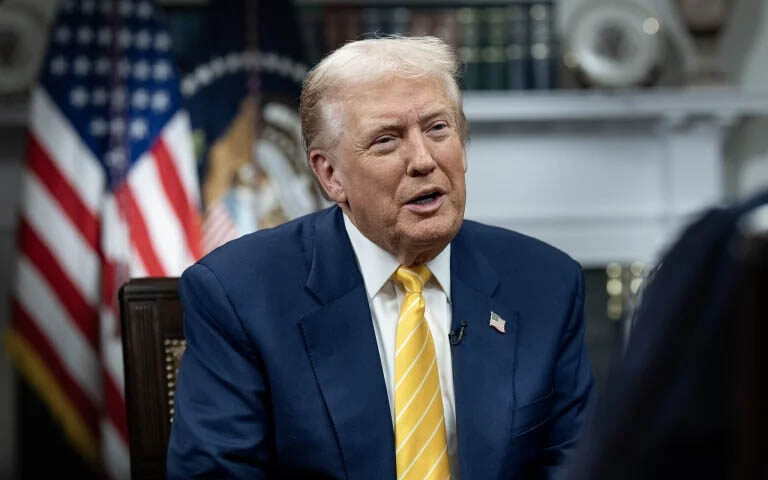
A prominent example now circulating involves a long-public allegation that resurfaced in the wake of the release. The administration has denied wrongdoing, and the Justice Department has characterized certain claims as false; Trump has repeatedly denied allegations of sexual misconduct. Because these are unproven allegations, responsible coverage hinges on verification, context and the legal record—not the intensity of online repetition.
Speaker Johnson tries to close the story — and keeps extending it
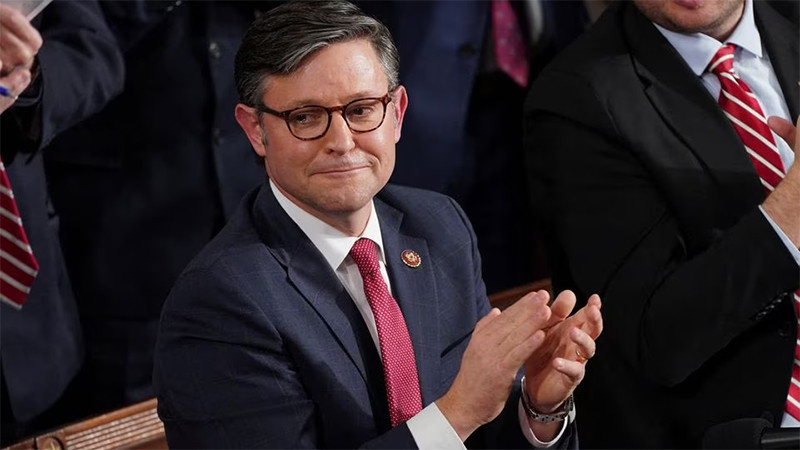
In a different political moment, the Republican response to such a storm would be disciplined: redirect, diminish, and change the subject. But on Sunday and Monday, Mike Johnson found himself defending Trump while simultaneously confronting an uncomfortable reality: the Epstein story resists closure precisely because the public distrusts elites to police themselves.
Johnson’s public line has been consistent—he says Trump has expressed the same views privately and publicly, and he has portrayed the president as untroubled by the renewed scrutiny. Those remarks have been replayed widely, partly because Johnson appeared to concede how politically radioactive the topic has become, even as he insisted it was being unfairly weaponized.
Democrats, for their part, are framing the dispute as less about any single name in a file and more about transparency. After the latest release—and the immediate controversy over what was withheld and what was inadvertently exposed—lawmakers publicly accused the administration of an incomplete production and demanded unredacted access to key materials under congressional oversight.
That tension—privacy for victims versus disclosure about powerful associates—has become the political trap. Any posture that looks like “protecting the famous” draws backlash; any posture that fails to protect victims is morally indefensible and legally risky.
A scandal collides with broader doubt about governance
The Epstein controversy is not unfolding in isolation. It is landing in a political environment already strained by public anger over costs, enforcement tactics, and fatigue with perpetual conflict.
Polling and election results are giving Democrats reasons to believe the moment could matter at the ballot box. In Texas, Democrat Taylor Rehmet flipped a reliably Republican seat in a special election for Texas Senate District 9—winning by about 14 points in a district Trump carried by 17 in 2024, a jarring swing that even some Republicans cautioned against dismissing as “quirky.”
The result became immediate fodder for the midterm narrative: that special elections, while imperfect predictors, can signal enthusiasm gaps—who is motivated, who is demoralized, and who is quietly slipping away.
Meanwhile, the Epstein release has intensified scrutiny of the administration’s competence. The Justice Department’s withdrawal of materials after exposing victim information invited condemnation from survivors and their lawyers, who argued the process inflicted fresh harm while failing to provide clarity about alleged enablers.
The online megaphone: outrage, influencers and a credibility spiral
The story’s velocity is being driven, in part, by the same ecosystem that helped shape Republican politics over the last decade: podcasts, streamer culture and algorithmic outrage.
Some prominent voices are treating the disclosures as proof of systemic rot; others are framing the controversy as a partisan trap. But even in conservative-leaning online spaces, the White House has struggled to find a message that ends the argument rather than amplifying it—especially when the facts of the release (millions of pages, redaction failures, and disputes about what remains withheld) keep generating new headlines.
Separate reporting has highlighted how many prominent names—particularly in tech and finance—appear in the files, emphasizing again that presence does not prove criminal conduct but can still damage reputations and inflame suspicions.
What happens next
For now, the administration’s formal position is that it has complied with the law. But the political reality is harsher: the release did not resolve the public’s suspicion that elites protect one another, and the redaction debacle reinforced claims that the system is either careless with victims or selective with accountability—sometimes both at once.
The next flashpoints are already scheduled. Congressional pressure is building, and Attorney General testimony is expected to become a televised referendum on competence, transparency and trust. And in the weeks ahead, Republicans will be forced to answer a strategic question that Johnson’s media appearances could not: whether defending Trump on Epstein is worth the cost of keeping the story alive.
Because the lesson of the last few days is simple: in a scandal that blends power, secrecy and trauma, saying “there’s nothing to see here” rarely ends the conversation. It usually just convinces people that there is.






