Late-night television once again collided with presidential politics this week after remarks from Donald Trump about ratings and fundraising emails became fodder for a blistering monologue by Jimmy Kimmel. The former president had criticized Kimmel publicly, dismissing him as untalented and pointing to what he described as weak ratings. The comments followed a fundraising message circulated by the Republican National Committee that struck a personal tone, asking supporters, “Do you still love me?”
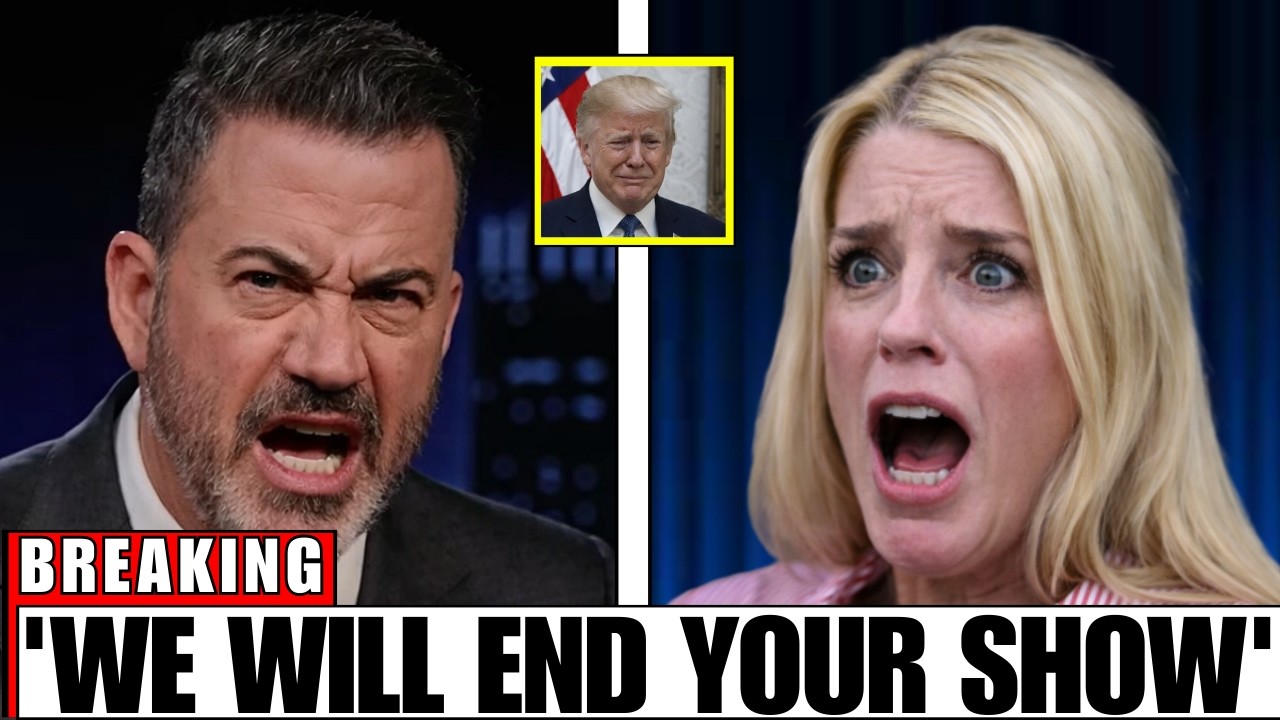
Kimmel seized on both developments during his broadcast of Jimmy Kimmel Live!, weaving Trump’s remarks into a broader satirical critique. Rather than offering a brief rebuttal, he expanded the moment into a pointed segment that blended political commentary with performance. The studio audience responded with sustained laughter, while clips from the show quickly circulated online.
A significant portion of the monologue focused on Attorney General Pam Bondi, whom Kimmel portrayed as a central player in ongoing controversies involving the administration. He referenced congressional hearings, questions about investigative transparency, and renewed public interest in records connected to Jeffrey Epstein. As with much of Kimmel’s political humor, the tone oscillated between exaggeration and sharp-edged satire.
Kimmel also mocked what he characterized as Trump’s fixation on awards, branding, and public image. Using archival clips of Trump praising various initiatives and personalities, the host constructed a montage designed to underscore perceived contradictions. The technique — juxtaposing a subject’s own words against present circumstances — has become a hallmark of contemporary late-night satire.:max_bytes(150000):strip_icc()/donald-trump-jimmy-kimmel-031824-344c3ea21e474793bf807b0254e39e4a.jpg)
The episode reflects a larger trend in which late-night hosts serve as cultural commentators as much as entertainers. In recent years, political figures have increasingly responded directly to comedic criticism, blurring the boundary between governance and performance. Trump’s willingness to address comedians publicly — and occasionally through official channels — has only intensified that dynamic.
Supporters of the former president argue that such segments amount to partisan attacks disguised as humor. Critics counter that satire has long played a role in democratic discourse, holding public figures to account through ridicule and exaggeration. The tension between those views ensures that moments like this extend beyond entertainment and into broader debates about media influence and political narrative.
What distinguished this particular broadcast was its pacing and theatricality. Kimmel structured the monologue as an escalating sequence, moving from light mockery to more pointed observations. Audience reactions — laughter, applause, audible surprise — became part of the spectacle, reinforcing the sense that the exchange was as much performance art as political commentary.
By the end of the segment, it was clear that the clash would not remain confined to one night of television. Online discussion intensified, with supporters and detractors dissecting each line. Whether viewed as incisive satire or overreach, the episode underscores how late-night comedy continues to function as both cultural mirror and political battleground — a place where punchlines can ripple far beyond the studio walls.






