🔥 BREAKING: Donald Trump SHARES A CONTROVERSIAL VIDEO — Barack Obama RESPONDS WITH MEASURED WORDS ⚡
Former President Donald J. Trump on Tuesday shared on social media a video that depicted former President Barack Obama’s face superimposed on the body of an ape, igniting a fresh round of outrage and underscoring the coarsening tone that has come to define much of the nation’s political discourse.
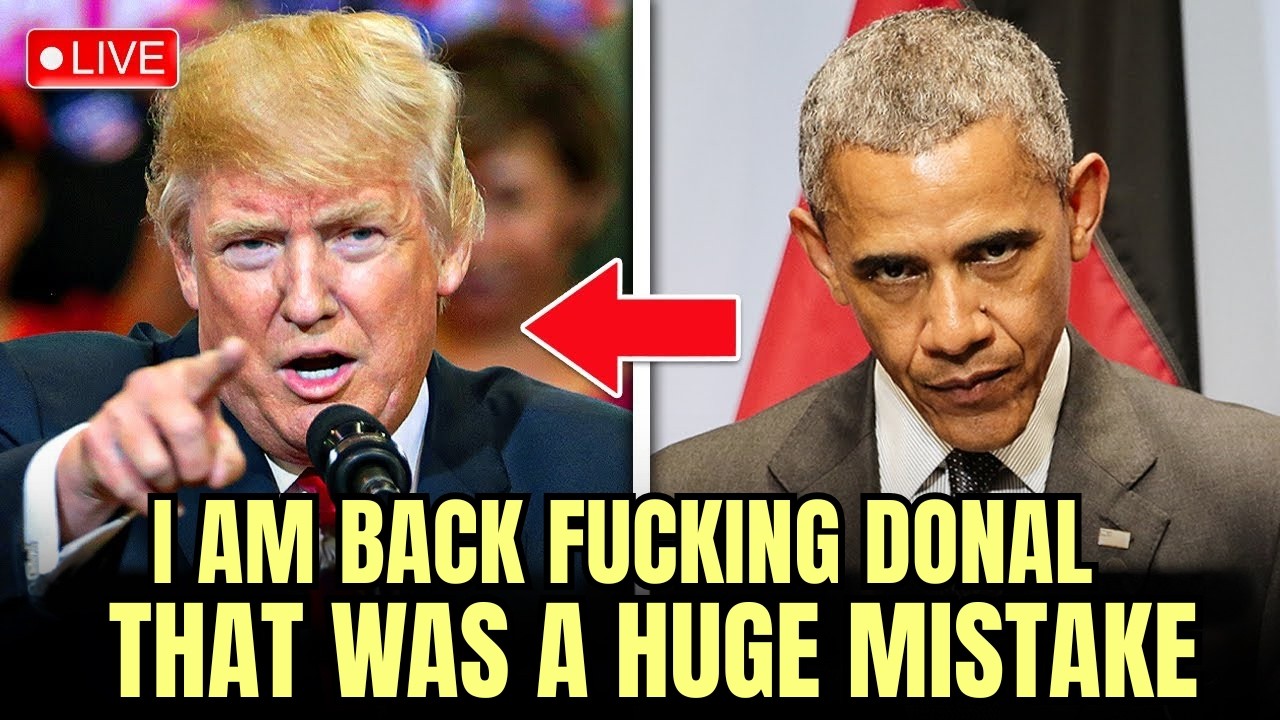
The post, which circulated widely before being flagged and removed by some platforms, drew swift condemnation from civil rights advocates and Democratic officials, who described it as overtly racist and beneath the dignity of a former president. Several Republican lawmakers declined to comment, while others sought to pivot to broader concerns about political polarization.
Mr. Obama did not publicly respond.
The silence was striking. In past political controversies, provocative statements by Mr. Trump have often prompted direct rebuttals, fueling days of televised exchanges and social media clashes. This time, aides to Mr. Obama said privately that he had no intention of engaging. On Wednesday, he appeared at a scheduled education event, smiling and posing for photographs, making no mention of the episode.
The decision not to respond reflects a calculation that engagement can amplify rather than diminish inflammatory content — particularly in a media environment where outrage often drives attention. “We do not need to duplicate the behavior of the other side,” Mr. Obama said in a separate public appearance when asked more broadly about rising incivility in politics. He urged Americans to respond to objectionable speech “in a lawful way” and to rely on civic processes rather than escalation.
Mr. Trump’s post came as renewed scrutiny has fallen on his past association with Jeffrey Epstein, the financier and convicted sex offender who died in jail in 2019 while awaiting trial on federal sex trafficking charges. Recent court filings related to Epstein have revived questions about prominent figures in his orbit, including Mr. Trump, who socialized with Epstein in the 1990s and early 2000s before later distancing himself.
There is no evidence in the newly unsealed documents that Mr. Trump has been charged with wrongdoing in connection with Epstein. Still, the disclosures have generated headlines and prompted political opponents to call for greater transparency about the nature of their relationship.
Some Democratic strategists argued that Mr. Trump’s post was an attempt to redirect attention from those developments. They described it as a familiar tactic: injecting a provocative or offensive statement into the news cycle at a moment of political vulnerability.
Allies of Mr. Trump rejected that characterization, saying the former president frequently shares content that reflects his grievances with political rivals and the media. A spokesman for Mr. Trump did not respond to a request for comment about the video or its timing.
The imagery itself touched on a long and painful history. Comparing Black people to apes has been a recurring racist trope in American and European history, used to justify discrimination, segregation and violence. Civil rights organizations said the video’s circulation demonstrated how such dehumanizing stereotypes continue to surface in contemporary politics.
“This kind of content is not just offensive; it reinforces narratives that have been used to marginalize and harm,” said Derrick Johnson, president of the NAACP, in a statement. “Leaders should be working to lower the temperature, not inflame it.”
The episode also highlighted the evolving role of social media in shaping political debate. Mr. Trump, who was once barred from several major platforms after the Jan. 6 attack on the Capitol, has returned to an online ecosystem that is more fragmented and less moderated than it was during his presidency. Content that might once have been quickly removed can now circulate widely before any intervention occurs.
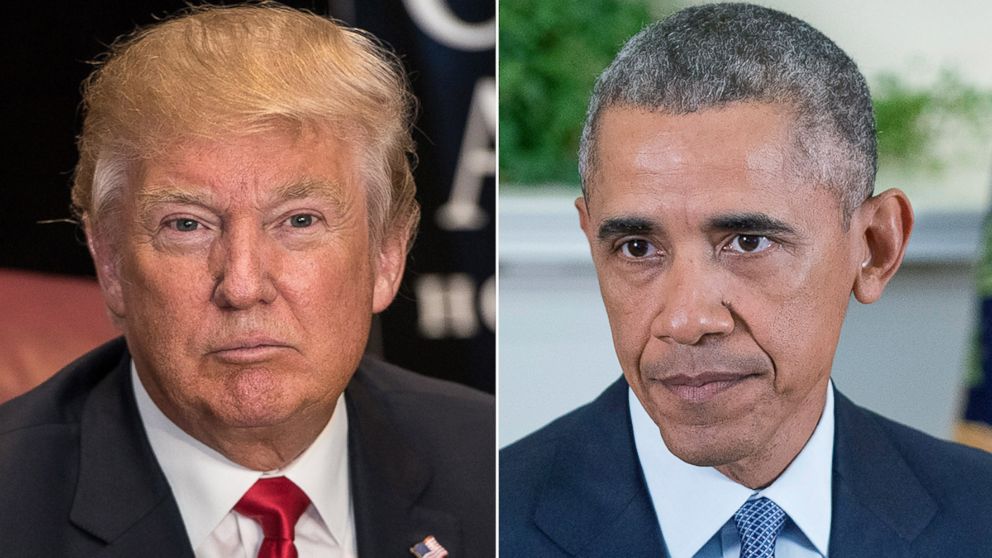
Media analysts noted that the lack of a direct response from Mr. Obama may have limited the lifespan of the controversy. Without a public back-and-forth between the two men, cable news coverage shifted more quickly to other matters, including the legal proceedings related to Epstein and the broader 2026 campaign landscape.
Still, the incident added to a pattern of norm-breaking behavior that has characterized Mr. Trump’s political career. From mocking opponents’ appearances to promoting conspiracy theories, he has repeatedly tested the boundaries of what is considered acceptable rhetoric from a national leader. Supporters often view his bluntness as authenticity; critics see it as corrosive.
For Mr. Obama, the choice to remain silent appeared consistent with a long-standing approach to provocation from his successor. During and after Mr. Trump’s presidency, Mr. Obama has generally avoided direct personal exchanges, instead framing his comments in terms of democratic principles and institutional integrity.
Whether that strategy will continue to blunt the impact of such attacks remains uncertain. As the nation heads toward another contentious election cycle, episodes like this one suggest that racial imagery and personal invective remain potent — and polarizing — tools in American politics.
In the absence of a direct confrontation between the two former presidents, the focus has returned to the legal and political questions surrounding Mr. Trump. But the viral video served as a reminder of how quickly the national conversation can be jolted by a single post — and how the decision to engage, or not, can shape what comes next.






