A sweeping new trade action from the United States has sent shockwaves through global markets after the Trump administration unveiled proposed tariffs targeting more than 60 countries in a single move. While the official justification centers on combating forced labor in international supply chains, critics are questioning whether the policy is really about human rights—or something else entirely.
The announcement has placed allies and rivals alike on the same tariff list. Countries including Canada, Japan, New Zealand, Israel, members of the European Union, and even geopolitical competitors such as China and Russia now face potential new trade barriers under Washington’s latest proposal.

At the center of the controversy is a report issued by the Office of the United States Trade Representative, which argues that many trading partners have failed to adequately prevent goods produced with forced labor from entering global markets.
Under the proposal, countries deemed insufficiently aggressive in policing their supply chains could face new import taxes when selling goods into the American market.
Canada was among the nations included in the announcement.
While Canadian officials were disappointed by the decision, many analysts believe the practical impact may be smaller than headlines initially suggest.
That is because nearly 90 percent of Canadian exports to the United States are already protected under the Canada-United States-Mexico Agreement (CUSMA), the trade pact that replaced NAFTA and continues to govern most North American trade.
Nevertheless, the symbolism of Canada’s inclusion has sparked debate on both sides of the border.
Critics of the White House policy argue that the forced-labor rationale may be serving another purpose.
Several trade experts have suggested that the administration is using human-rights concerns as a legally defensible pathway to revive tariff policies that previously faced challenges in American courts.
According to this view, the new measures could represent an attempt to expand trade restrictions while avoiding some of the legal obstacles that complicated earlier tariff initiatives.
Supporters of the proposal reject that interpretation.
They argue that forced labor remains a serious global issue and that governments should not benefit economically from supply chains linked to exploitation.
From their perspective, the United States is simply using its economic leverage to pressure trading partners into strengthening enforcement and improving transparency.
The debate has quickly evolved beyond tariffs alone.
It is now raising uncomfortable questions about how effectively countries are enforcing their own laws against forced labor.
In Canada’s case, critics have pointed to recent reports showing that only two suspected forced-labor shipments were blocked over a six-year period.
For some observers, those figures suggest significant gaps between policy commitments and practical enforcement.
Others argue that the numbers reflect the difficulty of detecting violations rather than a lack of effort.
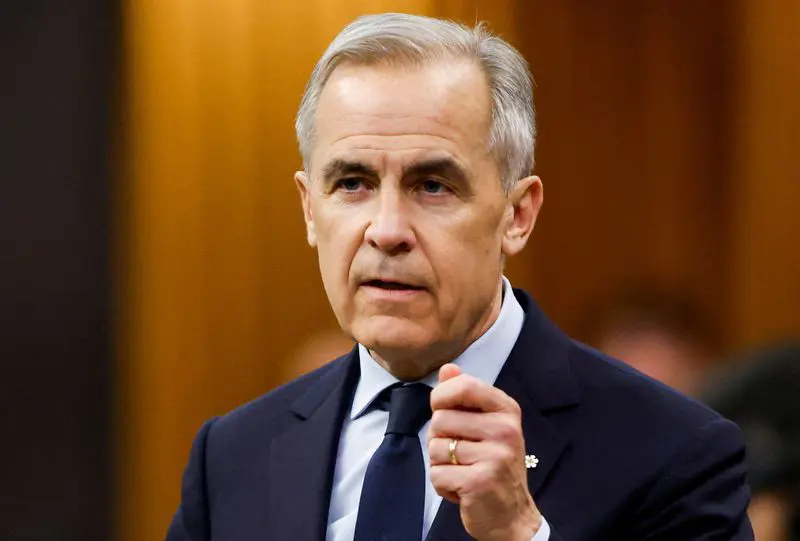
Prime Minister Mark Carney responded cautiously to the announcement, avoiding direct confrontation with Washington while emphasizing that the vast majority of Canadian trade remains protected under existing agreements.
Carney acknowledged that forced labor is a legitimate concern that deserves international attention.
At the same time, he maintained that Canada already possesses strong legal frameworks designed to combat modern slavery and unethical supply-chain practices.
His measured response reflects the delicate balancing act facing Ottawa.
Canada must defend its economic interests while avoiding an escalation that could damage one of the world’s largest bilateral trading relationships.
Trade officials from both countries are expected to continue discussions in the coming weeks.
Public hearings on the proposed tariffs are scheduled to begin in July, creating an opportunity for governments, businesses, labor groups, and industry representatives to present evidence and challenge aspects of the policy.
Those hearings could prove critical.
Some analysts believe the final tariff structure may change significantly after consultations conclude.
Others warn that the administration appears determined to move forward regardless of objections.
For Canadian exporters, the uncertainty itself may become a problem.
Businesses generally prefer predictable trade rules when making investment decisions, hiring workers, or expanding production.
Even if the direct economic impact remains limited, prolonged uncertainty can influence corporate planning and investor confidence.
The broader geopolitical implications are also attracting attention.
By targeting such a large number of countries simultaneously, the United States is signaling a more aggressive approach to trade policy—one that increasingly blends economic strategy with labor standards, national security concerns, and geopolitical competition.
Whether that approach strengthens international supply chains or creates new tensions remains a matter of fierce debate.
For now, one thing is clear.
A policy presented as a fight against forced labor has rapidly become a much larger conversation about trade, sovereignty, enforcement, and the future of global economic relations.
As hearings begin and governments prepare their responses, the coming months could play a significant role in shaping the next chapter of Canada-U.S. trade relations—and perhaps the future direction of American trade policy itself.






