Canada Pushes Back as Trump Revives an Old Assumption: Dependence
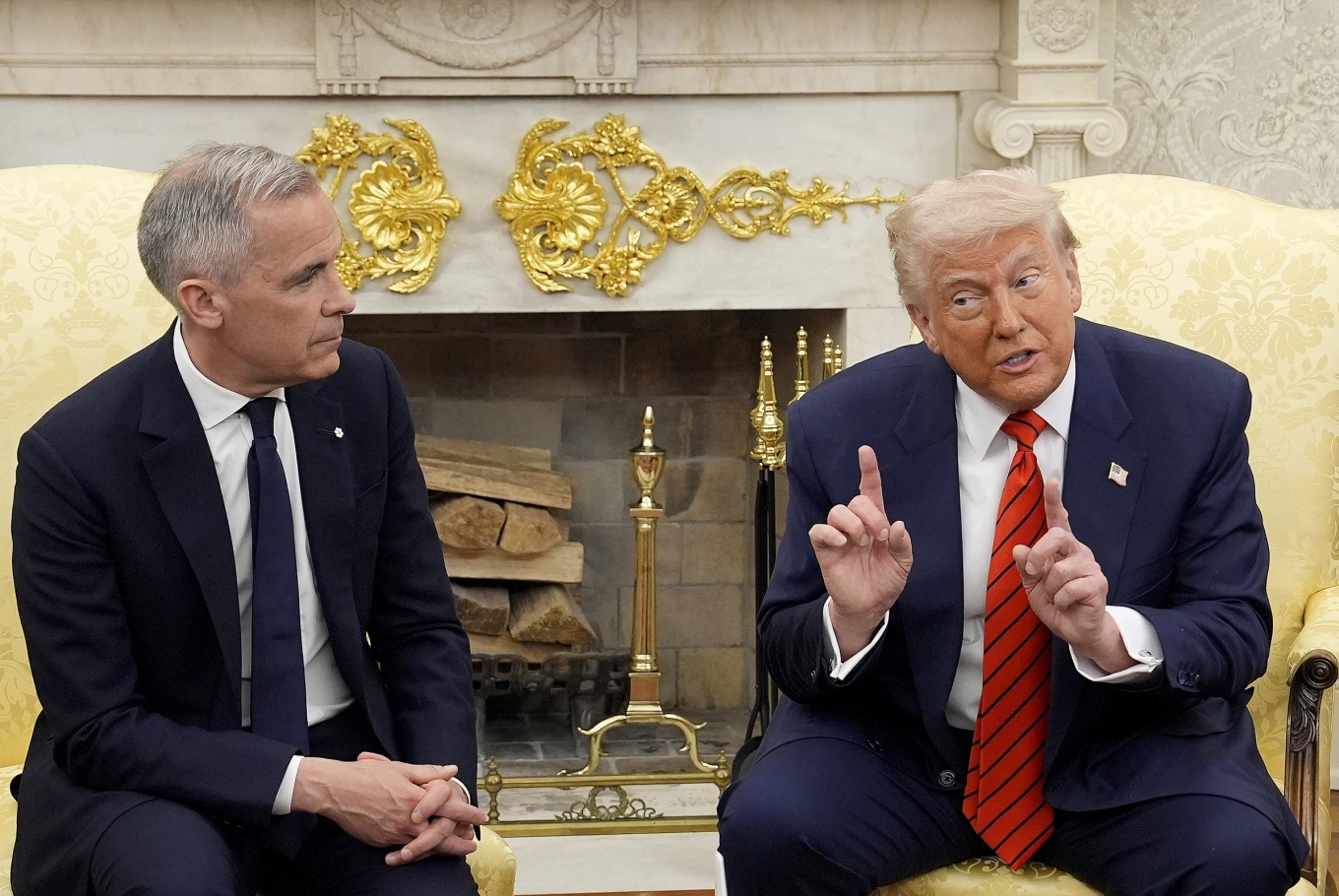
When President Donald J. Trump declared this week that “Canada lives because of the United States,” he was not merely delivering another off-the-cuff provocation. He was reviving a long-standing assumption embedded deep in Washington’s political culture: that Canada’s prosperity, security, and global relevance are ultimately derivative of American power.
Within 24 hours, Canada’s prime minister, Mark Carney, rejected that premise — not in a carefully hedged diplomatic communiqué, but in blunt, public language that signaled a deliberate shift in tone.
“Canada does not live because of the United States,” Mr. Carney said at a cabinet retreat in Quebec City. “Canada thrives because we are Canadian.”
The remark, which was not included in prepared remarks, ricocheted across North American media and social platforms. On X (formerly Twitter), Canadian commentators framed it as a long-overdue assertion of sovereignty. In the United States, reactions were sharper — and more revealing. Conservative influencers accused Mr. Carney of ingratitude. Several centrist foreign-policy analysts, meanwhile, noted that the anger itself suggested something deeper: a growing unease in Washington about a neighbor that is no longer behaving as a dependent junior partner.
A Statement That Touched a Nerve
Mr. Trump’s original comment came during remarks at the World Economic Forum in Davos, where he framed U.S.–Canada relations in hierarchical terms rather than as a partnership. The phrasing echoed rhetoric he used repeatedly during his presidency, when he described trade agreements as favors and allies as beneficiaries of American generosity.
But the timing mattered. Canada is in the midst of a strategic reorientation: diversifying trade, reassessing defense procurement, and openly signaling that its economic future cannot rest on a single market.
That context helps explain why Mr. Carney’s response landed with unusual force.
Rather than criticizing the United States directly, he reframed the relationship entirely. Canada, he argued, is not sustained by American tolerance but by its own institutions: a broad middle class, a pluralistic democracy, and an economic model designed to distribute opportunity rather than concentrate it.
“This wasn’t anti-American,” said one former U.S. diplomat, speaking privately. “It was anti-subordination.”
Washington’s Uneasy Reaction
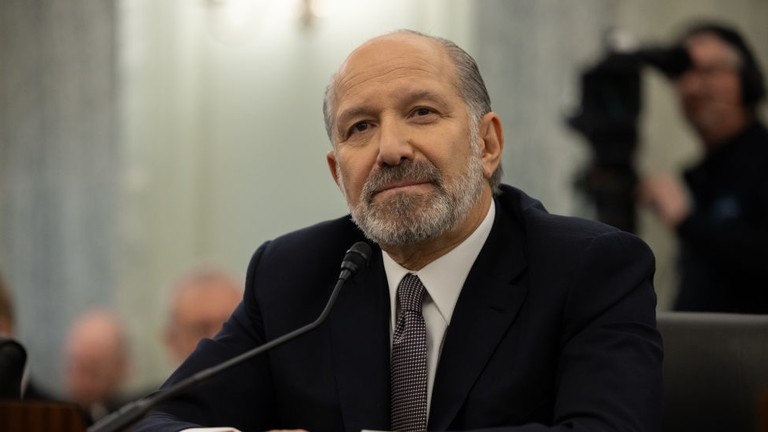
The most pointed response came not from Mr. Trump himself, but from Howard Lutnick, the U.S. Secretary of Commerce, who appeared on Bloomberg Television shortly after Davos.
Mr. Lutnick warned that Canada’s growing economic engagement with China — particularly in electric vehicles, energy, and critical minerals — could have consequences during the upcoming review of the United States-Mexico-Canada Agreement (USMCA). He suggested that trade preferences should not be taken for granted if Ottawa pursued what he called a “political path” misaligned with Washington’s priorities.
The tone was unmistakably punitive.
To several analysts, the remarks reflected something closer to anxiety than confidence. For decades, Canada’s limited options gave Washington leverage. Geography ensured dependence; integration ensured compliance. But that equation is changing.
Canada has expanded energy exports to Asia, increased trade with the European Union under CETA, and publicly invested in domestic industrial capacity in areas such as artificial intelligence, quantum computing, cybersecurity, and critical minerals — sectors central to 21st-century power.
“When leverage stops working, pressure replaces it,” said one trade expert quoted widely on social media after the interview aired.
A Broader Vision — Not Just a Rebuttal
What distinguished Mr. Carney’s remarks was not simply what he rejected, but what he offered instead.
In a speech that has since circulated widely on YouTube, TikTok, and X — drawing praise even from some American commentators — Mr. Carney outlined a vision of Canada as both a “bastion” and a “beacon”: secure yet open, diverse yet cohesive, democratic in an era of rising authoritarianism.
He emphasized diversity as a source of resilience rather than weakness, echoing arguments increasingly contested in U.S. political discourse. He spoke of democracy not as a static inheritance but as something that must be actively defended — including against economic coercion and rhetorical diminishment.
This framing resonated beyond Canada’s borders. Several American academics and former officials noted parallels with language used by European leaders attempting to assert strategic autonomy from Washington while remaining allied.
“What unsettled people in Washington wasn’t hostility,” said a former Pentagon official now at a think tank. “It was confidence.”
The End of an Old Posture
Historically, Canada’s strategy toward the United States has been quiet accommodation: minimize friction, avoid public confrontation, and resolve disputes behind closed doors. That approach delivered stability — but at the cost of visibility and, critics argue, dignity.
Mr. Carney appears to be signaling an end to that posture.
His government has moved to eliminate federal barriers to interprovincial trade, pledged to double defense spending by the end of the decade, and emphasized domestic control over supply chains tied to national security. These steps align Canada more closely with middle-power strategies pursued by countries like Australia and South Korea — allies, but not dependents.
Importantly, Mr. Carney did not suggest that Canada was abandoning the United States. Trade between the two countries remains the largest bilateral commercial relationship in the world. Nor did he deny the benefits of cooperation.
What he rejected was the notion of gratitude as obligation.
Why This Moment Matters
Mr. Trump’s worldview, as critics and supporters alike acknowledge, is built on hierarchy. Power flows downward; deference is expected. In that framework, Canada’s role has long been to accept its place — prosperous, stable, but ultimately secondary.
Mr. Carney’s response challenged that worldview without theatrics. He did not insult the United States. He did not threaten retaliation. He simply asserted equality.
That may prove more disruptive than confrontation.
Once a country stops seeking approval, the tools of intimidation lose potency. Tariff threats sound weaker. Trade warnings ring hollow. Narrative control slips.
For Washington, accustomed to a compliant northern neighbor, this is unfamiliar terrain.
For Canada, it marks a moment of self-definition.
As one widely shared comment on social media put it: “Canada isn’t asking to be led. It’s asking to be respected.”
Whether that recalibration leads to tension or a more balanced partnership remains to be seen. But one thing is clear: the era in which Canada quietly adjusted itself to American expectations is drawing to a close.
And that, more than any single speech, is what has rattled Washington.






