Washington and New York are holding their breath as they witness the dramatic twists in Donald Trump’s legal and financial war. No longer mere speculation, recent court filings and rulings have exposed a naked truth: the former President, who has long boasted of boundless wealth, was truly on the verge of bankruptcy. A civil fraud judgment totaling half a billion dollars nearly toppled his entire financial empire. While a 2025 appellate court ruling provided a temporary “bailout,” the mask of the “invincible billionaire” has been permanently removed, revealing a reality riddled with debt and a total dependence on judicial mercy.

The saga began in the courtroom of New York State Supreme Court Justice Arthur Engoron. After a meticulous investigation, the court concluded that the Trump Organization systematically inflated asset values to deceive banks and insurers. The penalty was more than a blow to his reputation; it was a lethal strike to his wallet: $364 million in disgorgement, which, with interest, ballooned to nearly $500 million.
For an average person, this is an unthinkable sum. For Trump, it was an existential crisis. This debt was not static; it accrued interest at over $110,000 per day. Every morning, Trump woke up owing a fortune more than the day before. This crushing financial pressure pushed him into a state of visible panic, forcing a desperate search for a bond to secure his appeal.

Donald Trump has always claimed a net worth in the billions. However, this crisis stripped away the distinction between net worth and liquidity.
The vast majority of Trump’s wealth is tied up in real estate: Trump Tower, Mar-a-Lago, and golf courses. These cannot be instantly converted into cash to pay a judgment.Estimates from Forbes indicated that Trump held only between $400 million and $700 million in actual cash.
A $500 million judgment meant his entire cash reserve could be wiped out in a single stroke. This forced him to face two bitter choices: conduct a fire sale of his iconic properties or declare bankruptcy. Trump chose to fight to the end in the appellate courts to avoid total collapse.

Just as Trump seemed out of options, a New York appeals court intervened in August 2025. The panel ruled that the $500 million penalty was “excessive” under the Constitution and significantly reduced the financial burden. Trump celebrated this as a “massive victory” and total vindication.
However, the reality is far more somber:
The fine was tossed, but the fraud remains. The appeals court affirmed the trial court’s factual findings: Trump and his company did commit fraud.Trump may have kept his money, but he is now permanently labeled a “civil fraudster” by the law. This label will shadow him for life, affecting every future business transaction and his political credibility.

The New York case is merely the tip of the iceberg. Trump continues to face a barrage of other financial liabilities:
E. Jean Carroll: Defamation judgments totaling over $80 million remain in the appeals process.Massive Legal Fees: Maintaining a small army of lawyers to fight on multiple fronts consumes a significant amount of his daily cash flow.
If the courts continue to issue adverse rulings, Trump could find himself in a “liquidity crunch” once again. His reliance on appellate courts to “bail out” his finances reveals a critical vulnerability in his position.
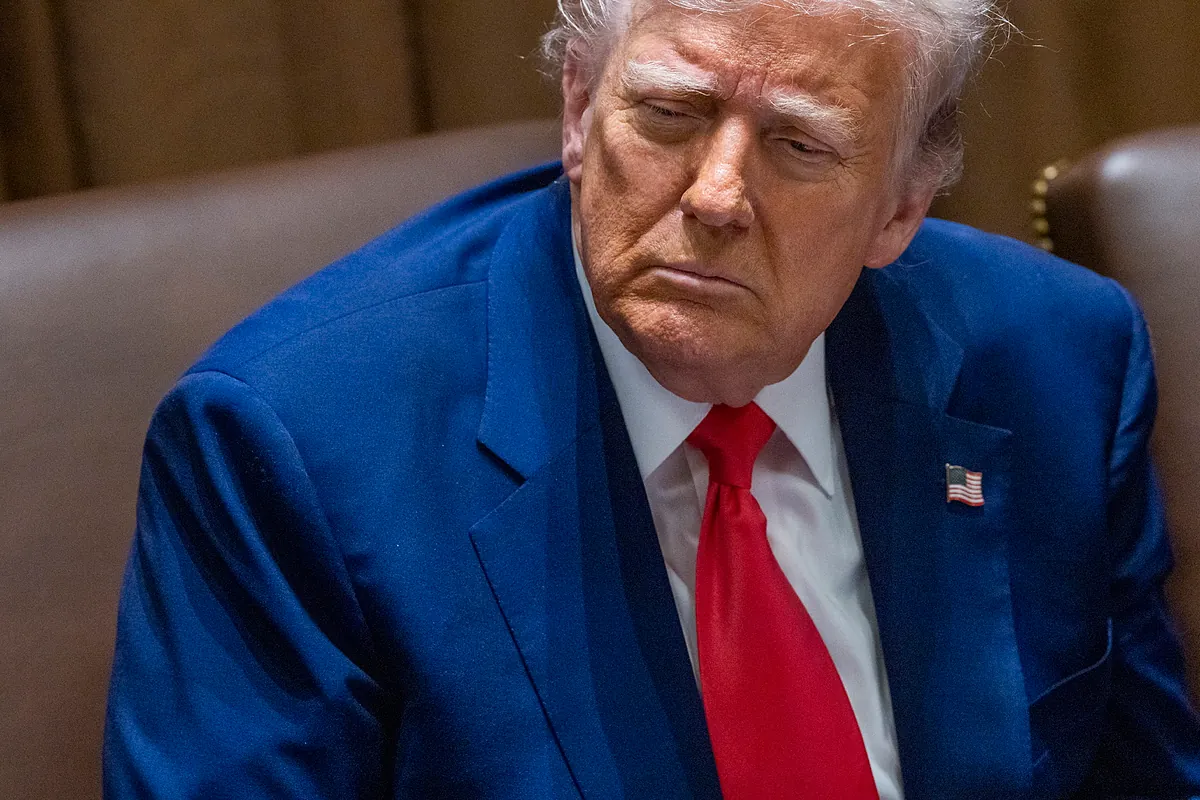
The prospect of an individual sitting in the Oval Office (or campaigning for it) while branded a “fraud” and facing bankruptcy creates immense conflicts of interest.
Will political decisions be driven by the need to protect personal assets?Can a president surrounded by financial pressure make objective decisions for the nation?
This reality proves that Trump’s foundation is not as solid as he portrays through social media posts or campaign rallies.
Donald Trump survived the first financial tsunami, but the storm is far from over. His recent efforts to raise funds—ranging from cryptocurrency ventures to high-interest loans for his $175 million bond—underscore his extreme financial strain.
The story of this near-bankruptcy is not just about numbers; it is about the collapse of a myth. In the coming years, Trump’s finances will remain the center of a legal battlefield. The outcome of these cases will decide not just the future of a businessman, but the future of a politician struggling to hold onto the highest power in America.