Inside Trump’s Expanding Immigration Detention Network and the Political Debate Surrounding It

WASHINGTON — In the remote desert of West Texas, a large immigration detention complex has quietly become one of the biggest facilities operated by U.S. Immigration and Customs Enforcement (ICE). Built on the Fort Bliss military base and known as Camp East Montana, the site opened only months ago but has already drawn scrutiny from advocates and lawmakers.
Several detainee deaths have been reported at the facility since its opening, including one case currently under investigation by local authorities. The camp was designed to hold up to 5,000 detainees, making it one of the largest immigration detention sites in the country.
Critics say the facility reflects a broader trend: the rapid expansion of detention infrastructure tied to the Trump administration’s immigration enforcement agenda.
Across the United States, new detention centers are being proposed or built — sometimes over the objections of local communities.
One such proposal in Social Circle, Georgia, has sparked debate. Plans call for a complex capable of housing 10,000 detainees, a number that would significantly exceed the population of the small town.
Local officials have expressed concerns about whether existing infrastructure — including water and sewer systems — could support a project of that scale.
But some advocacy groups say their biggest concern involves legal access for detainees.
According to reports examining preliminary blueprints, the design may include limited dedicated space for detainees to meet privately with attorneys. Legal experts say access to counsel is a critical part of immigration proceedings.
Expansion of Immigration Detention
The expansion of immigration detention facilities comes amid growing national debate over immigration enforcement practices.
Public protests in several cities, including Minneapolis, have focused attention on the role of ICE and the scale of deportation operations.
Despite political pressure, ICE remains one of the most heavily funded federal enforcement agencies. Its annual budget is larger than that of the United States Marine Corps, giving it significant resources to operate detention centers and enforcement programs across the country.
Supporters argue that detention facilities are necessary to manage immigration cases and ensure compliance with U.S. law. Critics counter that the system has grown too large and lacks adequate oversight.
The Evolution of Political Messaging
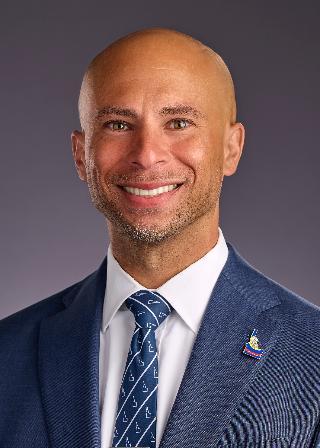
Journalist and researcher Chris Mathias, who has spent years covering political movements and online communities, says the national debate over immigration has been shaped in part by the evolution of political messaging over the last decade.
Mathias began reporting extensively on far-right activism after the 2017 Unite the Right rally in Charlottesville, Virginia, a gathering that drew national attention and intensified discussions about extremist political movements.
At the time, many analysts believed such ideas were limited to fringe online communities.
However, over the following years, some narratives first circulating in obscure online spaces gradually appeared in broader political discussions.
Terms such as “Great Replacement” and “remigration”, once largely confined to niche internet forums, eventually appeared in wider political debates and media commentary.
Researchers who track online networks say these ideas often move through a predictable pipeline.
First, they appear in smaller digital communities. Influencers and commentators then amplify them on podcasts, blogs and social media. Eventually, the concepts enter mainstream political discussion.
“It’s almost like a messaging test environment,” Mathias said. “Ideas circulate in smaller communities before being picked up by larger audiences.”
Media and the Spread of Narratives
Political media ecosystems also play a role in shaping which narratives gain national attention.
Researchers say stories — including unverified claims about migrants — sometimes begin in online communities before spreading through social media networks and eventually appearing in national political discourse.
Even after such claims are challenged or corrected, they can continue circulating within certain political circles, highlighting the speed at which information moves across modern media platforms.
Debate Within the Conservative Movement
The rise of more confrontational political rhetoric has also created tensions within conservative circles.
Some commentators have expressed concern about the tone of recent political debates, while others argue that immigration enforcement remains a central issue for voters.
Analysts say internal debates about strategy and messaging are likely to continue shaping the direction of the conservative movement in the coming years.
Grassroots Activism and Community Response
At the same time, grassroots activism around immigration policy has grown.
Community organizations have formed networks aimed at providing legal resources, monitoring enforcement activity and supporting immigrant families.
Some activists describe the approach as community solidarity — focusing on practical assistance and local organizing rather than national political campaigns.
A Continuing National Debate
Immigration enforcement remains one of the most divisive issues in American politics.
Supporters of expanded enforcement argue that stronger detention and deportation systems are necessary to maintain border security and uphold the rule of law.
Critics, however, say the system raises broader questions about civil liberties, due process and the long-term direction of U.S. immigration policy.
As new facilities continue to be proposed and built, the debate surrounding immigration enforcement — and the role of detention centers — is likely to remain at the center of the national conversation.






