After Strike in Tehran, Suspected Iran-Linked Deepfake Campaign Targets Trump
WASHINGTON — Less than 48 hours after a joint U.S.-Israeli airstrike near Tehran killed Iran’s Supreme Leader, Ayatollah Ali Khamenei, American officials say they are confronting a different kind of retaliation: a sophisticated online disinformation campaign that appears designed to inflame political divisions inside the United States.
According to senior intelligence officials, a network of accounts linked to Iranian state-backed cyber actors began circulating fabricated images purporting to depict former President Donald J. Trump in compromising situations. U.S. authorities and independent forensic analysts have described the material as highly advanced “deepfakes,” created using artificial intelligence tools capable of generating realistic but entirely synthetic imagery.
The images spread rapidly across social media platforms early Saturday morning, overwhelming moderators before labels and takedown efforts could catch up. By midday, related hashtags were trending globally, even as fact-checkers and cybersecurity experts flagged the material as manipulated.
White House officials characterized the episode as “a malicious disinformation operation” intended to destabilize domestic political discourse during a moment of international crisis. “This appears to be a retaliatory cyber action in response to the strike,” one senior administration official said, speaking on condition of anonymity to discuss intelligence assessments. “The objective is not persuasion. It is disruption.”
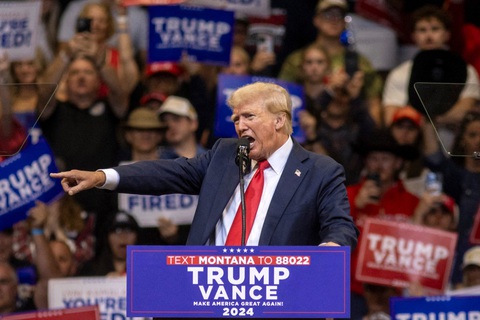
The alleged campaign underscores a growing concern among U.S. officials that geopolitical conflicts increasingly extend into digital information space, where foreign actors can attempt to shape narratives, erode trust and exploit existing political fault lines.
Investigators believe the material may have been amplified through the breach of a small political organization’s digital infrastructure, though officials cautioned that the inquiry remains ongoing. A group known as “Cyber Dawn,” previously linked by Western intelligence agencies to Iran’s Islamic Revolutionary Guard Corps, is suspected of involvement, though Tehran has not publicly acknowledged responsibility.
The digital escalation comes at an already volatile moment. The strike that killed Ayatollah Khamenei marked one of the most consequential actions in decades of U.S.-Iran tensions. While American officials have framed the operation as a necessary security measure, Iranian leaders have vowed retaliation, raising fears of both conventional and unconventional responses.
Cyber operations have long been part of that toolkit. Iran has previously been accused of targeting U.S. infrastructure, financial institutions and political campaigns with hacking and influence operations. But experts say the speed and sophistication of generative AI tools have lowered the barrier to producing convincing disinformation at scale.
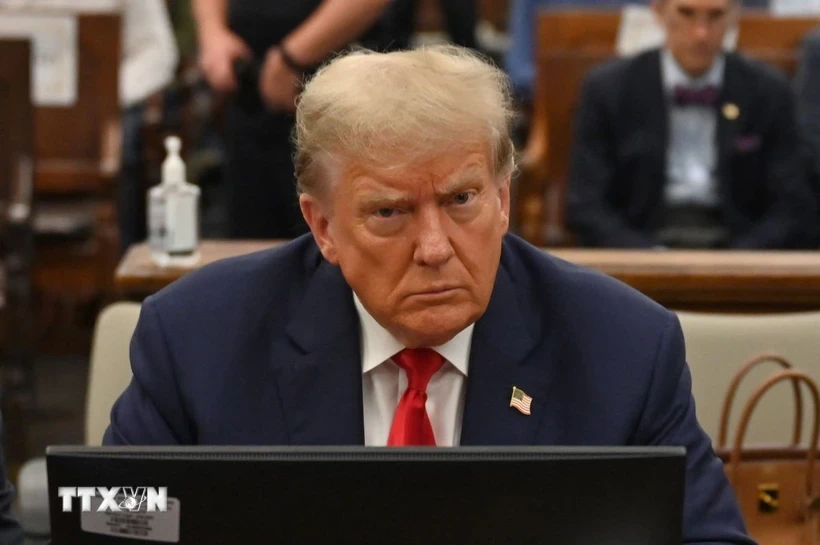
“What we’re seeing is the weaponization of synthetic media in a geopolitical conflict,” said Laura Bennett, a cybersecurity scholar at Georgetown University. “It’s faster, cheaper and more deniable than traditional propaganda. And it can have real-world political consequences.”
The Trump campaign condemned the episode as foreign election interference, describing it as a coordinated attempt to damage the former president’s reputation during an already contentious election cycle. In a statement, campaign officials urged technology companies to act more aggressively to prevent foreign actors from exploiting their platforms.
Social media companies have said they are working to remove the manipulated content and to identify coordinated inauthentic behavior. Still, experts note that once material spreads widely — particularly when it intersects with preexisting controversies or partisan narratives — containment becomes far more difficult.
FBI Director Christopher A. Wray told reporters that federal agencies are treating the incident as part of a broader pattern of foreign efforts to exploit domestic polarization. “Our adversaries understand that information can be as powerful as missiles,” Mr. Wray said. “Their goal is to create confusion, distrust and division.”
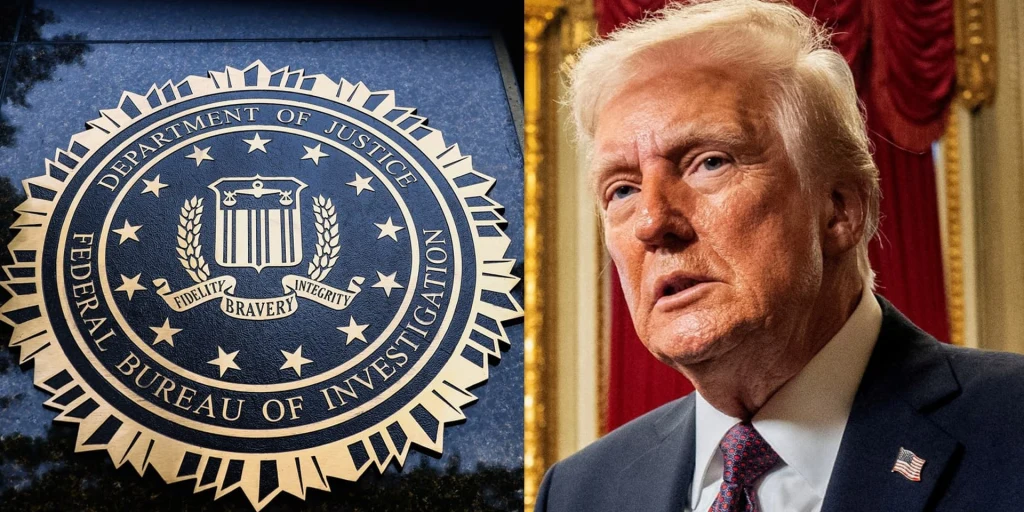
The episode also raises urgent questions about how democratic societies can defend against AI-driven disinformation without compromising free speech. Lawmakers from both parties have called for renewed discussion of election security safeguards, including clearer standards for identifying synthetic media and stronger penalties for foreign interference.
Meanwhile, geopolitical tensions remain high. Analysts warn that cyber operations may serve as a pressure valve — a way for adversaries to retaliate without escalating into direct military confrontation. But they can also deepen instability by eroding confidence in institutions and in the information ecosystem itself.
For voters already navigating a polarized political landscape, the proliferation of realistic fabrications presents a daunting challenge: distinguishing authentic evidence from digitally manufactured illusion.
In the days ahead, intelligence officials say they will continue tracing the origins of the campaign and assessing whether additional waves of synthetic content may follow. What is clear, they say, is that the conflict is no longer confined to airspace or territory. It is unfolding in timelines, feeds and search results — and its effects may linger long after the initial strike.






