In a tense House Judiciary Committee hearing that quickly descended into shouting and procedural chaos, Rep. Jamie Raskin (D-Md.), the ranking Democrat, aggressively questioned Attorney General Pam Bondi about potential constitutional violations tied to President Donald Trump’s aggressive pursuit of massive financial claims against the federal government.

The February 2026 oversight session, focused on Justice Department operations including the handling of Jeffrey Epstein-related files, turned particularly heated during Raskin’s five-minute questioning period. Raskin invoked the Constitution’s Domestic Emoluments Clause — Article II, Section 1, Clause 7 — which strictly limits a president to a fixed salary and prohibits receiving any other emoluments from the United States while in office.
Raskin highlighted Trump’s lawsuits against federal agencies, including a claim for $230 million related to the 2022 FBI search of Mar-a-Lago and a separate $10 billion suit against the IRS and Treasury Department over the 2020 leak of his tax returns by former contractor Charles Littlejohn, who was later convicted and imprisoned. The $10 billion demand, Raskin noted, approaches a significant portion of the IRS’s annual budget.
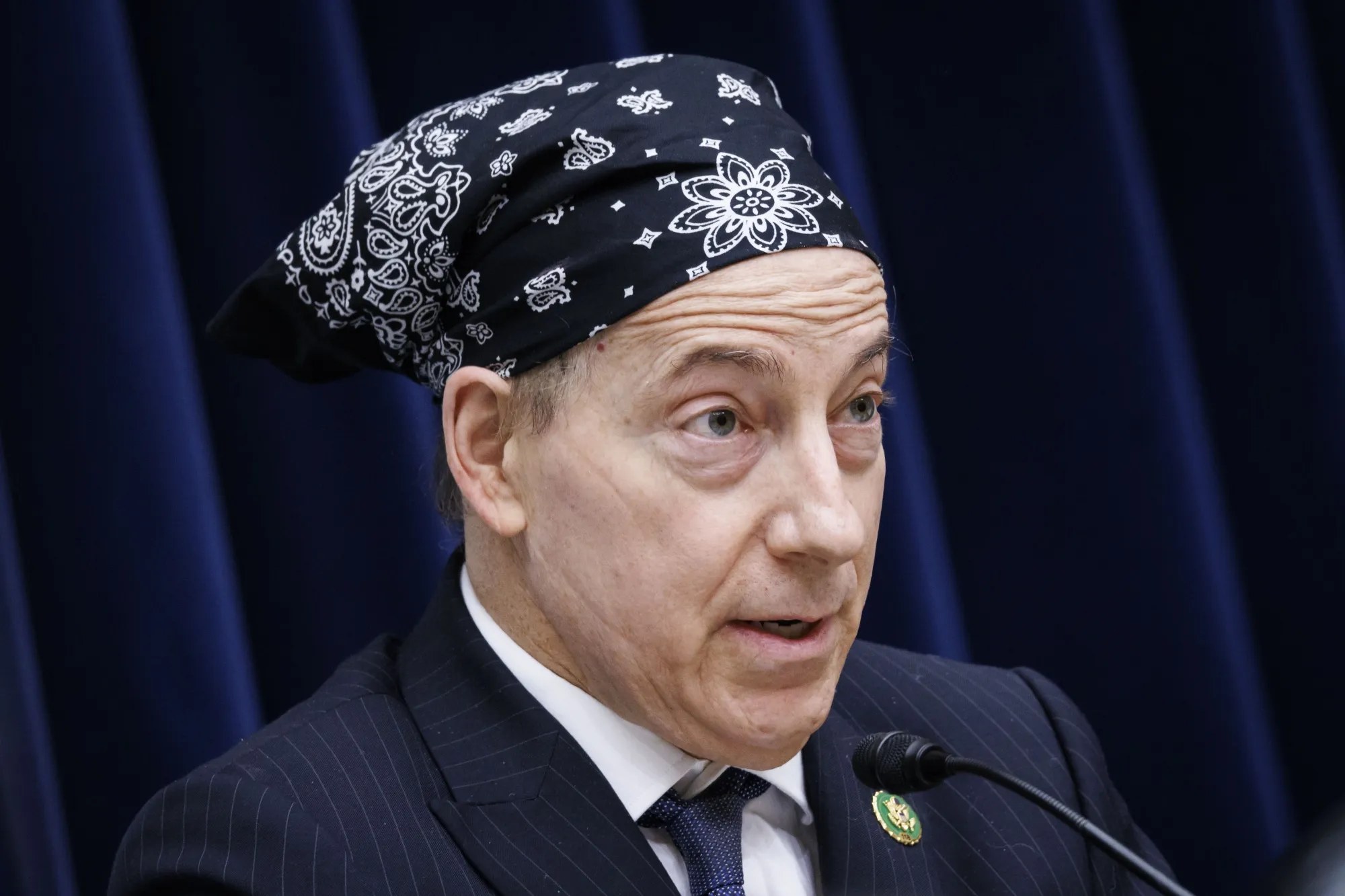
“Do you think it would violate the Domestic Emoluments Clause for you to settle that $10 billion case or any of the other claims that the president has made against the government?” Raskin asked Bondi. He pointed out Trump’s own comments about negotiating such matters, adding, “He himself has remarked… ‘I’m the one that makes the deal, right?'”
Bondi declined to engage, responding curtly: “I’m not going to discuss pending litigation.”
Raskin pressed on, acknowledging the legitimacy of Trump’s privacy concerns over the tax leak — which revealed years of minimal or zero federal income taxes paid — while pivoting to contrast it with victims of Jeffrey Epstein. He referenced survivors whose personal information, including names, phone numbers and addresses, was allegedly disclosed by the Justice Department in violation of protections built into federal law.
“If Donald Trump can get $10 billion theoretically from the Department of Justice, how much should these people get for a far worse violation of their privacy rights and a far greater danger established to their lives?” Raskin demanded.
The exchange grew chaotic as Bondi interrupted, referencing a local case involving an individual named Chase Mulligan — described by her as a predator in Raskin’s Maryland district — accusing Raskin of obsession with Trump and “Trump derangement syndrome.” Raskin shot back, insisting on reclaiming his time under committee rules and lecturing Bondi on proper hearing protocol: “We have only five minutes… If you go off on a wild goose chase… we’re allowed to say we reclaim our time. At that point, you have to be quiet. You have no choice.”
The chairman intervened to restore order, but the back-and-forth underscored deep partisan divides. Raskin later called for a joint task force involving the Justice Department, governors, state attorneys general and local prosecutors to investigate crimes against Epstein survivors and others, criticizing the DOJ for failing to act.
The confrontation reflects broader tensions in the hearing, where Democrats accused Bondi of shielding powerful interests and mishandling Epstein-related disclosures, while Bondi and Republican allies dismissed much of the questioning as partisan “theatrics.”
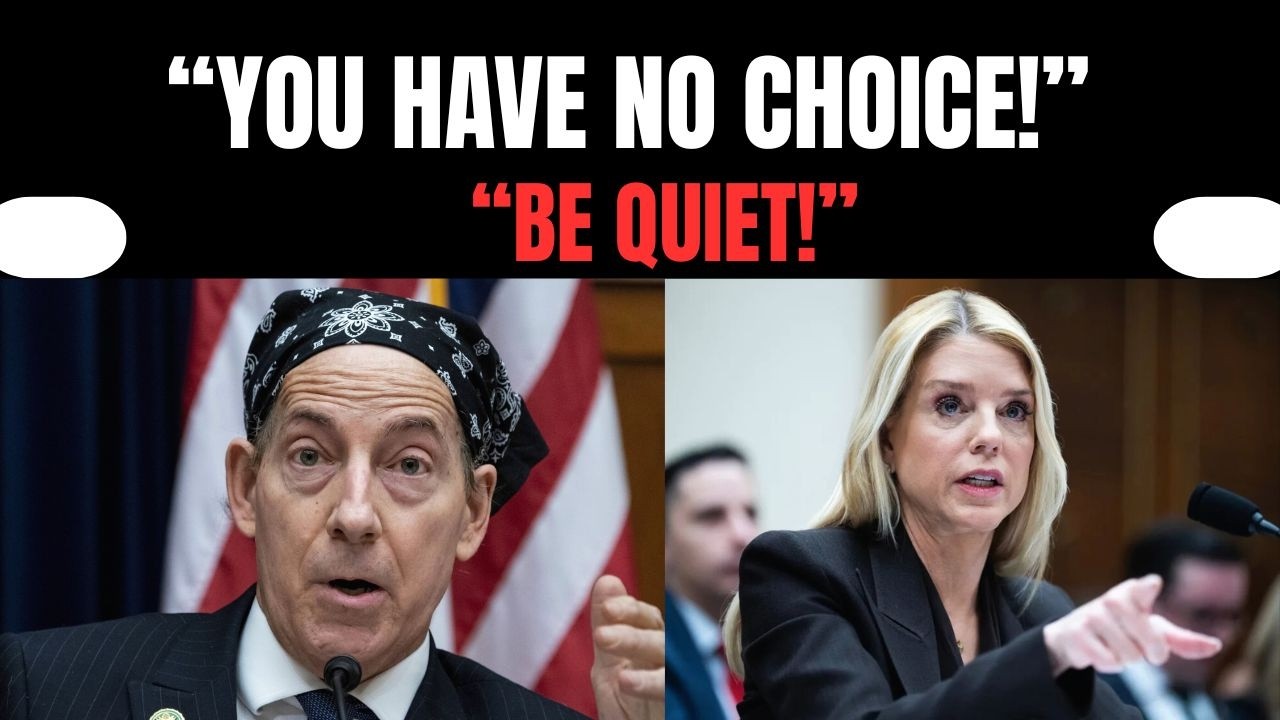
The Domestic Emoluments Clause, designed to prevent self-enrichment through public office, has rarely been tested in this context. Legal scholars note that settlements in ongoing litigation could raise novel questions about whether a president benefits indirectly from executive-branch actions under the unitary executive theory. Bondi’s refusal to speculate left the constitutional issue unresolved in the public record.
Raskin’s pointed comparison between Trump’s financial demands and the harms faced by Epstein victims highlighted what Democrats portrayed as unequal treatment under the law. The episode, captured in viral clips and YouTube uploads, has fueled debates over accountability, executive power and the Justice Department’s independence in an era of intense political polarization.
As oversight hearings continue, the clash between Raskin and Bondi stands as a stark illustration of how constitutional principles and high-profile litigation can collide in the crucible of congressional scrutiny.






