Romania’s Red Line: How One Russian Drone Strike Changed NATO’s Black Sea Calculus
For nearly three years, Romania lived with the sound of war just beyond the Danube.
Night after night, Russian drones crossed the skies over southern Ukraine, streaking toward ports and grain terminals near NATO territory. Romanian officials protested. NATO monitored. Moscow denied responsibility. And Europe, though alarmed, largely treated the incidents as dangerous spillover from a brutal regional conflict.
Then one drone stopped being “spillover.”
It hit an apartment building.

On the night of May 29, Romania said a Russian-made drone slammed into a residential block in Galați, near the Ukrainian border, injuring two civilians, including a child. The attack marked the first time since Russia’s invasion of Ukraine that civilians inside Romania — a NATO member — had been physically wounded by a drone strike linked to the war. (Reuters)
The Kremlin insisted nothing had been proven.
Romania no longer cared for ambiguity.
Within hours, Bucharest launched its sharpest diplomatic retaliation against Moscow since the beginning of the war. Russian diplomatic personnel were expelled. A Russian consulate in Constanța was shut down. NATO consultations intensified. European officials condemned the incident in unusually direct language.
But beneath the diplomacy was something larger.
The drone did not merely hit Romania.
It hit NATO’s southeastern nerve center.
For years, Romania occupied an uneasy position inside the Atlantic alliance — strategically vital but militarily underprepared. It shared a 650-kilometer border with Ukraine, hosted major NATO facilities, and overlooked the Black Sea, yet much of its defense infrastructure remained rooted in Cold War systems.
That reality is changing with extraordinary speed.
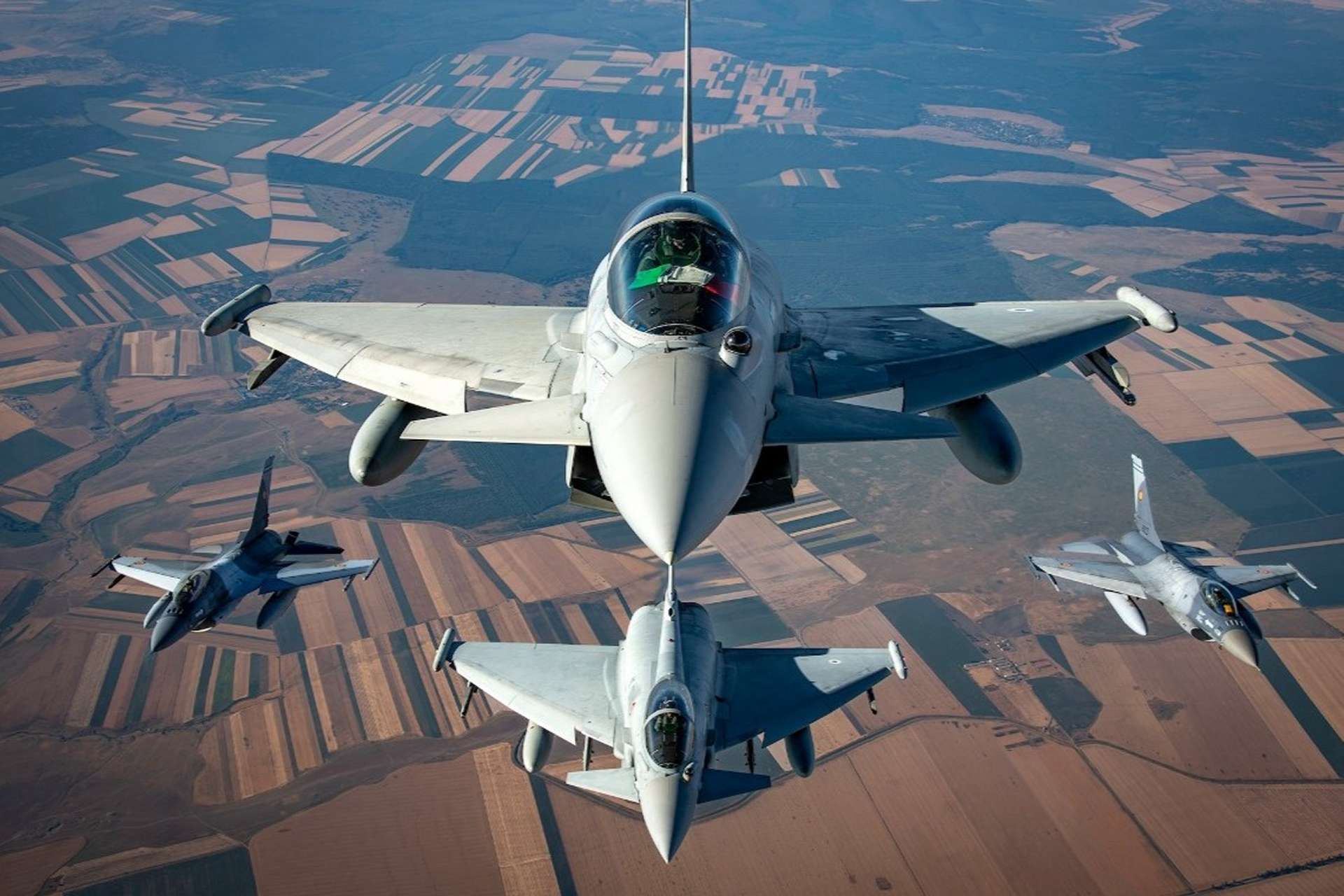
The transformation became visible the night Romanian F-16s scrambled into the darkness, attempting to intercept the incoming drone before it disappeared into a populated area.
According to Romanian officials, the drone remained inside Romanian airspace for only a few minutes. Pilots received authorization to engage, but the aircraft could not establish a safe firing window before the drone struck. The target was flying low, moving fast, and dangerously close to civilian neighborhoods. (Reuters)
Military analysts say the episode exposed a growing problem for NATO.
Traditional fighter aircraft are effective against high-altitude missiles and enemy jets. But small drones flying near the ground create an entirely different challenge. They are cheaper, harder to detect, and capable of slipping through narrow defensive gaps.
Russia understands this perfectly.
The Shahed-style drones used against Ukraine are not merely weapons. They are instruments of pressure — inexpensive systems designed to force expensive defensive reactions. A drone worth tens of thousands of dollars can trigger millions of dollars in air defense costs.
Yet the strategic consequences of this latest strike may end up costing Moscow far more than the drone itself.
Romania’s response was not symbolic theater.
It was structural escalation.
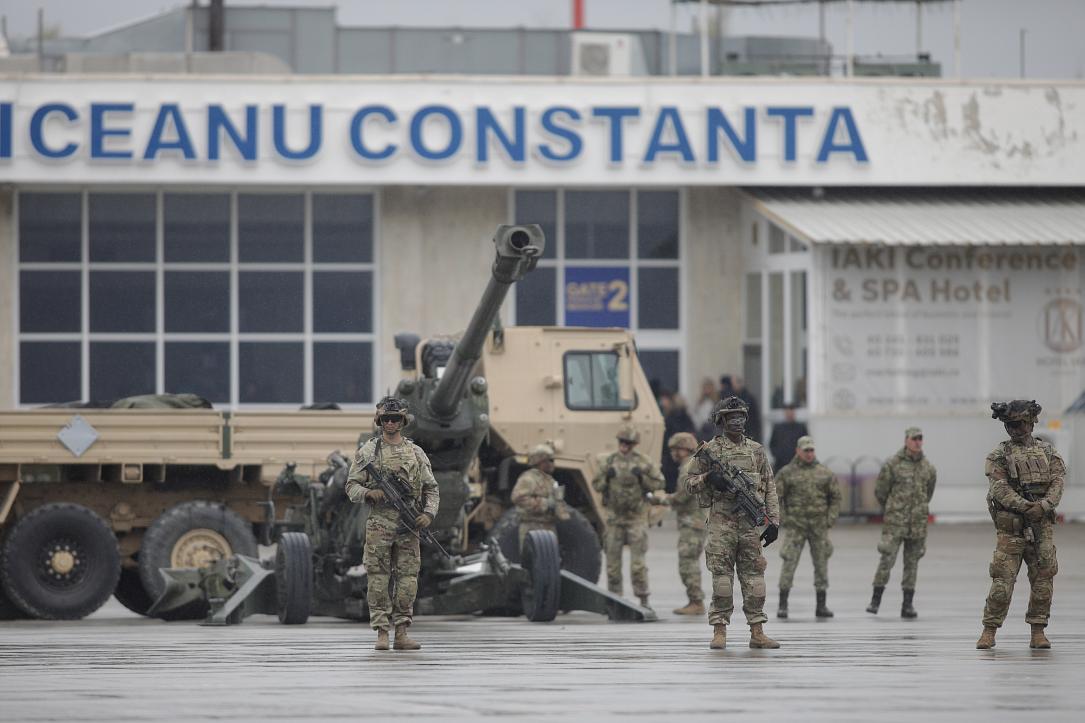
At the center of the diplomatic retaliation stood Constanța, Romania’s largest Black Sea port and one of NATO’s most sensitive logistics hubs.


Constanța has become indispensable to the alliance’s eastern flank. Military equipment moving into Ukraine passes through its infrastructure. NATO naval activity concentrates around its coastline. Nearby sits Mihail Kogălniceanu Air Base, now undergoing a massive expansion expected to transform it into Europe’s largest NATO military installation.
Former Western commanders have repeatedly warned that, in any direct NATO-Russia confrontation, the region would immediately become a primary target.
Romanian intelligence officials long suspected Russian diplomatic facilities near the port were being used for surveillance and intelligence collection tied to NATO naval operations. By shutting the Russian consulate, Bucharest effectively severed one of Moscow’s local observation points along the Black Sea corridor.
The message was unmistakable.
Romania no longer views these incursions as isolated accidents.
NATO’s reaction reinforced that shift.
Alliance Secretary General Mark Rutte declared that NATO stood ready to defend “every inch” of allied territory. American officials called the drone incident reckless. European governments quickly aligned behind Romania’s position. (The Guardian)
Behind closed doors, attention turned toward Article 4 of the NATO treaty — the alliance’s formal consultation mechanism triggered when a member believes its territorial security is threatened.
The significance of Article 4 lies not in automatic military retaliation but in collective recognition that a security threshold has been crossed.
Poland activated Article 4 after repeated drone incidents in 2025. NATO aircraft subsequently intercepted hostile targets over alliance territory for the first time in its history, according to European defense reporting. (Army Recognition)
Romania’s case carries even heavier symbolism.
This was not falling debris in an empty field.
It was a direct strike on civilians inside NATO territory.
And it was not the first violation.
Romanian authorities say Russian-linked drones have breached the country’s airspace 28 times since the war began. (Reuters)
That accumulation matters.
One violation may be dismissed as navigational failure.
Twenty-eight becomes a pattern.


The repeated incursions have accelerated one of Europe’s most aggressive military modernization programs.
Only a few years ago, Romania still relied heavily on aging MiG-21 aircraft inherited from the Soviet era. Today, the country is rapidly assembling one of the largest F-16 fleets in Eastern Europe through acquisitions from Portugal, Norway, and other NATO partners. (NATO)
But fighter jets are only part of the equation.
Romania is building a layered air defense system designed specifically for the kind of low-altitude drone warfare now defining the conflict in Ukraine. Patriot missile batteries are being integrated into NATO’s broader missile shield architecture. French and South Korean short-range systems are being deployed to close low-altitude gaps. NATO exercises increasingly focus on drone interception and electronic warfare. (NATO Academy)
The country is also investing in drone-on-drone interception technologies — a sign that future wars may rely less on billion-dollar weapons systems and more on autonomous swarms operating at minimal cost.
This transformation is not occurring in isolation.
Romania’s geography has made neutrality impossible.
Its Black Sea coastline sits directly across from Russia’s naval sphere. The Danube corridor functions as a logistical artery for Ukraine. NATO missile defense infrastructure operates from Romanian soil. Western aircraft patrol Romanian skies daily.
In strategic terms, Romania has evolved from peripheral ally into frontline state.
That reality explains why the drone strike resonated so deeply across Europe.
For NATO, the danger is no longer theoretical.
The war is already brushing against alliance territory with increasing frequency.
Military planners fear the greatest risk may not be deliberate escalation but cumulative normalization — repeated “accidents” gradually eroding the distinction between spillover and attack.
Each incident tests response times.
Each violation probes political resolve.
Each drone forces NATO governments to reconsider where deterrence truly begins.
Russia, meanwhile, continues to operate inside the ambiguity.
Moscow benefits from uncertainty. It can deny intent while still generating pressure. It can exploit NATO caution while avoiding direct confrontation. The Kremlin understands that Western leaders desperately want to avoid escalation into open alliance conflict.
But ambiguity weakens over time.
Especially when civilians are injured.
Especially when apartment buildings burn.
Especially when violations repeat themselves nearly thirty times.


Romanian officials now openly acknowledge that the country’s rules of engagement are changing.
Just days before the Galați strike, Bucharest approved legislation allowing unauthorized drones entering Romanian airspace to be destroyed immediately under expanded military authority.
The law existed for exactly this scenario.
This time, the response window was too short.
Next time may be different.
That is the deeper consequence of the strike on Galați.
Russia may have intended only another pressure tactic near the Ukrainian border. Instead, it accelerated Romania’s militarization, strengthened NATO cohesion along the Black Sea, and hardened political attitudes inside a country once considered vulnerable.
The drone itself was cheap.
The geopolitical consequences are not.
And somewhere inside NATO headquarters, military planners are likely reaching the same conclusion Romania already has:
The next drone crossing the Danube may not survive the journey. (Reuters)






