At Davos, Allies Push Back as Trump Finds His Influence Diminished
DAVOS, Switzerland — The annual gathering of political and business leaders in the Alps is typically a stage for reassurance: a place where global elites pledge cooperation, smooth over differences and project stability. This year, however, the mood turned unmistakably cooler around one figure. As President Donald Trump delivered remarks that bristled with grievance and confrontation, many of America’s traditional partners chose a different approach — one that left the United States looking isolated rather than ascendant.
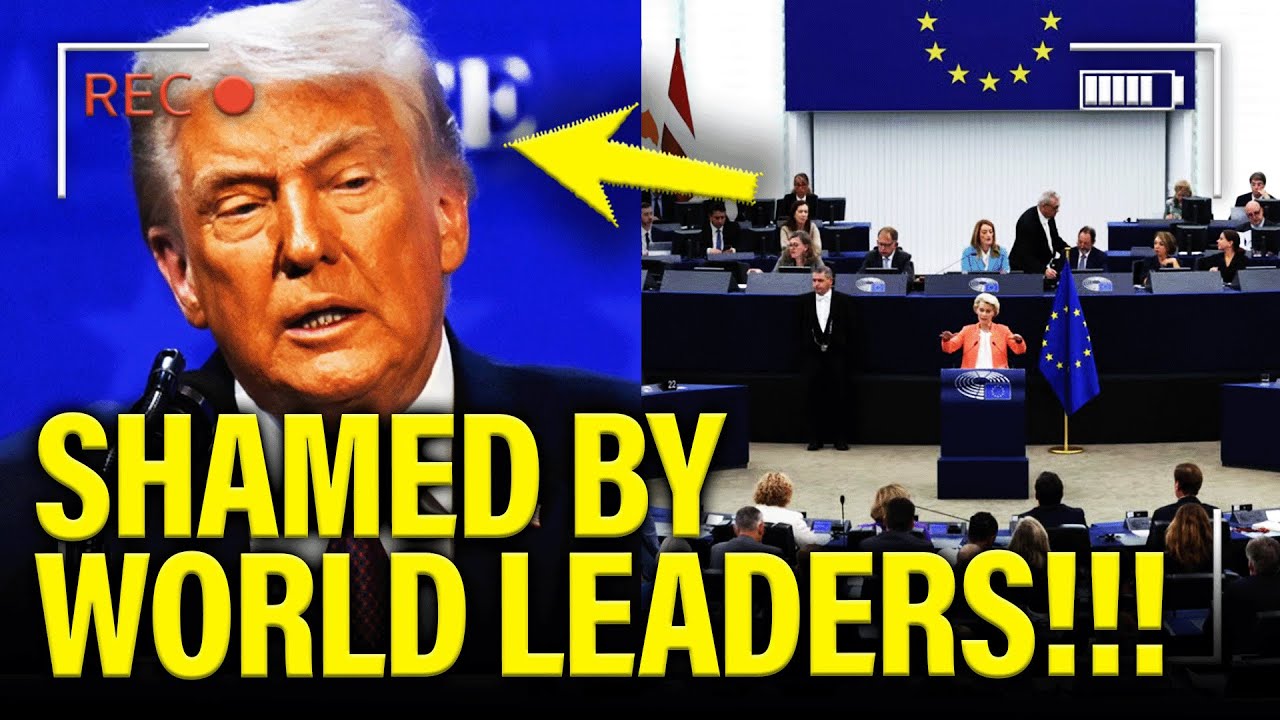
The shift was most visible in the contrast between Mr. Trump and Mark Carney, whose address at the World Economic Forum a day earlier drew sustained applause. Mr. Carney spoke of multilateralism, shared values and the need for democracies to coordinate more closely in a fractured world. Diplomats and executives in the audience described the speech as measured, confident and pointedly global — a rebuke, without naming names, to the unilateralism that has characterized Washington’s recent posture.
By comparison, Mr. Trump’s appearance landed awkwardly. He castigated NATO allies, revived claims of American self-sufficiency and suggested that partners who questioned his approach were ungrateful. The remarks echoed a pattern that has unsettled allies since his return to office: sharp rhetoric followed by improvised assertions of deals or understandings that others say do not exist.
Nowhere was that more evident than in the dispute over Greenland. Mr. Trump has repeatedly implied that the United States could secure new sovereign arrangements there, framing the Arctic island as a strategic necessity. Officials in Denmark and Greenland have flatly rejected that characterization, insisting that no such negotiations have taken place and that sovereignty is not up for discussion. NATO officials said they, too, were taken by surprise by claims that the alliance had endorsed any new framework.
The denials fed a broader unease among European leaders: if Washington announces major shifts without consultation, how should allies respond? In private conversations, several diplomats said they had coordinated to deliver a unified message — firm resistance, expressed calmly and publicly, rather than confrontation behind closed doors.
That resolve was reinforced by voices from outside Western Europe. Volodymyr Zelenskyy, addressing the forum, warned that equivocation only emboldens authoritarian powers. While he spoke primarily about Ukraine’s war with Russia, his message resonated in the context of Greenland and NATO: alliances, he argued, must demonstrate clarity and strength, or risk being tested.
For Mr. Trump, the cumulative effect was palpable. People familiar with the meetings said that after his speech, informal conversations shifted away from Washington. Invitations to smaller side sessions were scarce. Executives who had once sought proximity to the American president appeared content to keep their distance, engaging instead with European and Canadian officials who emphasized predictability.
The White House rejected the notion that Mr. Trump had been sidelined. A senior official said the president was “fully engaged” and dismissed reports of a freeze-out as media exaggeration. Supporters argued that blunt talk was precisely what voters had endorsed and that allies would ultimately adjust.

Yet the reaction from markets and institutions suggested limits to that approach. After several days of volatility, investors steadied only when it became clear that some of the president’s more provocative ideas were being softened or deferred. Analysts noted that even the suggestion of trade retaliation by the European Union — described by one official as an “economic bazooka” — carried weight precisely because it was coordinated and credible.
The episode also revived questions about NATO’s cohesion. Mr. Trump has repeatedly questioned the alliance’s value, despite the fact that it was the United States that first invoked Article 5 after the attacks of Sept. 11, 2001, and that allies subsequently bore significant costs in Afghanistan and elsewhere. In Brussels, officials at NATO said privately that the alliance was functioning, but acknowledged that trust had frayed.
“There is a difference between burden-sharing debates and casting doubt on the alliance itself,” said one senior European defense official. “The latter forces everyone to plan for contingencies.”
Those contingencies are no longer abstract. In Ottawa, officials confirmed that Canada has reviewed defensive scenarios involving its southern neighbor, a step that would have been unthinkable a decade ago. In Copenhagen and Nuuk, leaders emphasized cooperation with Washington on economics and security — but only within the bounds of mutual respect and international law.
What emerged in Davos was not a dramatic rupture, but something more subtle and perhaps more consequential: a rebalancing of attention. Where American presidents once dominated the forum by virtue of office alone, this year influence accrued to those who articulated a coherent vision for cooperation. Mr. Carney’s prominence, diplomats said, reflected a hunger for steadiness at a moment of geopolitical strain.
For Mr. Trump, the challenge is whether confrontation can still deliver leverage when partners are prepared to absorb the costs of saying no. His defenders insist that resistance will fade. His critics argue that the Davos meetings revealed the opposite — that coordinated pushback can narrow the space for improvisation.
As the forum closed, there were no formal expulsions or declarations of exile. The symbolism was quieter than that: empty chairs, conversations that moved on, and a sense that the center of gravity had shifted, at least temporarily, away from Washington. In a world already testing the resilience of alliances, that may prove to be the most telling outcome of all.







