A Handshake in Beijing Sends Shockwaves Through North America’s Trade System
By early 2026, the most stable trade relationship in the industrialized world is showing signs of fracture.
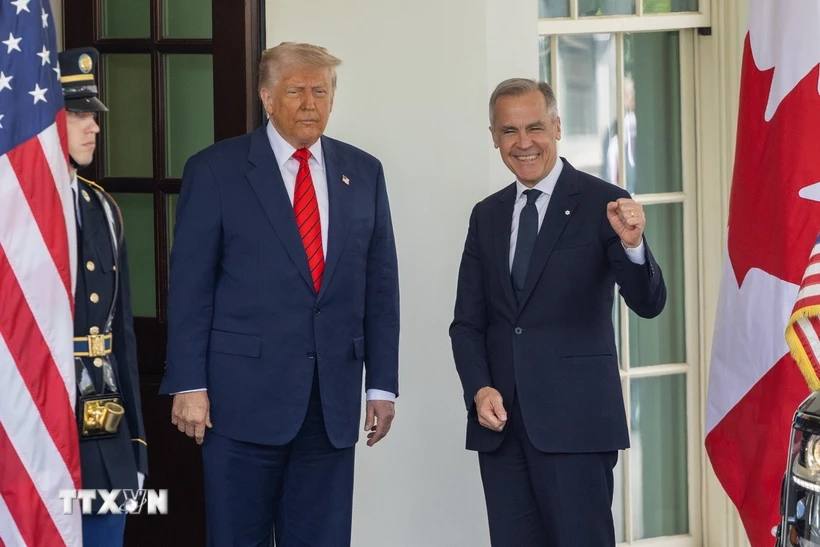
For more than 75 years, the economic relationship between Canada and the United States has been defined not by dramatic breaks, but by quiet integration. Grain, cars, energy, machinery, and food have crossed the border so routinely that the line itself often seemed theoretical. That assumption was shaken on January 16, when Prime Minister Mark Carney arrived in Beijing and signed a sweeping agricultural and industrial trade agreement with China — a deal that U.S. officials now privately describe as the most serious disruption to North American trade architecture in a generation.
The agreement, announced after meetings with senior Chinese officials, sharply reduced Canadian tariffs on Chinese electric vehicles from 100 percent to 6.1 percent. In return, Beijing cut tariffs on Canadian canola from 84 percent to 15 percent, reopening a market that had effectively been closed for years. On paper, the arrangement looked balanced. In practice, it has triggered alarm in Washington, confusion in boardrooms, and anxiety across supply chains that bind the continent together.
“This is not just a bilateral trade deal,” said one former U.S. trade negotiator, speaking on condition of anonymity to discuss internal deliberations. “It rewires incentives across the entire North American system.”
A System Built on Predictability
Canada exports more than eight million tons of grain to the United States annually, worth nearly $10 billion. The automotive sector moves roughly $30 billion in parts and vehicles across the border each year, with some components crossing between seven and ten times before final assembly. These flows depend on predictability — on the assumption that tariffs, standards, and political alignment will not suddenly change.
That assumption is now under strain.
The United States maintained a measured public response to the China deal, emphasizing the importance of consultation and existing frameworks under the United States-Mexico-Canada Agreement (USMCA). But behind closed doors, according to multiple people familiar with the discussions, the reaction has been far more intense.
Senior officials in the Trump administration have warned lawmakers that the agreement could undermine key provisions of USMCA just as its mandatory six-year review approaches this summer. The concern is not only economic, but strategic: that Canada’s pivot toward China weakens Washington’s leverage in its broader trade confrontation with Beijing.
On Capitol Hill, lawmakers from agricultural states have raised alarms about Canadian grain gaining preferential access to Chinese markets while U.S. farmers remain locked out. Auto industry executives, meanwhile, have quietly warned of potential retaliation that could freeze investment decisions already strained by tariff uncertainty.
Social Media, Signals, and Silence
The political reaction has played out as much online as in formal statements. Influential conservative commentators on X have framed the deal as a “betrayal” of North American solidarity, while some centrist economists have argued that Canada is acting rationally after years of tariff pressure from Washington.
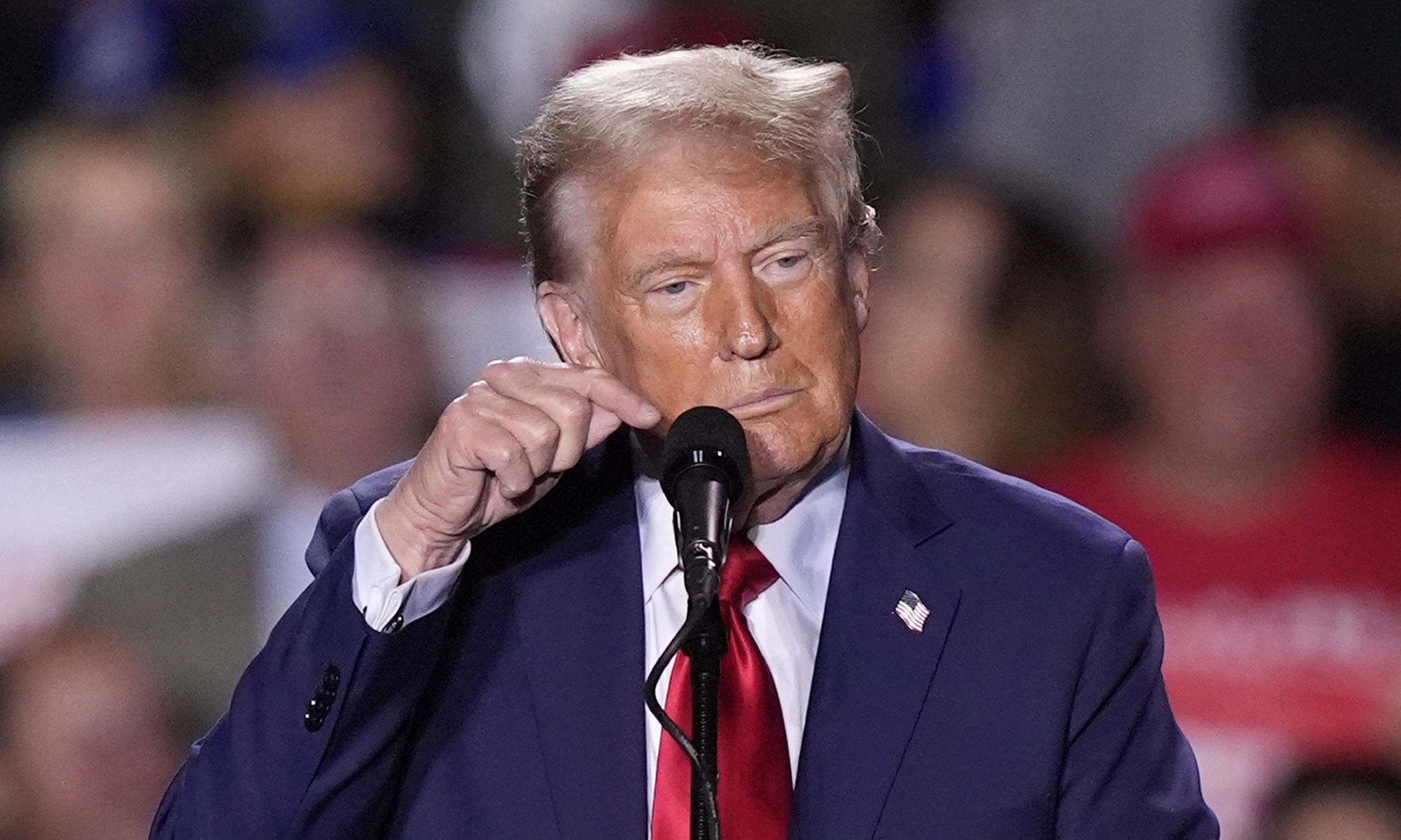
Trump advisers have posted that the agreement proves U.S. pressure tactics “forced Canada to look elsewhere,” while progressive trade analysts have countered that the deal exposes weaknesses in America’s reliance on unilateral threats. None of those views have been officially endorsed — but together they reflect a widening debate over whether the old trade order is already gone.
President Trump himself has alternated between downplaying the agreement publicly and signaling privately that “all options remain on the table,” according to people briefed on internal conversations. Retaliatory tariffs, enhanced customs inspections, and sector-specific penalties are all under discussion, officials say.
Farmers Caught in the Middle
For Canadian farmers, the reaction has been more pragmatic than ideological. Canola producers, who saw shipments collapse after China imposed punitive tariffs in earlier disputes, describe the deal as a lifeline.
“This gives us certainty we haven’t had in a year,” said a Saskatchewan grower whose family has farmed canola for three generations. “Politics aside, we needed a market.”
American farmers, however, see the picture differently. U.S. grain producers worry that Canadian exports redirected toward China could distort North American prices, while any U.S. retaliation risks closing off Canada — their largest and most reliable foreign market.
“This is how trade wars stop being abstract,” said an Iowa-based agricultural economist. “They land directly on people who had nothing to do with the decision.”
The USMCA Test
The timing of the deal may be its most destabilizing element. The USMCA review, scheduled for mid-2026, was already expected to be contentious amid disputes over energy, autos, and environmental standards. The China agreement injects a new fault line — one that goes to the heart of whether North America still functions as a unified trade bloc.
U.S. officials argue that lower Canadian tariffs on Chinese electric vehicles could allow subsidized Chinese products indirect access to North American markets. Canadian officials counter that safeguards remain in place and that the deal does not violate USMCA rules.
Trade lawyers say the outcome is far from clear.
“There is no obvious smoking gun,” said a former World Trade Organization arbitrator. “But there is plenty of room for escalation.”
A Shift, Not a Break — Yet
Supporters of Carney’s approach argue that Canada was pushed toward diversification by years of tariff threats, trade disputes, and unpredictability from Washington. In that view, the China deal is not a rupture but a warning — a signal that middle powers will no longer accept economic dependency without guarantees.
Critics argue the opposite: that Canada underestimated the fragility of trust and overestimated its ability to balance between rival superpowers without consequence.
What both sides agree on is uncertainty.
Trucks are already facing longer inspections. Some manufacturers have paused cross-border shipments while assessing risk. Commodity traders report unusual volatility in grain futures. None of this amounts to collapse — but it feels like strain.
History in Motion
Trade systems rarely fail overnight. They grind, slow, and seize before they break. What makes this moment unsettling is not what has happened, but what might.
Factories do not close because of speeches; they close because parts stop arriving. Prices do not spike because of rhetoric; they spike because logistics fail. And trust, once cracked, is notoriously difficult to repair.
Mark Carney’s handshake in Beijing may ultimately prove to be a bargaining chip, a temporary detour, or a strategic masterstroke. It may also mark the beginning of a longer unravelling — one driven not by ideology, but by accumulated mistrust.
Six months from now, the USMCA review will offer a verdict of sorts. By then, the direction of North American trade may already be set.
For now, farmers, factory managers, and families are left watching a system they assumed was permanent begin to shift beneath their feet — reminded, once again, that in trade as in politics, stability is never guaranteed.
And when it breaks, it rarely does so quietly.






