Canada’s Fighter Jet Dilemma Becomes a Test of Sovereignty

For more than a decade, Canada’s plan to modernize its air force has been treated as a technical procurement problem — a question of range, radar, stealth, and price. In early 2026, it has become something else entirely: a political referendum on sovereignty in an era when military power is increasingly defined by software, supply chains, and asymmetric dependence on a single ally.
At the center of the debate is the F-35A Lightning II, the fifth-generation stealth fighter built by Lockheed Martin and marketed as the backbone of NATO air power for decades to come. Canada formally committed in 2023 to purchase 88 aircraft, with deliveries beginning this year and extending through 2032. For Washington, the deal was seen as settled. For Ottawa, it now appears anything but.
In recent months, U.S. officials have privately and publicly warned Canada against backing out of the agreement, cautioning that abandoning the F-35 could have diplomatic and industrial consequences. The message has been clear: reconsider if you must, but do not walk away lightly.
The warning comes as Canada continues an “unnecessary review,” as some American commentators have described it. But in Ottawa, the reassessment is seen less as delay than as reckoning — one triggered by cost overruns, political pressure from the White House, and a growing realization that modern weapons systems come with strings that no longer end at delivery.
A Long Road to a Controversial Choice
Canada’s relationship with the F-35 has been fraught from the beginning. In 2010, the government announced plans to buy 65 aircraft without a competitive bidding process, prompting public outrage and criticism from defense experts who questioned both transparency and cost assumptions. By 2014, the plan was shelved, forcing a full procurement reset.
Nearly a decade later, after an exhaustive competition, Ottawa selected the F-35A over Sweden’s Saab Gripen E in 2023. The decision was framed as pragmatic and final. Canada would join a growing club of allies operating a common platform, maximizing interoperability with the United States and NATO partners.
Then came the Auditor General’s report in June 2025.
What had been presented as a 19-billion-Canadian-dollar program was now projected to cost at least 27.7 billion — and potentially as much as 33 billion — once infrastructure upgrades, weapons integration, training, and long-term operating costs were included. The increase, nearly 75 percent, shocked lawmakers and the public alike.
Defense analysts on X and in outlets like Defense News quickly noted that such omissions were not unusual in major procurements. But in Canada’s constrained defense budget environment, the numbers were politically explosive.
Trump, Tariffs, and the Question of Leverage
The timing could hardly have been worse.
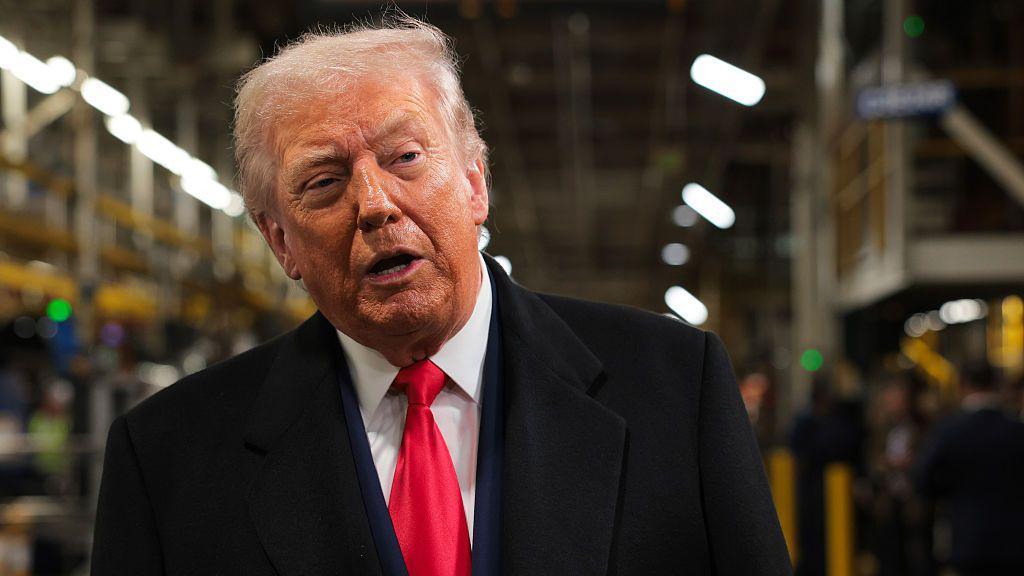
As the cost revelations surfaced, relations with Washington deteriorated sharply. President Donald Trump, now in his second term, threatened 25 percent tariffs on Canadian goods and revived provocative rhetoric suggesting Canada could become America’s “51st state” — comments that were dismissed by U.S. officials as jokes but taken seriously north of the border.
For many Canadians, the episode crystallized a long-standing unease: reliance on the United States comes with vulnerability, especially when that reliance extends beyond trade into defense, intelligence, and military technology.
That concern was amplified by the nature of the F-35 itself.
Unlike previous generations of fighter aircraft, the F-35 is a software-defined weapons system. Its performance depends on continuous updates controlled by the U.S. Department of Defense. With the exception of Israel, no operator has access to the full source code or the authority to independently modify core systems.
Pentagon officials have repeatedly denied the existence of a so-called “kill switch,” a rumored mechanism allowing Washington to remotely disable allied aircraft. But defense experts interviewed by U.S. media have emphasized a simpler reality: without ongoing software updates and logistical support, the F-35’s effectiveness degrades over time.
In practical terms, Canada does not fully own the aircraft it is buying.
The Swedish Alternative
Against this backdrop, Sweden saw an opening.
In August 2025, Canada and Sweden signed a defense and aerospace cooperation agreement focused on Arctic security. Saab, Sweden’s leading defense contractor, quickly proposed a revised Gripen package: full assembly in Canada, extensive technology transfer, and a domestic industrial footprint anchored by Bombardier.
The offer promised approximately 12,600 Canadian aerospace jobs, long-term control over maintenance and upgrades, and an aircraft optimized for dispersed operations in extreme environments — including short runways and highway strips, a capability often highlighted by Gripen advocates on social media.
Operating costs were another selling point. Saab estimates the Gripen’s cost per flight hour at roughly $8,000, compared with estimates ranging from $35,000 to $47,000 for the F-35, according to figures frequently cited in U.S. defense reporting.
In March 2026, Defense Minister Bill Blair announced that Canada was formally re-examining the F-35 contract. The Gripen, previously defeated in the 2021 competition, was back in contention.
Capability Versus Control
The reaction from Canada’s military leadership was swift and skeptical.
A leaked technical evaluation from the original competition showed the F-35 dramatically outperforming the Gripen in mission effectiveness and upgrade potential. Former Royal Canadian Air Force leaders warned that anything short of top-tier capability risked leaving Canada dependent on allies in a crisis — precisely the outcome sovereignty advocates sought to avoid.
U.S. defense commentators echoed the concern, arguing that stealth, sensor fusion, and deep integration with American forces were not luxuries but necessities in modern warfare.
Yet critics countered with a different question: superior for what mission?
Canada is not seeking to project power globally. Its primary responsibilities remain Arctic patrol, continental defense, and NATO support. For those tasks, does Ottawa need the most advanced — and most tightly controlled — fighter aircraft ever built?
No Clean Exit
Even the Gripen is no escape hatch. Its GE F414 engine is American-made, subject to U.S. export controls. Washington could, in theory, exert leverage regardless of which aircraft Canada chooses.
That reality has tempered talk of a clean break. A hybrid proposal — accepting the first 16 F-35s while replacing the remaining 72 with Canadian-assembled Gripens — has gained quiet traction. It would preserve interoperability while nurturing domestic industry.
But it would also double training pipelines, complicate logistics, and strain budgets — risks senior officers have described as unacceptable in wartime.
A Decision Beyond Jets
Prime Minister Mark Carney has committed to taking delivery of the first F-35s. What comes after remains unresolved.
In Washington, officials see the debate as a troubling precedent. In Ottawa, it is increasingly viewed as inevitable.
Canada’s fighter jet dilemma is no longer about aircraft performance alone. It is about who controls the tools of national defense in an age when ownership is conditional and alliances are transactional.
As one defense analyst wrote recently on X, “The F-35 is the best jet money can buy — but it also reminds you whose money really matters.”
For Canada, the choice may define not just its air force, but the limits of sovereignty in the 21st century — where security and independence no longer always point in the same direction.






