Mark Carney’s First Year: A Quiet Shift in Canada’s Global Role
In a period marked by geopolitical tension, economic uncertainty, and shifting alliances, a subtle but consequential change has taken place in global politics. At the center of that shift is Canada’s prime minister, Mark Carney, whose first year in office has begun to reshape how Canada is perceived on the world stage.
Mr. Carney’s rise to political leadership was, in many respects, unconventional. Known primarily for his career in global finance — including his tenure as governor of both the Bank of Canada and the Bank of England — he entered Canadian politics without the traditional path through parliamentary ranks. Yet the very qualities that once made his candidacy unusual have become central to his governing style.
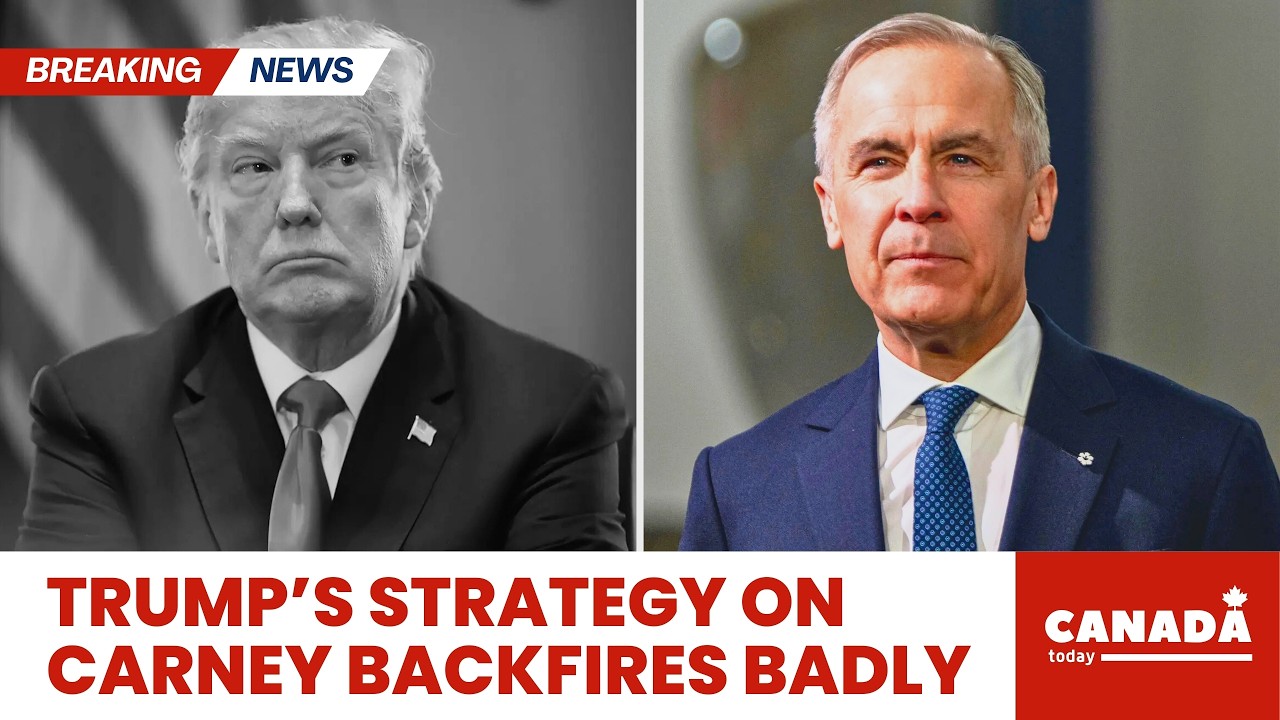
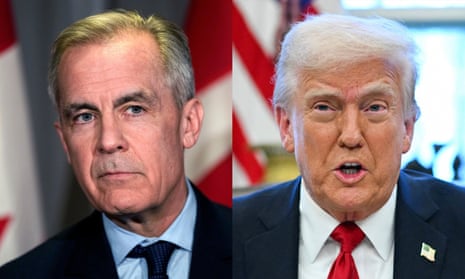
His first year in office has unfolded against the backdrop of heightened global instability, much of it tied to the political climate surrounding the United States under Donald Trump. Trade tensions, tariff threats, and an increasingly confrontational tone toward allies have introduced volatility into international relationships that had long been considered stable. For Canada, whose economy and security remain closely tied to its southern neighbor, that volatility has carried immediate consequences.
It is within this environment that Mr. Carney has begun to define his leadership.
Rather than responding with rhetorical escalation, the Canadian prime minister has adopted a markedly different approach: one built on economic credibility, measured diplomacy, and institutional stability. The contrast has not gone unnoticed.
In international forums, Canada has begun to occupy a somewhat different position than it did in recent years. Under the previous government of Justin Trudeau, Canada was often visible in multilateral gatherings such as the G7, but critics sometimes argued that its role leaned more toward symbolic diplomacy than substantive policy leadership. Mr. Carney’s background in economic governance has shifted that perception.

His discussions with global leaders frequently center on financial coordination, trade stability, and long-term structural challenges facing advanced economies. For many countries navigating similar pressures, that expertise carries weight.
The change has been particularly evident in Canada’s engagement with European partners. During a recent visit to Norway, Mr. Carney held discussions with leaders from the Nordic region — a group that includes Norway, Sweden, Denmark, Finland, and Iceland — on Arctic cooperation, climate policy, and regional security. The meeting reflected a growing recognition that Canada’s perspective on northern governance and economic resilience is increasingly relevant.
At home, this international posture appears to have translated into political strength.
Recent polling from the Canadian research firm Nanos Research suggests that public confidence in Mr. Carney remains high. Surveys indicate that the governing Liberal Party of Canada holds a significant lead over the Conservative Party of Canada, with nearly half of respondents saying they would support the Liberals if an election were held today.
Equally notable is the personal approval gap between Mr. Carney and his chief political rival, Pierre Poilievre. According to the same polling data, a clear majority of Canadians prefer Mr. Carney as prime minister, a margin that suggests his reputation as a steady manager of economic and geopolitical risk has resonated with voters.
Political analysts caution that early popularity does not guarantee long-term success. Domestic challenges — from housing affordability to productivity growth — remain pressing issues that could test the government in the years ahead. Moreover, Canada’s relationship with the United States will continue to demand careful navigation, particularly if trade tensions intensify.
Still, the broader international context has created an opening that Mr. Carney appears well positioned to occupy.
In a world where many governments are responding to uncertainty with confrontation or nationalist rhetoric, Canada’s current strategy has been to emphasize continuity and cooperation. Rather than redefining alliances, Mr. Carney has focused on reinforcing them. Rather than seeking leverage through disruption, he has leaned on predictability.
The result is not dramatic diplomacy but something quieter: credibility.
That credibility, in turn, has begun to influence how Canada participates in global discussions — from economic coordination to Arctic governance. Countries searching for reliable partners in an increasingly fragmented geopolitical landscape are taking notice.
Whether Mr. Carney ultimately ranks among the most consequential leaders in modern Canadian history remains an open question. A single year rarely determines such judgments. But his first twelve months in office have already produced a discernible shift.
Canada, long regarded as a stable middle power, now appears to be moving toward a more active role in shaping international conversations.
And for the moment, that transformation is closely tied to the leadership style of Mark Carney — a style defined less by spectacle than by steadiness.






