Why NATO Can’t Stop Talking About Sweden’s Gripen Fighter
In recent months, an unexpected name has begun to dominate conversations inside NATO briefing rooms: the Saab JAS 39 Gripen E. Once viewed as a niche platform from a relatively small defense industry, the Swedish-built aircraft is now reshaping how military planners think about air power in an era defined not just by advanced technology, but by endurance, cost, and resilience.
The shift did not happen overnight. For decades, NATO doctrine leaned heavily on high-end, technologically sophisticated systems such as the Lockheed Martin F-35 Lightning II. These aircraft offer unparalleled stealth, sensor fusion, and integration across allied forces. Yet their advantages come with significant trade-offs—most notably, the high cost of operation and the complexity of maintenance. In a short, high-intensity conflict, those drawbacks can be managed. In a prolonged war, they become central vulnerabilities.

The war in Ukraine has served as a stark reminder that modern conflict is as much about sustainability as it is about capability. Air forces with large fleets have struggled to maintain consistent sortie rates under logistical pressure. Supply chains falter, maintenance crews are stretched thin, and even the most advanced aircraft risk being grounded—not by enemy fire, but by their own operational demands.
It is within this context that the Gripen E has gained renewed attention. Designed during the Cold War under the constant pressure of potential conflict with the Soviet Union, Sweden’s defense philosophy emphasized survival over spectacle. The result is an aircraft built not to dominate headlines, but to function reliably under extreme and degraded conditions.
Unlike many modern fighters, the Gripen E was engineered with a concept known as “distributed operations.” It can take off and land on improvised runways, including highways, and be serviced by small teams with minimal equipment. In a scenario where fixed air bases are among the first targets of missile strikes, this flexibility becomes a decisive advantage. By dispersing aircraft across multiple locations, Sweden—and now NATO—can reduce vulnerability and maintain operational continuity even under sustained attack.
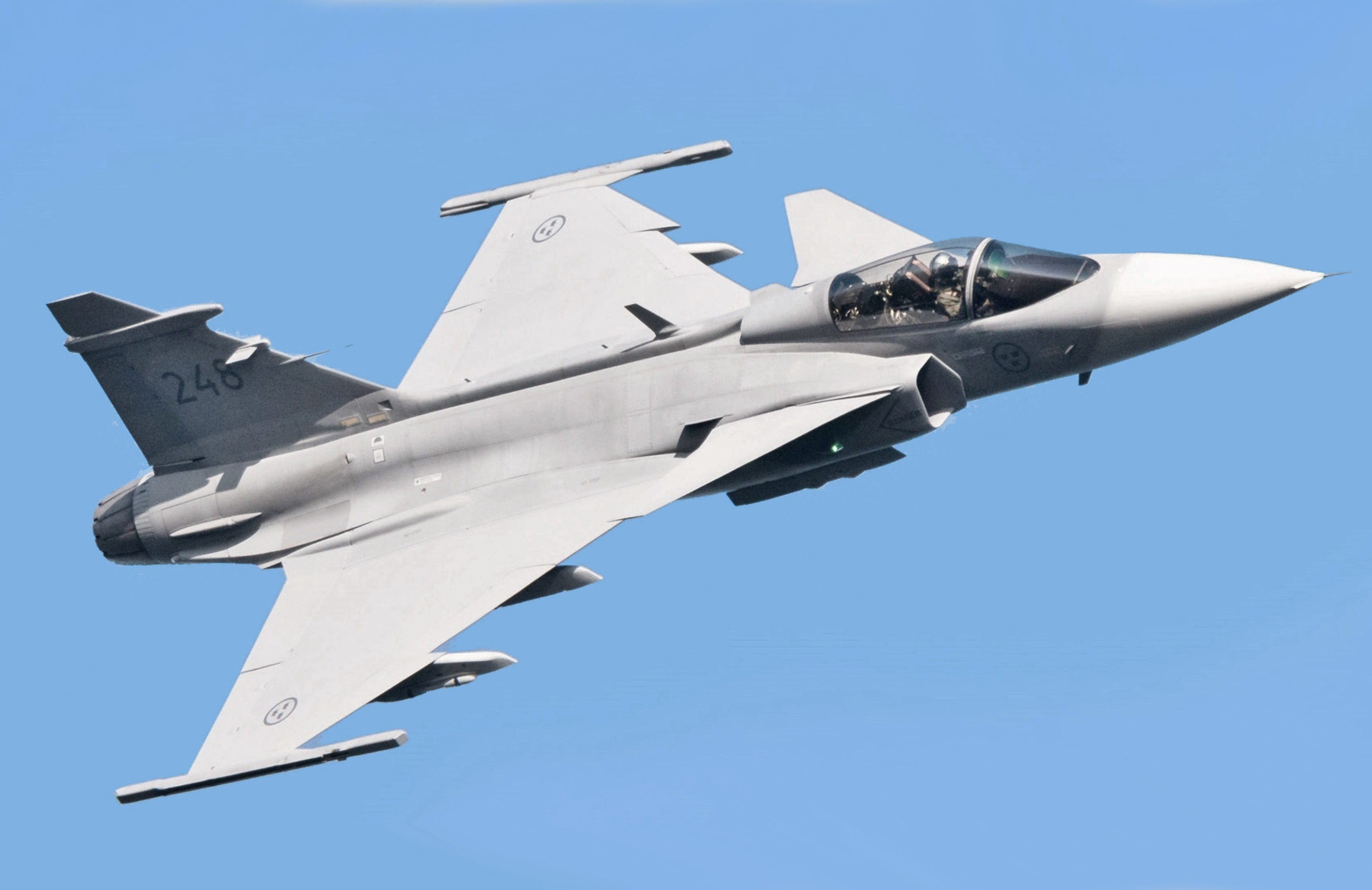
Cost is another critical factor. Operating the Gripen E requires a fraction of the resources needed for heavier, more complex platforms. This efficiency allows for higher sortie rates over extended periods, enabling air forces to maintain a persistent presence in contested environments. In practical terms, it means that a fleet of Gripens can often achieve what would require significantly greater investment with other aircraft.
But the conversation surrounding the Gripen E extends beyond logistics. Its software-driven architecture reflects a broader transformation in military technology. Rather than relying on lengthy hardware upgrades, the aircraft can be updated rapidly through software, allowing it to adapt to new threats in weeks instead of years. In an era where electronic warfare and cyber capabilities evolve at a rapid pace, this adaptability is increasingly seen as essential.
Sweden’s recent accession to NATO in 2024 has amplified the relevance of these capabilities. Positioned strategically in the Baltic region, Sweden introduces not only geographic depth but also a new operational model. The integration of Gripen squadrons into NATO planning complicates adversary targeting and strengthens the alliance’s defensive posture, particularly in areas where access has historically been contested.
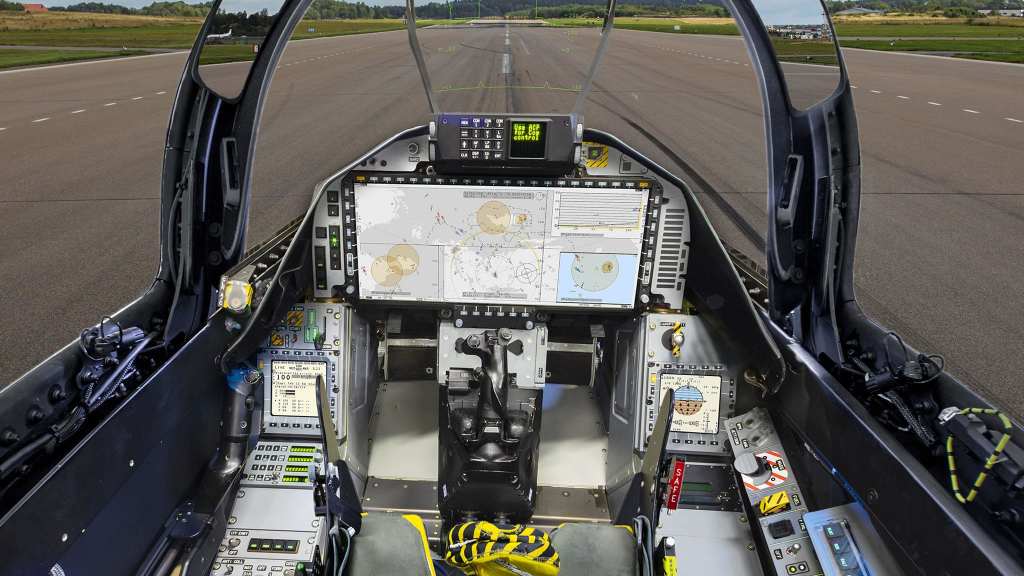
The implications are not confined to Europe. In the Indo-Pacific, where large fixed bases are increasingly vulnerable to advanced missile systems, the principles embodied by the Gripen—mobility, dispersion, and efficiency—are attracting growing interest. Military planners are beginning to reconsider long-standing assumptions about how air power should be structured and sustained.
This evolving debate is perhaps most visible in Canada, where policymakers are weighing the future of their air force. While Canada has committed to acquiring the F-35, discussions about alternative or complementary platforms, including the Gripen, persist. At the same time, domestic initiatives aimed at developing autonomous “loyal wingman” systems suggest a broader shift toward integrated, networked air power.
In this emerging framework, the question is no longer which fighter jet is superior in isolation. Instead, it is how different systems can work together to create a force that is both technologically advanced and operationally sustainable. The Gripen E, once considered an outsider, now sits at the center of that conversation.
What NATO’s renewed focus on this aircraft ultimately reveals is a deeper transformation in military thinking. The future of air warfare may not belong solely to the most advanced machines, but to those that can endure, adapt, and remain in the fight when it matters most.






