The Quiet Repricing of America: How Global Capital Is Learning to Look Elsewhere
The shift did not begin with a single announcement or a dramatic rupture. There was no summit declaring the end of American financial primacy. Instead, it emerged in spreadsheets, quarterly reports and policy adjustments—small, deliberate moves that, taken together, suggest something larger is underway.
In late 2025, Canada—long regarded as one of the United States’ most dependable economic partners—sold a record $20.5 billion in U.S. Treasury bonds. The move, followed by continued fluctuations in early 2026, was not a panic-driven retreat but part of a broader recalibration. Canadian holdings declined sharply, signaling not abandonment, but a reassessment of exposure.

This repositioning is unfolding alongside a noticeable change in consumer behavior. Canadian travel to the United States has dropped significantly, with both road crossings and flight bookings falling well below pre-2024 levels. The economic impact, measured in billions of dollars, reflects a subtle but meaningful cooling in cross-border engagement.
At the policy level, Ottawa is pursuing what officials describe as a diversification strategy. Trade agreements with countries like China and India, along with long-term plans to expand non-U.S. exports, suggest a deliberate effort to reduce reliance on a single dominant partner. Geography still binds the two economies, but dependence is no longer treated as inevitable.
China, meanwhile, is executing its own gradual shift. Once the largest foreign holder of U.S. Treasuries, Beijing has steadily reduced its position over more than a decade. By early 2026, its holdings had fallen to levels not seen since before the global financial crisis.
Yet the capital has not vanished. It has been redirected. China has increased its gold reserves and expanded currency swap agreements, allowing trade to flow without defaulting to the U.S. dollar. These moves point to a long-term strategy aimed at insulating its economy from external financial pressure.
In Europe, a similar logic is taking hold. Investors are showing increased interest in regional equities and assets perceived as less exposed to geopolitical friction. Trade initiatives with emerging markets, particularly India, reflect a desire to build alternative economic corridors that operate with greater autonomy from Washington.
The Gulf states, for their part, are conducting internal reviews of their vast U.S. holdings. Sovereign wealth funds, which collectively manage trillions of dollars, are not withdrawing en masse. But new investments are increasingly directed inward or toward Asia, aligning with domestic development goals and shifting geopolitical calculations.
Corporate behavior reinforces this trend. According to recent surveys, companies are moving away from opportunistic divestments toward more strategic separations. Business units tied to regulatory complexity or political uncertainty—particularly in the United States—are being reevaluated, and in some cases, spun off.
This does not amount to a coordinated exit. Rather, it resembles a form of parallel risk management. Governments, institutions and corporations are independently reaching similar conclusions: that exposure to the United States, while still valuable, carries a different risk profile than it once did.
The implications are not immediate collapse, but gradual transformation. The United States remains home to the world’s deepest capital markets and most influential technology sector. It continues to offer liquidity and scale unmatched elsewhere.
But what is changing is its status as the default destination for global capital. Investors now weigh American assets against a growing field of alternatives, many of which are being actively developed by U.S. allies and competitors alike.
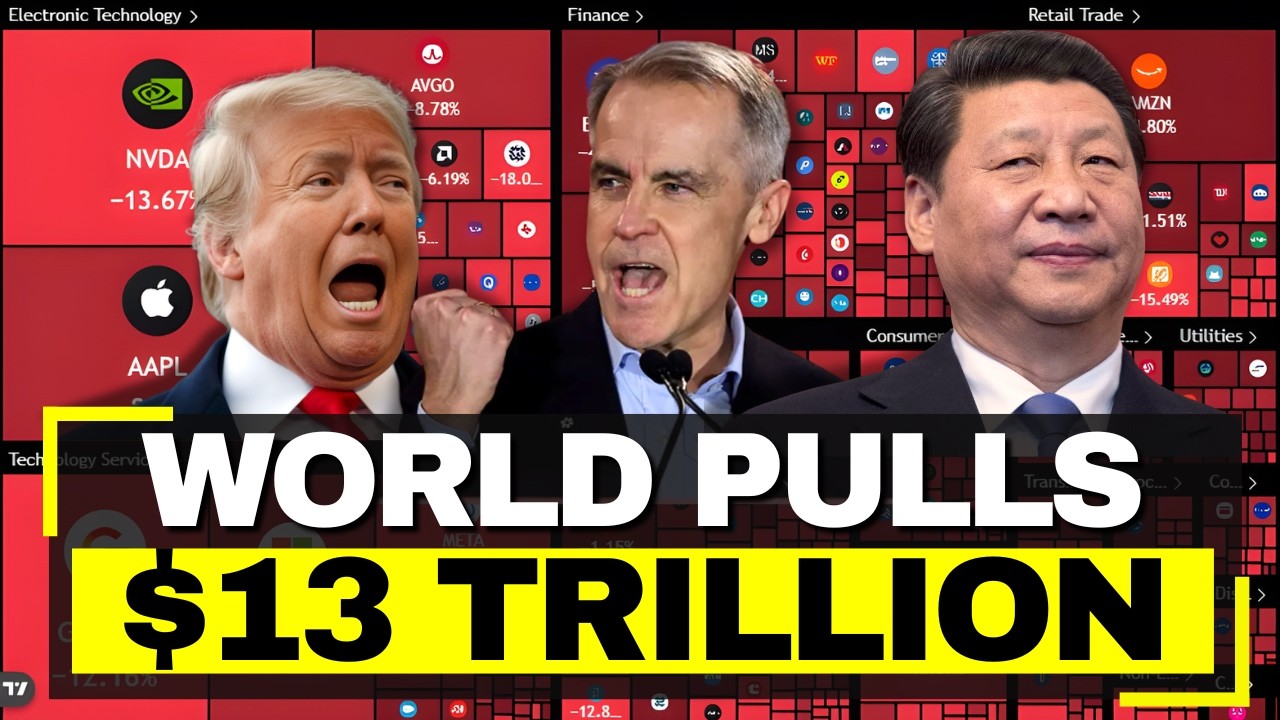
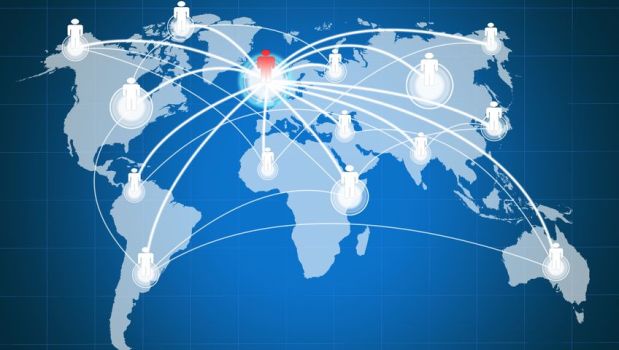
Financial systems, once tightly centered around the dollar, are becoming more distributed. Trade networks are expanding beyond traditional routes. And capital, always sensitive to uncertainty, is finding new pathways.
If there is a defining feature of this moment, it is not crisis but diffusion. Influence is no longer concentrated in a single system, but spread across multiple, overlapping frameworks. The shift is quiet, but its consequences may prove enduring.
For decades, American economic dominance rested not only on strength, but on the absence of viable alternatives. That absence is beginning to fade. And in that subtle transition—from singular to optional—the balance of global finance may be quietly rewritten.






