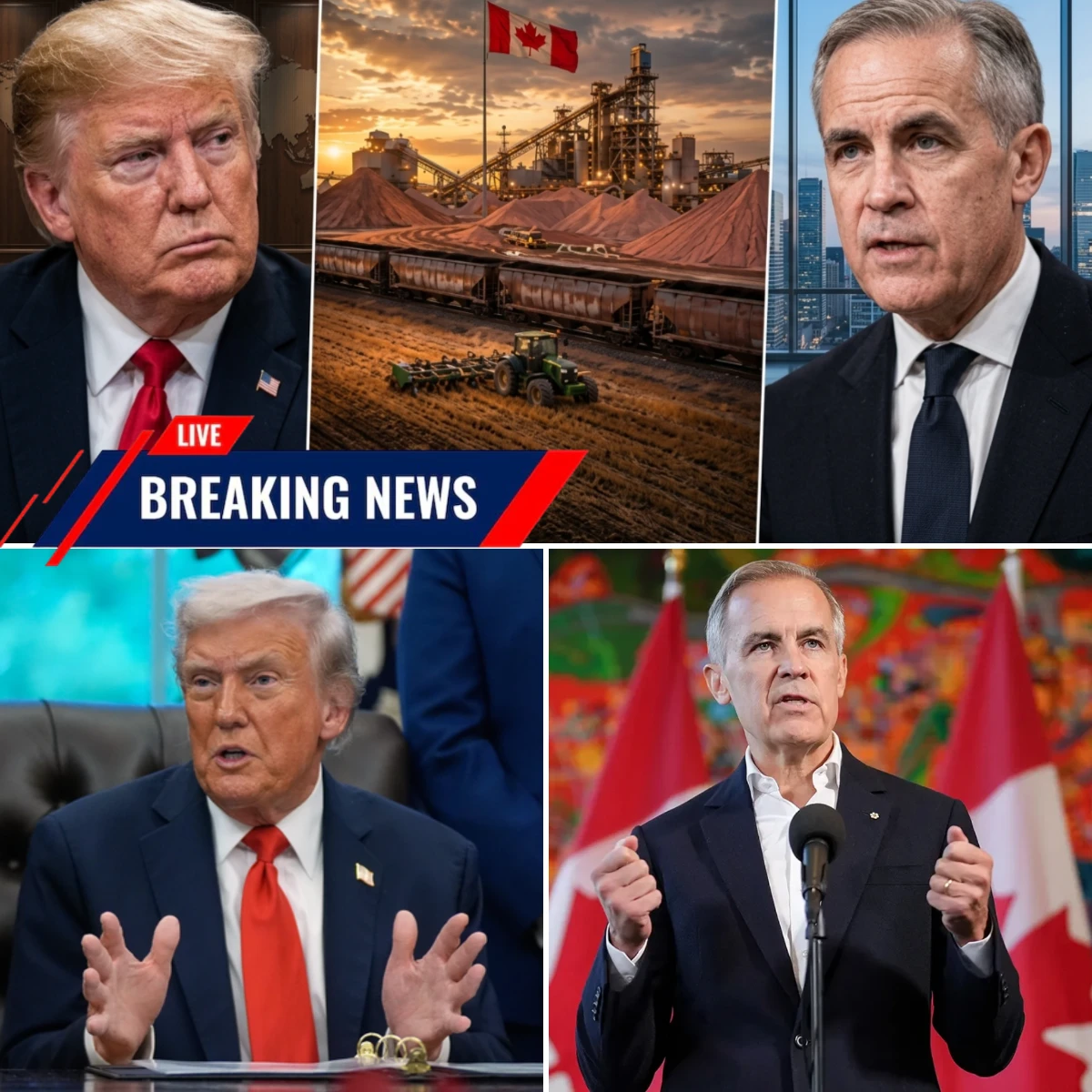
They call it “pink gold.” Potash is a vital ingredient for global food production, and Canada possesses the world’s largest reserves and production volume. As US President Donald Trump threatens severe tariffs, potash has quietly emerged as Canada’s ultimate secret weapon, exposing a catastrophic vulnerability in the American supply chain.
1. The Fatal Flaw in America’s Agricultural Supply
American farms absolutely rely on potassium to achieve crop yields for corn, soybeans, wheat, and cotton. However, the US cannot produce enough to feed its own soil. According to Reuters and the University of Illinois, over 80-85% of American potash imports come directly from Canada.
When Washington imposed a 10% duty on non-USMCA qualifying Canadian potash, they believed they were punishing Ottawa. Instead, they placed a direct tax on their own farmers. Tariffs on vital agricultural inputs immediately squeeze farm margins, risking weaker harvest yields and triggering food inflation. Tariffs may target foreign suppliers, but the American agricultural system is the one actually footing the bill.
2. The Domestic Supply Trap
Washington cannot quickly drill its way out of this problem. Domestic US potash production (concentrated in New Mexico and Utah) is vastly insufficient to meet demand. Expanding domestic capacity requires years of permitting, immense capital, and lengthy environmental reviews. The Fertilizer Institute has already warned that domestic expansion cannot happen fast enough.
What about short-term foreign alternatives? They are politically toxic. Russia and Belarus are the other major global potash players, but deep sanctions, war risks, and diplomatic isolation make reliance on them impossible. America is trapped in a supply chain bottleneck, and Canada holds the only key.
3. Canada’s Absolute Leverage
Canada possesses immense leverage because its market is globally diversified. Canadian volumes reliably serve buyers in China, India, Brazil, and other massive farm economies. Furthermore, BHP’s massive Jansen project in Saskatchewan is set to begin production in mid-2027, adding 8.5 million tons annually and solidifying Canada’s undisputed dominance in global fertilizer trade.
The lesson for the United States is harsh but necessary: Tariff policy backfires disastrously when the targeted product feeds your own domestic food production. A government can announce duties much faster than farmers can alter their supply chains. The potash dispute proves that resource dependence strictly limits how far Trump’s pressure tactics can go. In this trade war, whoever controls the soil controls the leverage.







