Justice Department Faces Mounting Scrutiny Over Handling of Epstein Files
The Justice Department is facing an escalating political and legal crisis after revelations that Attorney General Pam Bondi authorized extensive redactions in the release of long-anticipated Jeffrey Epstein files, including material that appears to shield her own actions and potentially President Trump from scrutiny. What was billed by the administration as a landmark transparency initiative is now being investigated by Congress, challenged in federal court, and criticized by watchdog groups as a coordinated cover-up.
The controversy centers on the administration’s highly publicized release of documents related to Epstein, the disgraced financier who died in jail in 2019 while awaiting trial on federal sex-trafficking charges. President Trump had repeatedly promised that the files would finally reveal the truth about Epstein’s network of powerful associates. Bondi, whom Mr. Trump installed as attorney general early in his second term, amplified that message in a series of media appearances, suggesting that explosive new evidence — including a client list and extensive video material — was about to become public.
Instead, when the files were released, they arrived heavily redacted. Many pages were entirely blacked out, revealing little to nothing beyond document headings. The reaction was swift and angry. Lawmakers accused the Justice Department of misleading the public, while legal experts questioned whether the redactions were consistent with federal transparency laws.
At the center of the criticism are Bondi’s own public claims. In interviews, including one on Fox News, she said there was a client list “sitting on my desk” and asserted that investigators had uncovered “tens of thousands” of videos depicting child sexual abuse. Those statements helped fuel public anticipation and reinforced the administration’s narrative that it was breaking with past secrecy.
However, according to internal Justice Department and FBI memoranda obtained through court orders and congressional inquiries, those claims were overstated. The internal records indicate that investigators identified thousands of images and videos in total — not tens of thousands of videos — and found no verified client list matching the description Bondi had implied. When those discrepancies became clear inside the department, critics now say, the response was not correction but concealment.

Representative Dan Goldman of New York, a Democrat on the House Judiciary Committee, sent a letter to Bondi in May 2025 accusing the department of staging a “performative release” while withholding substantive information. “The American people were told the truth was finally coming,” Mr. Goldman wrote. “What they received instead were documents already known to the public, stripped of context and redacted to the point of meaninglessness.”
The controversy deepened when watchdog groups, including Democracy Forward, sued the Justice Department after it declined to expedite Freedom of Information Act requests for internal communications about the Epstein files. Last month, a federal judge ordered the department to process those requests on an accelerated timeline, citing the significant public interest and the government’s own role in inflating expectations about the release.
That ruling has heightened pressure on Bondi, particularly as evidence has emerged that some redactions concealed references to her own statements and decisions. Internal documents show that Bondi publicly cited a figure of “over 250 victims,” while FBI assessments identified a substantially higher number of alleged victims. Critics say that discrepancy, too, was obscured through redactions.
Representative Ayanna Pressley of Massachusetts added fuel to the fire by posting images of the released documents on social media, showing pages completely blacked out. “This is not transparency,” she wrote. “This is a brazen cover-up.”
Bondi has defended her actions, arguing that redactions were necessary to protect victims’ privacy and avoid compromising ongoing investigations. Testifying before the Senate Judiciary Committee in February, she insisted that the department had acted responsibly and within the law. But her testimony, marked by sharp exchanges with Democratic senators, appeared to do little to ease concerns. Senator Richard Durbin, the committee’s chairman, accused her of invoking victim protection as a “fig leaf” for political shielding.
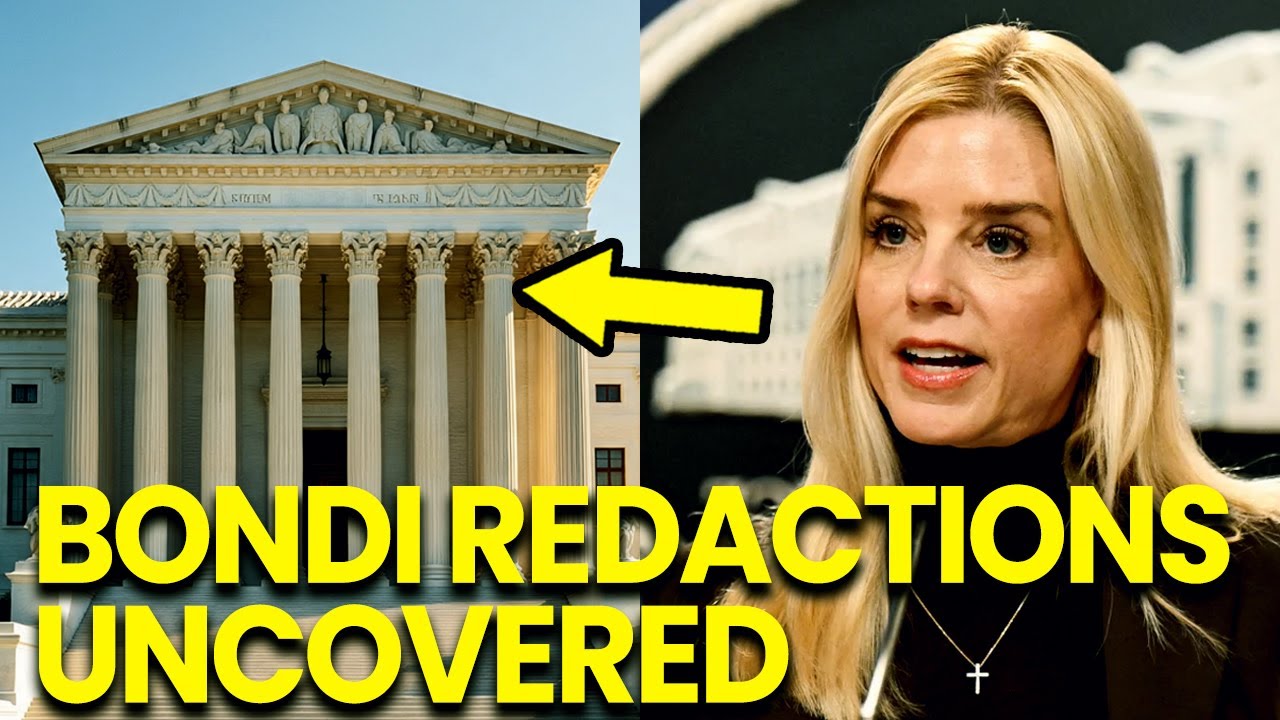
The episode has also revived broader concerns about the politicization of the Justice Department under Mr. Trump. Critics argue that the Epstein files affair fits a pattern in which transparency is promised but selectively applied, particularly when disclosures could harm the president or his allies. The timing has only intensified those worries: the redaction scandal has erupted amid reports that Susie Wiles, Mr. Trump’s former chief of staff, is cooperating with federal investigators, and as the Supreme Court has struck down several pillars of the administration’s economic agenda.
Public trust appears to be eroding. Recent polling shows Mr. Trump’s approval rating at 37 percent, and independents, in particular, have expressed growing skepticism toward his administration’s claims of reform and openness. Legal analysts say the fallout from the Epstein files could extend well beyond Bondi’s tenure, especially if forthcoming court-ordered disclosures reveal explicit political motivations behind the redactions.
For now, the Justice Department faces a narrowing window to restore credibility. Each new document released under court order, each missed deadline under the Epstein Files Transparency Act, and each congressional inquiry adds to the sense that the department is fighting not just for secrecy, but for its legitimacy.
What began as a promise to confront one of the most notorious scandals in modern American history has become a test of whether the nation’s top law enforcement agency can convince the public that it serves justice — and not political power.






